



LIFE CYCLE
Perennial

PLANT CHARACTERISTICS
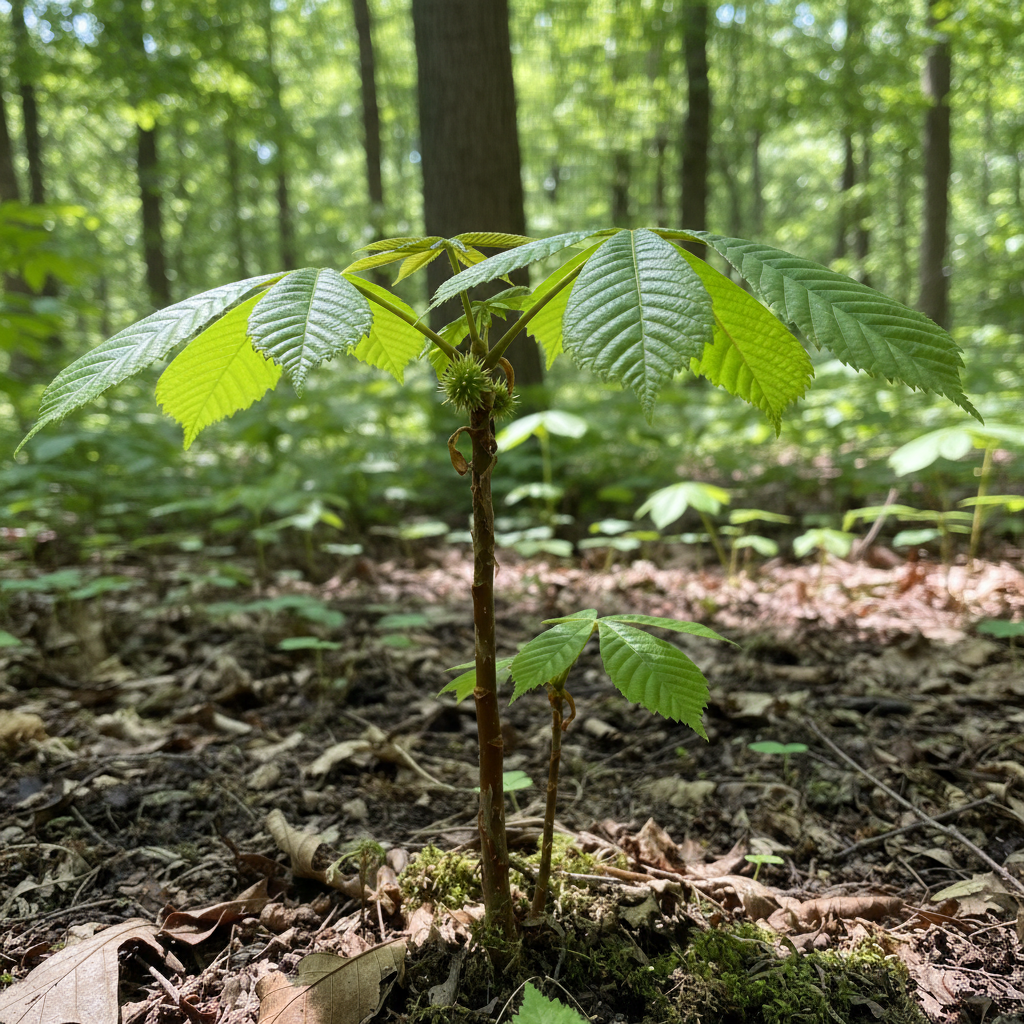
Castanea dentata.

GROWTH HABIT
Large Tree

BLOOM SEASON
Summer

FLAVOUR PROFILE
Sweet Nut

SUITABLE FOR
Outdoor

PLANTING SEASON
Spring.

FRUIT SIZE
1–1.5 inches

PLANT HEIGHT
1500–3000 cm

LIGHT REQUIREMENT
Full Sun

WATER NEEDS
Moderate

HARDINESS ZONES
USDA 4–8

CONTAINER GARDEN
Yes

PLANT SPACING
900–1200 cm

PLANTING DEPTH
1–2 inches

GROWING CONDITIONS
Well-drained
Frequently Asked Questions
Can American Chestnut be planted as a specimen tree?
Can American Chestnut be planted as a specimen tree?
Yes, its broad tree form can serve as a focal feature in a spacious landscape where the canopy has room to develop
How can American Chestnut be incorporated into a woodland-style planting?
How can American Chestnut be incorporated into a woodland-style planting?
It can be positioned among compatible trees and understory plants while leaving adequate space for its long-term growth
Can American Chestnut be grown in a large container when young?
Can American Chestnut be grown in a large container when young?
A large container can be used during early establishment if it provides sufficient root space and good drainage before the tree is moved to a suitable permanent location
How should space be planned around an American Chestnut tree?
How should space be planned around an American Chestnut tree?
Provide generous clearance from buildings, paths, and nearby trees so the developing canopy and root system are not crowded
Can American Chestnut be combined with other nut trees?
Can American Chestnut be combined with other nut trees?
Yes, it can be included in a mixed nut-tree planting when neighboring trees have compatible soil, sunlight, drainage, and spacing requirements
How can young American Chestnut trees be protected from strong winds?
How can young American Chestnut trees be protected from strong winds?
A sheltered planting position and appropriate support during early establishment can help protect the young trunk and developing branches