



Life Cycle
Perennial

Plant Characteristics
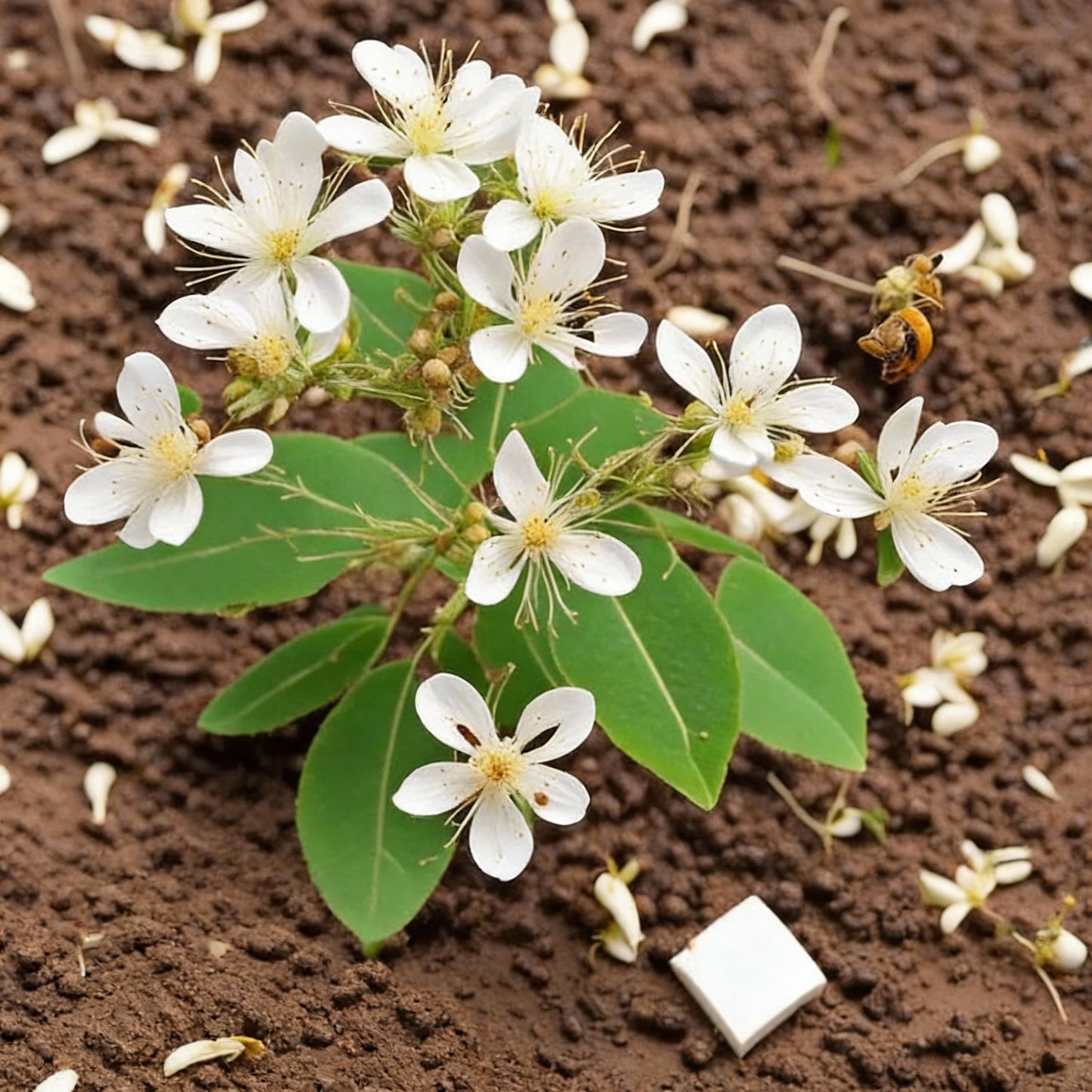
Nectar-rich flowers

Growth Habit
tree-forming

Bloom Season
Late Summer

Flavour Profile
Not applicable

Suitable for
Outdoor

Planting Season
Spring

Fruit Size
Small capsules

Plant Height
6–10 m

Light Requirement
Full Sun to Partial Shade

Water Needs
Moderate

Hardiness Zones
6–9

Container Garden
NO

Plant Spacing
4–6 m

Planting Depth
1–2 cm

Growing Conditions
Well-drained fertile soil
Frequently Asked Questions
Can Bee Beloved Euodia produce clusters of small flowers that attract pollinators?
Can Bee Beloved Euodia produce clusters of small flowers that attract pollinators?
Yes. Euodia hupehensis is valued as a flowering tree with clusters of small blooms that can provide an attractive food source for bees and other pollinating insects.
Does Bee Beloved Euodia grow best in sunny conditions?
Does Bee Beloved Euodia grow best in sunny conditions?
Yes. It generally performs well in full sun to partial shade with fertile, well-drained soil and adequate moisture during establishment.
Can Euodia hupehensis be grown as an ornamental landscape tree?
Can Euodia hupehensis be grown as an ornamental landscape tree?
Yes. Its attractive foliage, flowering display, and branching form make it suitable for spacious gardens, parks, and landscape plantings.
Will regular pruning help maintain a healthy tree structure?
Will regular pruning help maintain a healthy tree structure?
Yes. Light pruning can help remove damaged branches, improve air circulation, and maintain a balanced canopy.
Can Bee Beloved Euodia provide seasonal interest beyond its flowers?
Can Bee Beloved Euodia provide seasonal interest beyond its flowers?
Yes. Its foliage and overall tree form provide ornamental interest beyond the flowering period, making it a useful landscape specimen.
How is Euodia hupehensis different from Seven-Son Flower Tree?
How is Euodia hupehensis different from Seven-Son Flower Tree?
Euodia hupehensis is valued particularly for its pollinator-friendly flowering display and attractive foliage, while Seven-Son Flower Tree (Heptacodium miconioides) is a different deciduous species known for clusters of fragrant white flowers followed by persistent red calyces.