



Life Cycle
Perennial

Plant Characteristics
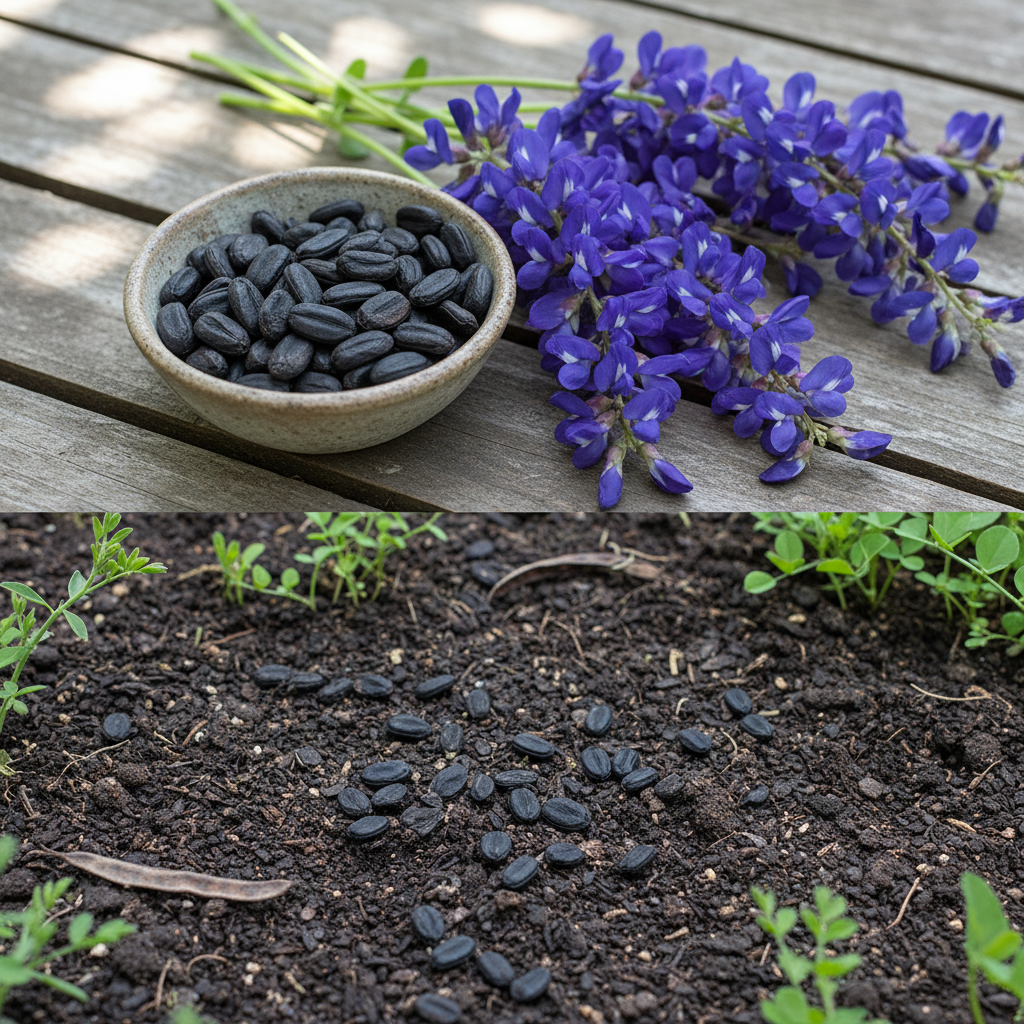
Vibrant indigo blooms

Growth Habit
Upright

Bloom Season
Late spring

Flavour Profile
Ornamental

Suitable for
Outdoor

Seed Type
Non-GMO

Plant Type
Flowering perennial

Planting Season
Spring

Fruit Size
N/A

Plant Height
90–120 cm

Light Requirement
Full Sun

Water Needs
Moderate

Hardiness Zones
USDA 3–9

Container Garden
Yes

Plant Spacing
45–60 cm

Planting Depth
0.5–0.6 cm

Growing Conditions
Well-drained soil
Frequently Asked Questions
Can Baptisia australis be used in a native-style garden?
Can Baptisia australis be used in a native-style garden?
Yes. Blue false indigo suits naturalistic and native-style plantings, especially when combined with compatible perennial flowers and grasses.
Does false indigo develop a woody base over time?
Does false indigo develop a woody base over time?
Mature Baptisia plants can develop a substantial, long-lived root system and sturdy structure, so allow adequate space as the plant establishes.
Can blue false indigo be planted near ornamental grasses?
Can blue false indigo be planted near ornamental grasses?
Yes. Ornamental grasses can complement the upright flower spikes and provide contrasting foliage texture.
Are the seed pods useful for winter garden interest?
Are the seed pods useful for winter garden interest?
The developing pods can add structural interest after flowering. Leaving selected stems in place can provide a different seasonal appearance.
Can Baptisia be used in a sunny border without frequent pruning?
Can Baptisia be used in a sunny border without frequent pruning?
Yes. Once established, it generally maintains a structured form and does not require frequent shaping like many shrubs.
Is false indigo suitable for a deep garden bed?
Is false indigo suitable for a deep garden bed?
Yes. A deep bed can accommodate its established root system while giving the plant room to develop its mature form.