



Life Cycle
Perennial

Plant Characteristics
Ornamental flowering tree

Growth Habit
Upright

Bloom Season
Spring–Early Summer

Flavour Profile
Ornamental

Suitable for
Outdoor

Seed Type
Open-pollinated

Plant Type
Tree / Flowering Tree

Planting Season
Spring

Fruit Size
Flat seed pods

Plant Height
10–15 m

Light Requirement
Full Sun

Water Needs
Moderate

Hardiness Zones
9–11

Container Garden
No

Plant Spacing
6–8 m

Planting Depth
1–2 cm

Growing Conditions
Warm climate
Frequently Asked Questions
How can Jacaranda's spreading canopy affect garden planning?
How can Jacaranda's spreading canopy affect garden planning?
The broad canopy needs open space, so plant it away from buildings and allow sufficient clearance from pathways and structures.
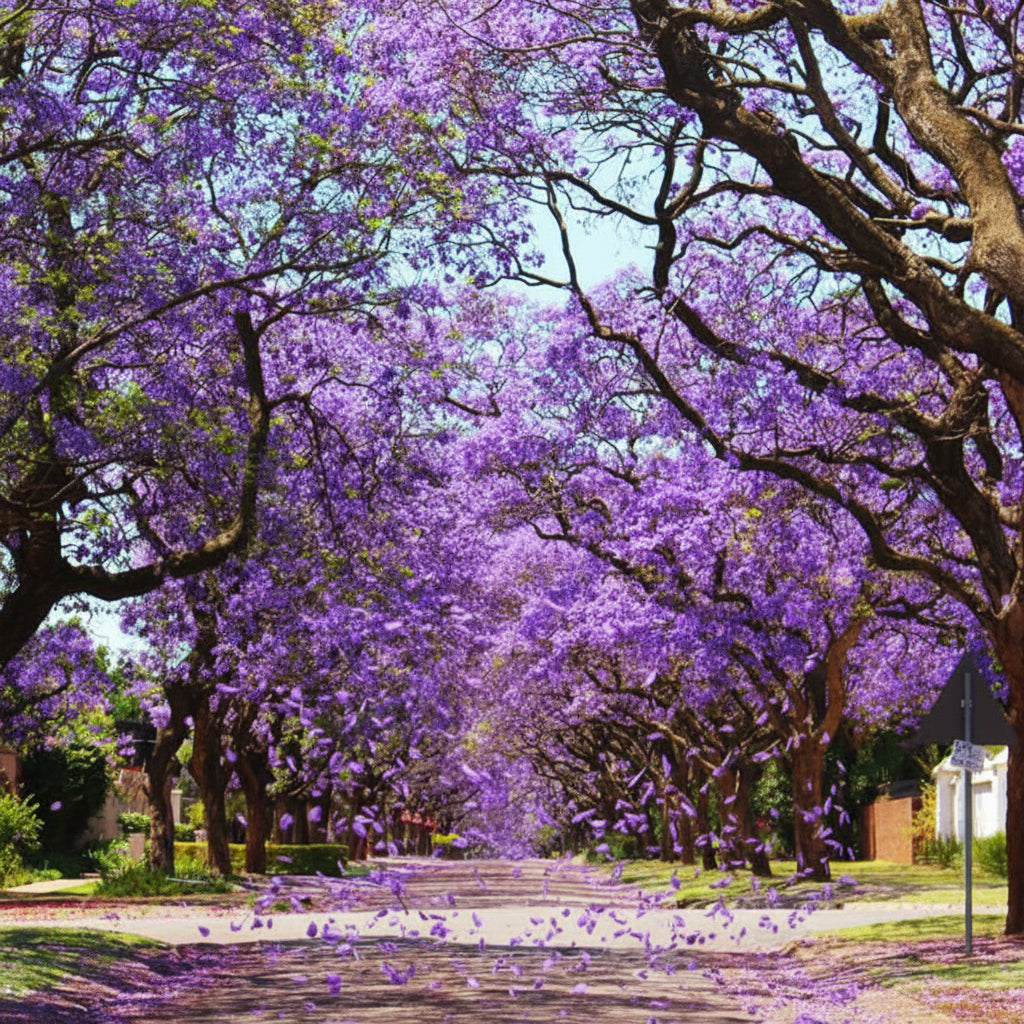
What makes Jacaranda suitable for avenue planting?
What makes Jacaranda suitable for avenue planting?
Its tall trunk, spreading canopy, and seasonal purple-blue flowers can create a striking avenue or street-tree effect in suitable landscapes.
Can young Jacaranda trees be shaped during early growth?
Can young Jacaranda trees be shaped during early growth?
Light formative pruning can help establish a balanced structure while the young tree develops its main branches.
When does Jacaranda typically create its strongest visual display?
When does Jacaranda typically create its strongest visual display?
Its purple-blue flower clusters provide the main seasonal display, making the tree particularly noticeable during its flowering period.
Can Jacaranda grow in a large container when young?
Can Jacaranda grow in a large container when young?
Young trees can be grown in containers temporarily, but their eventual size makes open-ground planting more suitable for long-term growth.
Why should falling flowers and leaves be considered near paved areas?
Why should falling flowers and leaves be considered near paved areas?
The tree can shed flowers and foliage seasonally, so placing it where natural debris is manageable can simplify garden maintenance.