Skip to product information
1 of 6

Blue Lotus Seeds for Planting - Nymphaea caerulea

Blue Lotus Seeds for Planting - Nymphaea caerulea

Regular price $16.99 USD
Regular price Sale price $16.99 USD
Sale Sold out
Quantity

How to Sow and Plant

Lightly scarify seed coat (gently nick or sand) before sowing to aid water absorption.
Soak seeds in warm, dechlorinated water (soil not needed initially) — keep in full sun in a shallow container until sprouts emerge (germination often within 10–25 days).
Once seedlings produce small leaves, transfer to a wide aquatic pot filled with heavy aquatic soil or loam/clay, then submerge under 6–18 in (15–45 cm) of water.
Ensure water is warm (≈ 21–27 °C) for optimal growth; avoid cold water or frost.

How to Grow

Light: Full sun — at least 6–8 hours/day for healthy growth and blooming.
Water Depth: Maintain water depth of 15–45 cm (6–18 in) above soil for mature plants.
Soil: Heavy loam or aquatic planting medium at pot bottom — avoid light/sandy soils that cloud water.
Temperature: Warm water (≈ 21–27 °C) — Blue Lotus is frost-sensitive and does not tolerate cold water.
Maintenance: Low once established — remove dead leaves / spent flowers; ensure water remains clean; fertilise occasionally with aquatic plant fertilizer if needed.

Tips

Use wide, shallow containers or pond basins rather than deep narrow pots — rhizomes spread horizontally.
Change or refresh water occasionally if stagnant — avoid stagnation to reduce algae buildup.
Provide at least 6 hours of direct sun for good blooms; in very hot climates partial afternoon shade can prevent leaf scorch.
If growing in a small container/tub, ensure water stays warm (use greenhouse or heat if needed) — Blue Lotus may go dormant in cool water.
For first blooms expect patience — seedlings may take a season or more to establish before producing full-sized lily pads and flowers.

View full details
About
Product Information
Features
life-cycle

LIFE CYCLE

Perennial

plant-characteristics

PLANT CHARACTERISTICS

Broad

growth-habit

GROWTH HABIT

Floating Perennial

bloom-season

BLOOM SEASON

Late spring

flavour-profile

FLAVOUR PROFILE

Ornamental

suitable-for

SUITABLE FOR

Outdoor

About
Blue Lotus Seeds for Planting - Nymphaea caerulea
seed-type

SEED TYPE

Non-GMO

plant-type

PLANT TYPE

water lily

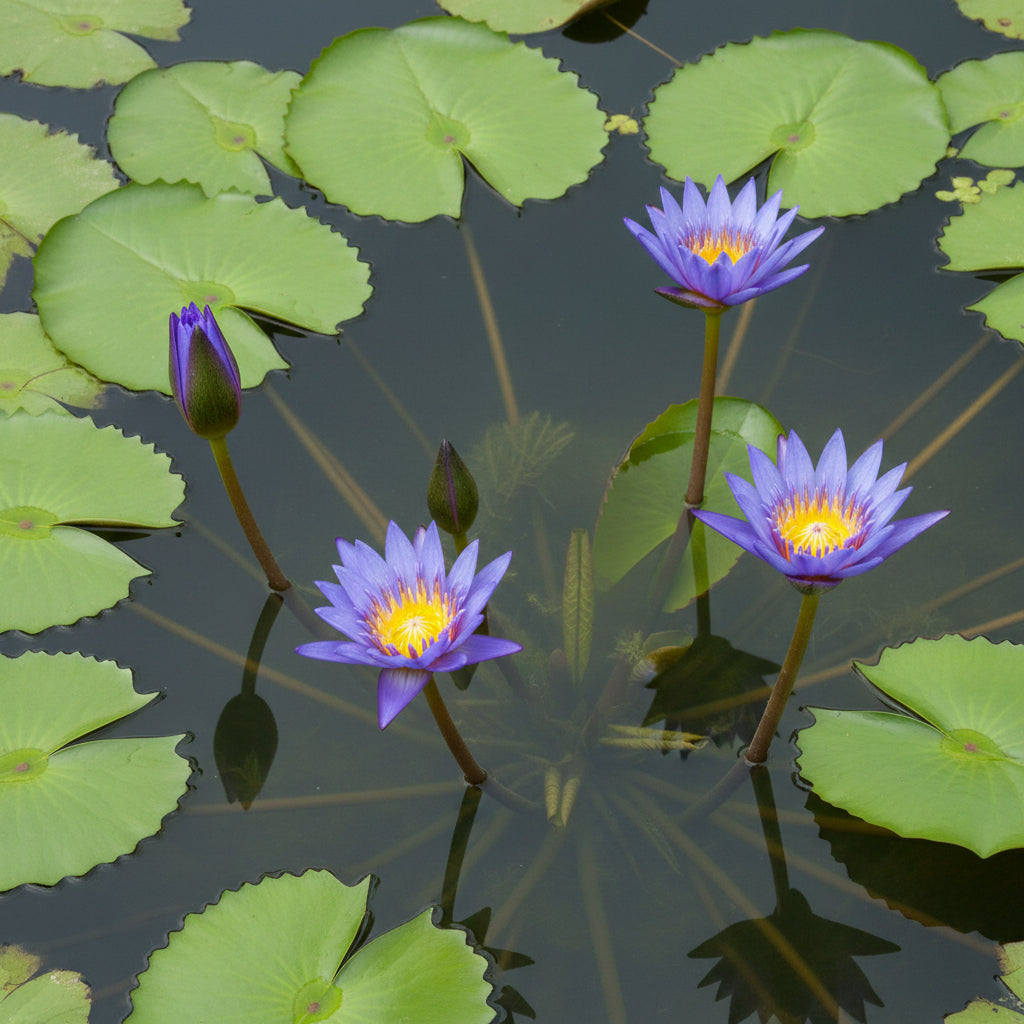
Blue Lotus — also known as the “Egyptian Blue Water Lily” — is a tropical/subtropical aquatic plant revered for its tranquil beauty, historic symbolism, and striking blooms. Native to parts of Africa and adapted to still or slow-moving water, it creates floating mats of foliage and produces dramatic blue-violet flowers that open with the morning sunlight and close by afternoon, symbolizing renewal. Ideal for water gardens, ornamental ponds, patios with water features, or large containers; it adds serenity, lush greenery, and vibrant colour to aquatic landscapes with relative ease once established.

Planting information
planting-season

PLANTING SEASON

Spring

fruit-size

FRUIT SIZE

N/A

plant-height

PLANT HEIGHT

~20–30 cm

light-requirement

LIGHT REQUIREMENT

Full Sun

water-needs

WATER NEEDS

High

hardiness-zones

HARDINESS ZONES

Tropical

container-garden

CONTAINER GARDEN

Yes

plant-spacing

PLANT SPACING

45–60 cm

planting-depth

PLANTING DEPTH

15–45 cm

growing-conditions

GROWING CONDITIONS

Full sunlight

Coverage
Seed Count
Recommended Coverage
SEED COUNT
100
GTIN
036000141351

Frequently Asked Questions

1. Is Blue Lotus a true lotus or a water lily?

Despite the common name "Blue Lotus," this plant is botanically a water lily (Nymphaea caerulea), not a true lotus (Nelumbo species).

2. Is this product intended for tea, smoking, or consumption?

No. This product is sold strictly as an ornamental aquatic plant seed for water gardens and ponds, not for consumption or any other use.

3. Is Blue Lotus safe to grow around children and pets?

It is grown as an ornamental pond plant; general supervision is recommended around any plant, and this listing is for ornamental cultivation only.

4. How long does it take for Blue Lotus to establish and start flowering?

Established plants typically take a season or more to mature; patience is needed as seedlings develop lily pads before producing their first blooms.

5. Does Blue Lotus attract wildlife like fish or pollinators to a pond?

Yes, aquatic plants like this can attract pollinators such as bees, and provide shade/cover that benefits pond fish and wildlife.

6. Can Blue Lotus survive winter or cold climates outdoors?

No, it is frost-sensitive and tropical/subtropical in nature; in cooler climates it's best grown as a seasonal plant or moved indoors/protected during cold months.