


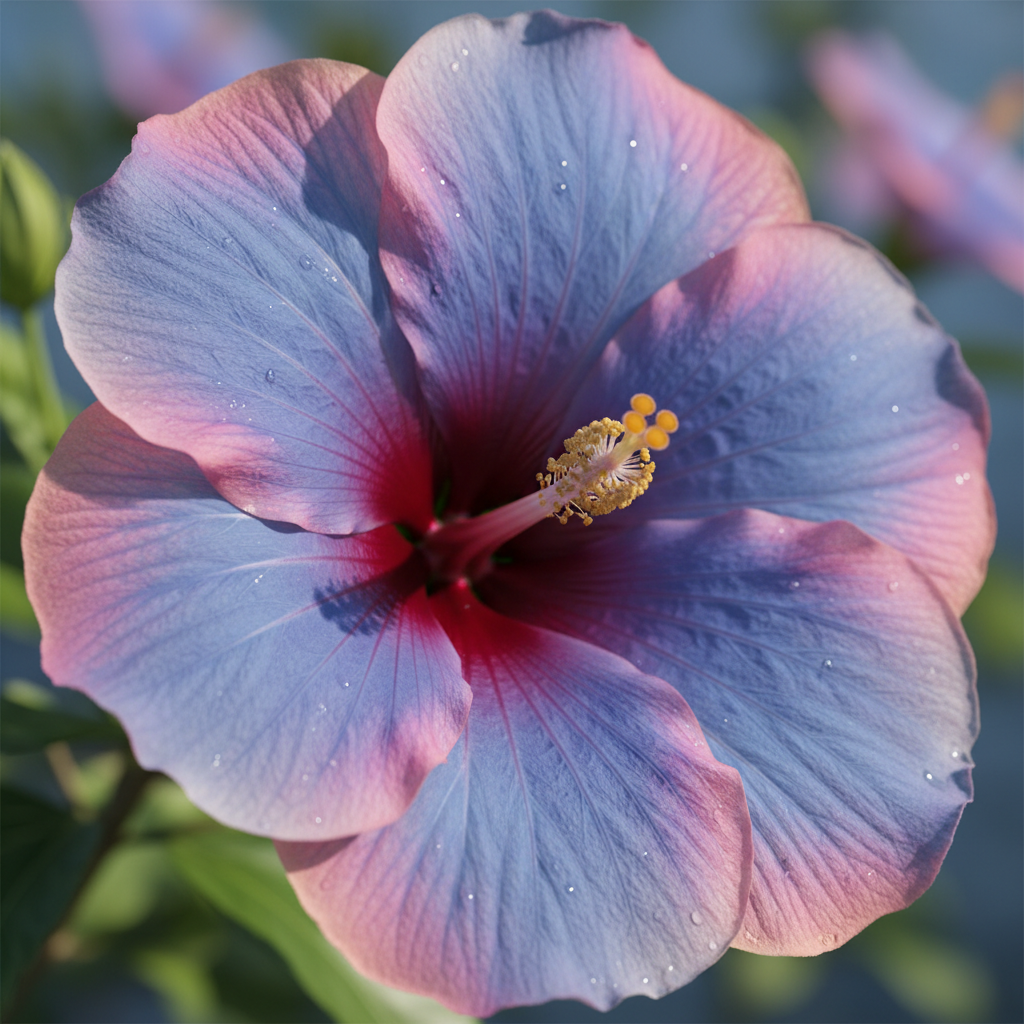

Life Cycle
Perennial

Plant Characteristics
Large giant blooms

Growth Habit
Shrubby upright growth

Bloom Season
Spring to Autumn

Flavour Profile
Ornamental

Suitable for
Outdoor

Planting Season
Spring–Summer

Fruit Size
N/A

Plant Height
120–240 cm

Light Requirement
Full Sun

Water Needs
Moderate

Hardiness Zones
USDA Zones 9–11

Container Garden
Yes

Plant Spacing
90–120 cm

Planting Depth
1–2 cm

Growing Conditions
Warm climate
Frequently Asked Questions
Can Blue Pink Hibiscus produce exceptionally large ornamental blooms?
Can Blue Pink Hibiscus produce exceptionally large ornamental blooms?
Yes. It is grown for its impressive, oversized flowers that create a bold focal point in tropical-style gardens.
Do the flower colors become more vibrant as the blooms mature?
Do the flower colors become more vibrant as the blooms mature?
Yes. The petals may develop richer blue-pink tones as the flowers fully open, depending on the variety and growing conditions.
Can Blue Pink Hibiscus be grown in large patio containers?
Can Blue Pink Hibiscus be grown in large patio containers?
Yes. It grows well in spacious containers with fertile, well-drained soil and plenty of sunlight.
Will regular pruning encourage a fuller, bushier plant?
Will regular pruning encourage a fuller, bushier plant?
Yes. Light pruning promotes branching, helping maintain a compact shape and supporting continued flowering.
Can the flowers attract butterflies and other pollinators?
Can the flowers attract butterflies and other pollinators?
Yes. The large nectar-rich blooms attract butterflies, bees, and other beneficial pollinating insects.
How is Blue Pink Hibiscus different from Rose of Sharon?
How is Blue Pink Hibiscus different from Rose of Sharon?
Blue Pink Hibiscus is typically grown as a tropical or subtropical ornamental with large exotic blooms, while Rose of Sharon (Hibiscus syriacus) is a hardy deciduous shrub that flowers during summer.