


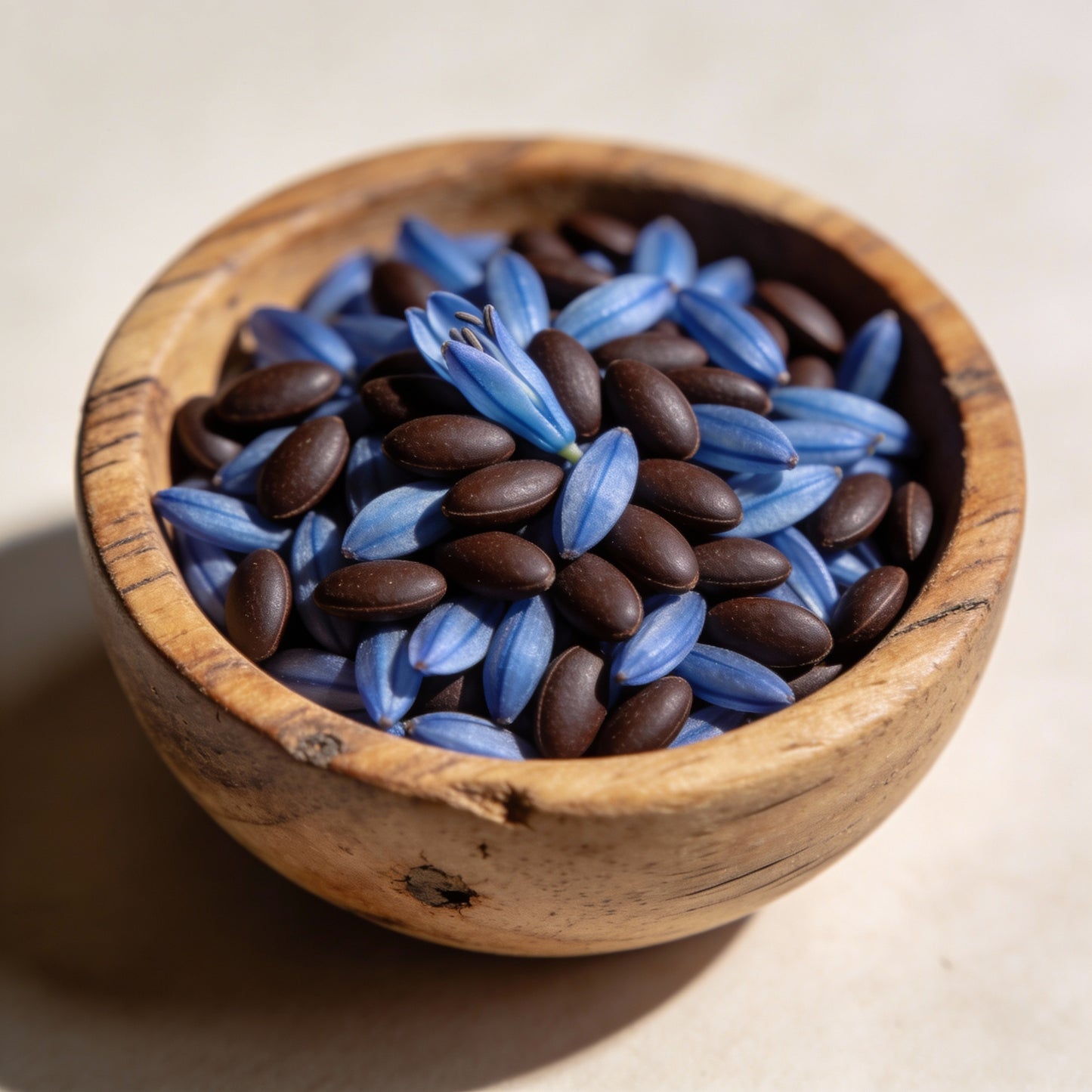

Life Cycle
Perennial

Plant Characteristics
Blue stars

Growth Habit
Clump forming

Bloom Season
Spring summer

Flavour Profile
Not edible

Suitable for
Outdoor

Planting Season
Spring

Fruit Size
Not applicable

Plant Height
40–60 cm

Light Requirement
Full Sun

Water Needs
Moderate

Hardiness Zones
8–11

Container Garden
Yes

Plant Spacing
25–30 cm

Planting Depth
Surface sow

Growing Conditions
Well drained soil
Frequently Asked Questions
Can Blue Tinsel Lily and Anguligar be grown in separate containers?
Can Blue Tinsel Lily and Anguligar be grown in separate containers?
Yes. Since the two plants have different watering and growing requirements, growing them in separate containers makes care easier.
Do Anguligar flowers open during the daytime?
Do Anguligar flowers open during the daytime?
No. Anguligar, also known as Fishbone Cactus, typically produces fragrant blooms that open at night and close by the following day.
Can the trailing Anguligar plant be trained to climb?
Can the trailing Anguligar plant be trained to climb?
Yes. With a trellis or support, Anguligar can be guided upward, or it can be allowed to trail naturally from hanging baskets.
Will the Blue Tinsel Lily return each growing season?
Will the Blue Tinsel Lily return each growing season?
Yes. Blue Tinsel Lily is a perennial bulb that can return each season when grown under suitable conditions.
Can these two plants create contrasting garden displays?
Can these two plants create contrasting garden displays?
Yes. The upright blue flowers of Blue Tinsel Lily and the cascading stems of Anguligar create an attractive combination of height and texture.
Do both plants attract the same pollinators?
Do both plants attract the same pollinators?
Not always. Blue Tinsel Lily is commonly visited by daytime pollinators, while the night-blooming Anguligar may attract nighttime pollinators depending on the local environment.