


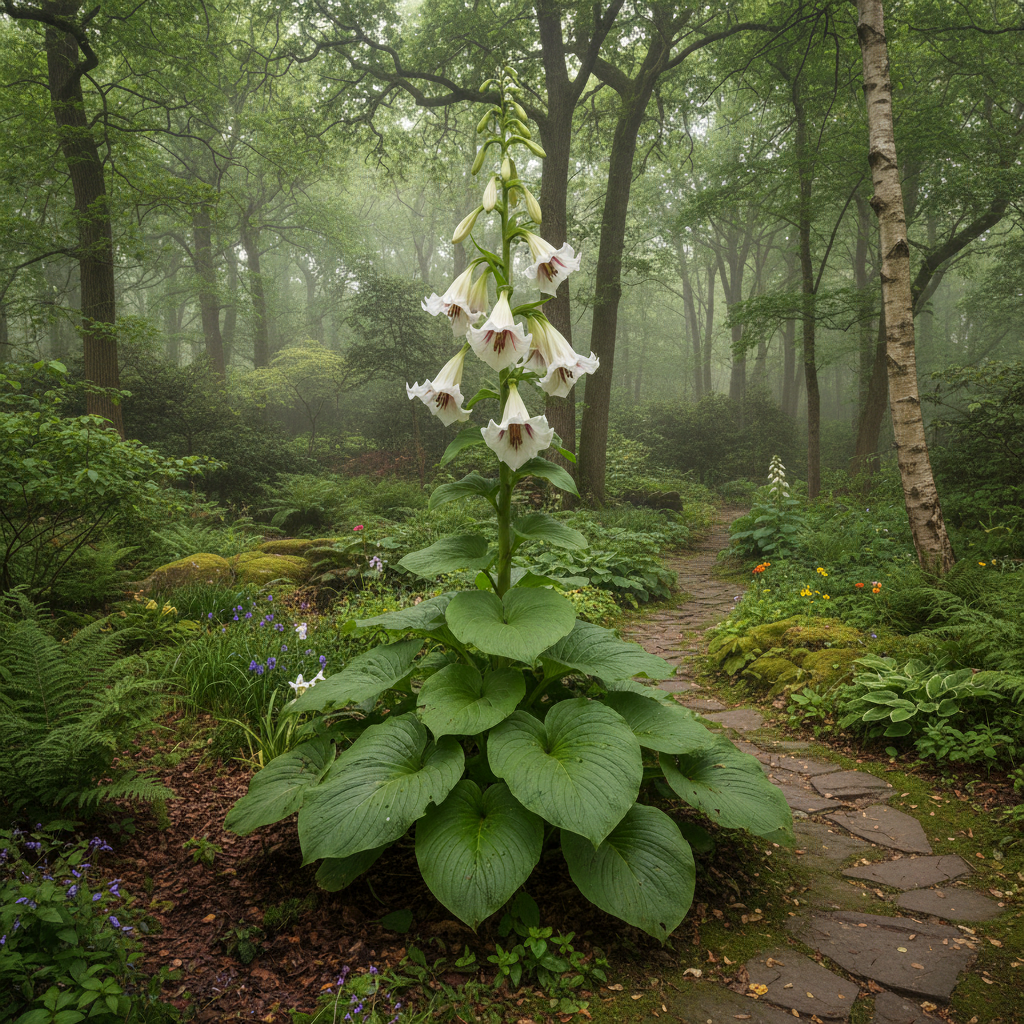

Life Cycle
Perennial

Plant Characteristics
Giant blooms

Growth Habit
Upright tall

Bloom Season
Late spring

Flavour Profile
Ornamental

Suitable for
Outdoor

Seed Type
Open pollinated

Plant Type
Flowering perennial

Planting Season
Spring

Fruit Size
N/A

Plant Height
2 to 4 meters

Light Requirement
Partial shade

Water Needs
Moderate

Hardiness Zones
USDA 5 to 8

Container Garden

Plant Spacing
90 to 120 cm

Planting Depth
1 cm

Growing Conditions
Cool climate
Frequently Asked Questions
Why is Cardiocrinum giganteum called the Giant Himalayan Lily?
Why is Cardiocrinum giganteum called the Giant Himalayan Lily?
It produces impressive tall flower stems that create a dramatic focal point in woodland and shade gardens.
Can it be planted beneath tall trees?
Can it be planted beneath tall trees?
Yes. Filtered sunlight beneath deciduous trees provides suitable growing conditions.
Which companion plants pair well with Giant Himalayan Lily?
Which companion plants pair well with Giant Himalayan Lily?
Ferns, hostas, astilbes, and woodland primulas create elegant shaded displays.
Does it add architectural height to gardens?
Does it add architectural height to gardens?
Yes. Tall flowering stems provide strong vertical structure in perennial borders.
Can it become a woodland feature plant?
Can it become a woodland feature plant?
Yes. Its impressive size makes it an eye-catching specimen in shaded landscapes.
Does mulch benefit its root zone?
Does mulch benefit its root zone?
Organic mulch helps conserve soil moisture and maintain cooler growing conditions.