



LIFE CYCLE
Perennial

PLANT CHARACTERISTICS
Hardy / Long-Lived

GROWTH HABIT
Upright / Spreading Canopy

BLOOM SEASON
Spring

FLAVOUR PROFILE
Ornamental

SUITABLE FOR
Outdoor

SEED TYPE
Non-GMO

PLANT TYPE
Deciduous Tree

PLANTING SEASON
Fall / Early Spring

FRUIT SIZE
Large

PLANT HEIGHT
50–80 feet

LIGHT REQUIREMENT
Full Sun

WATER NEEDS
Moderate

HARDINESS ZONES
4–8

CONTAINER GARDEN
No

PLANT SPACING
25–40 feet

PLANTING DEPTH
2–5 cm

GROWING CONDITIONS
Well-drained soil
Frequently Asked Questions
Why is Chestnut Oak better suited to open landscapes?
Why is Chestnut Oak better suited to open landscapes?
Its mature height and broad spreading canopy require substantial long-term space, making open landscapes more suitable than confined garden areas.
Can Chestnut Oak be planted near a house?
Can Chestnut Oak be planted near a house?
It is better positioned well away from buildings because the tree develops a large canopy and deep root system.
Why is transplanting established Chestnut Oak difficult?
Why is transplanting established Chestnut Oak difficult?
The tree develops a deep root system, so planting the acorn in its intended location helps avoid disturbance later.
How can Chestnut Oak support a wildlife-friendly landscape?
How can Chestnut Oak support a wildlife-friendly landscape?
Once established, the oak can provide habitat and food resources that contribute to a diverse outdoor landscape.
What makes Chestnut Oak suitable for rocky soil?
What makes Chestnut Oak suitable for rocky soil?
The product describes it as adaptable to poor or rocky soils when drainage is suitable.
How can the acorn be positioned when sowing?
How can the acorn be positioned when sowing?
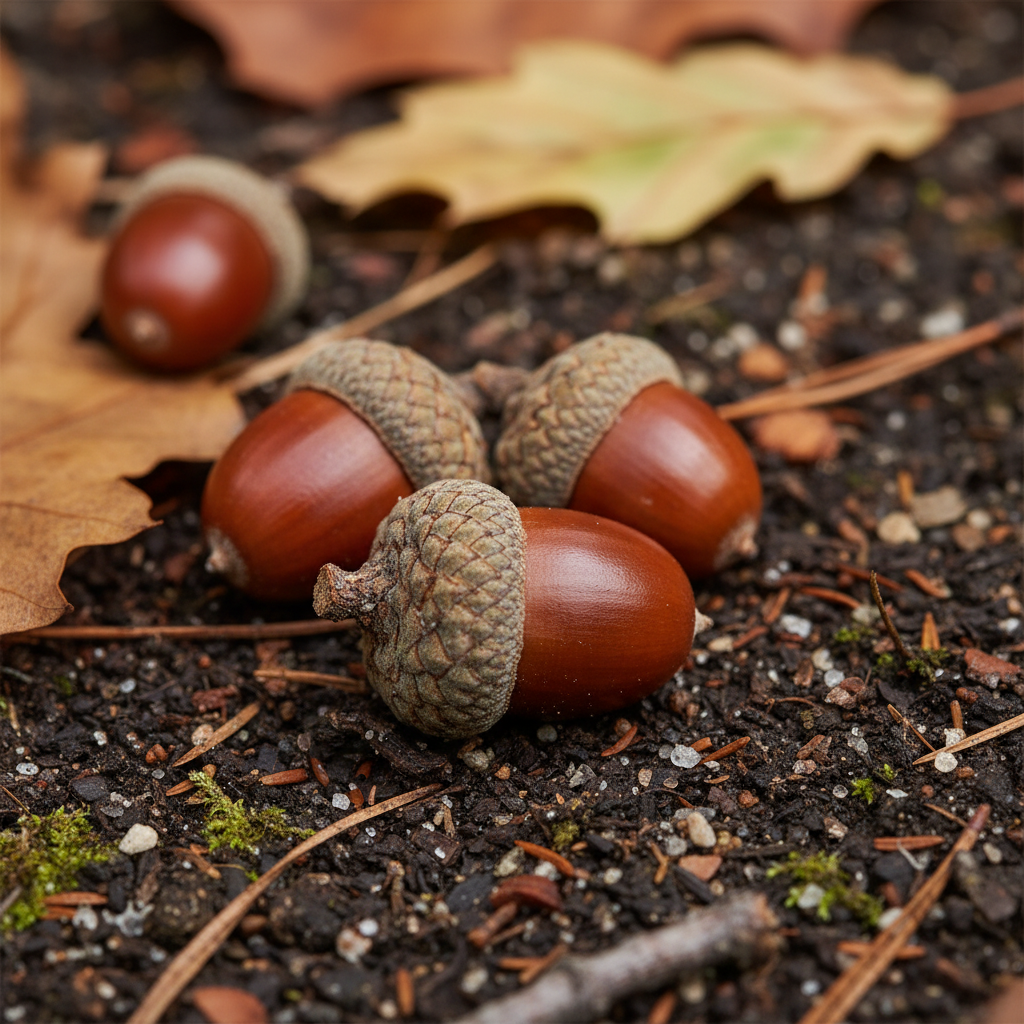
Plant the acorn 2–5 cm deep with its pointed end facing sideways, then keep the soil moist without waterlogging.