


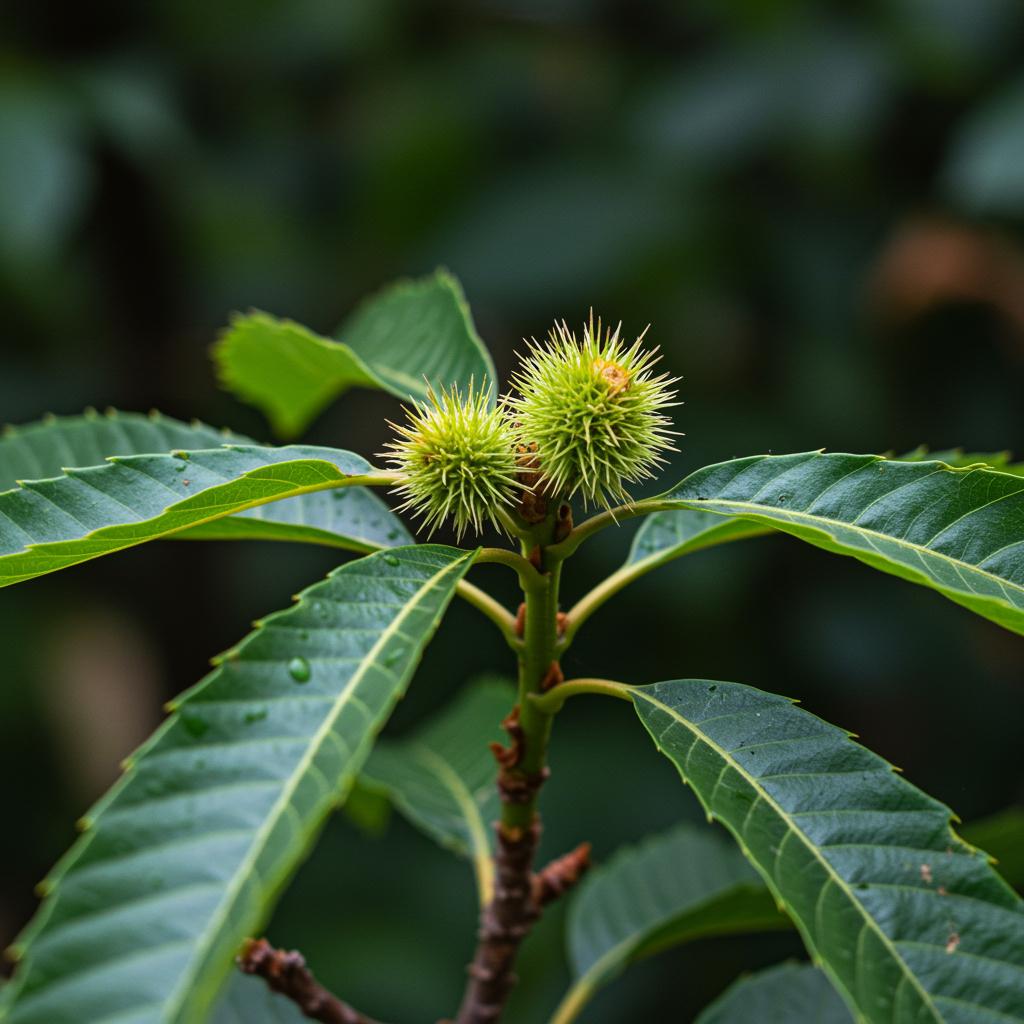

LIFE CYCLE
Deciduous perennial

PLANT CHARACTERISTICS
Compact woody

GROWTH HABIT
small tree

BLOOM SEASON
Spring

FLAVOUR PROFILE
Nutty

SUITABLE FOR
Outdoor

SEED TYPE
Non-GMO

PLANT TYPE
Deciduous nut

PLANTING SEASON
Spring

FRUIT SIZE
0.8–1 inch

PLANT HEIGHT
8–15 ft

LIGHT REQUIREMENT
Full Sun

WATER NEEDS
Moderate

HARDINESS ZONES
USDA 5–9

CONTAINER GARDEN
Yes

PLANT SPACING
6–10 ft

PLANTING DEPTH
1–2 inches

GROWING CONDITIONS
Well-drained soil
Frequently Asked Questions
Can Chinquapin Chestnut be grown as a compact landscape tree?
Can Chinquapin Chestnut be grown as a compact landscape tree?
Yes, its smaller stature compared with many chestnut trees can make it suitable for landscapes where a moderate-sized nut tree is preferred
How does Chinquapin Chestnut develop its canopy?
How does Chinquapin Chestnut develop its canopy?
It can develop a branching, rounded form as it matures, providing both foliage structure and seasonal interest in an open landscape
Can Chinquapin Chestnut be planted near other nut trees?
Can Chinquapin Chestnut be planted near other nut trees?
Yes, it can be included in a mixed orchard or nut-tree planting when adequate spacing is provided for mature canopy development
What type of landscape setting suits Chinquapin Chestnut?
What type of landscape setting suits Chinquapin Chestnut?
Open lawns, woodland edges, native-style plantings, and mixed edible landscapes can provide suitable settings where the tree has enough space to develop
How should the area around a young Chinquapin Chestnut be maintained?
How should the area around a young Chinquapin Chestnut be maintained?
Keeping competing weeds and dense vegetation away from the young tree can reduce competition while its root system and canopy become established
Can Chinquapin Chestnut provide seasonal interest beyond its nuts?
Can Chinquapin Chestnut provide seasonal interest beyond its nuts?
Yes, its foliage, branching structure, flowering period, and developing burrs can contribute different visual features throughout the growing season