



LIFE CYCLE
Perennial

PLANT CHARACTERISTICS
Colorful climber

GROWTH HABIT
Climbing vine

BLOOM SEASON
Spring

FLAVOUR PROFILE
Ornamental

SUITABLE FOR
Outdoor

PLANTING SEASON
Spring

FRUIT SIZE
N/A

PLANT HEIGHT
200–300 cm

LIGHT REQUIREMENT
Full sun

WATER NEEDS
Moderate

HARDINESS ZONES
4–9

CONTAINER GARDEN
Yes

PLANT SPACING
90–120 cm

PLANTING DEPTH
1–2 cm

GROWING CONDITIONS
Well-drained soil
Frequently Asked Questions
Does Clematis need a support structure while growing? Yes. Clematis is a climbing plant and grows best when given a trellis, arch, fence or other suitable support. Can Clematis be grown in a large container? Yes. A large container with good drainage and a sturdy support can accommodate Clematis while allowing the vine to climb. How can Clematis be trained along a garden fence? Guide young stems toward the fence or trellis and gently secure them until the plant begins climbing naturally. Does Clematis prefer its roots to stay cool? Yes. Clematis generally benefits from shaded or protected root areas while the upper growth receives suitable light. Can mixed Clematis colors vary between plants? Yes. A mixed-color seed collection can produce flowers with varying colors and forms depending on the plants grown. What garden feature is best for displaying Clematis flowers? Vertical structures such as arches, pergolas and trellises provide a practical way to display its climbing growth and flowers.
Does Clematis need a support structure while growing? Yes. Clematis is a climbing plant and grows best when given a trellis, arch, fence or other suitable support. Can Clematis be grown in a large container? Yes. A large container with good drainage and a sturdy support can accommodate Clematis while allowing the vine to climb. How can Clematis be trained along a garden fence? Guide young stems toward the fence or trellis and gently secure them until the plant begins climbing naturally. Does Clematis prefer its roots to stay cool? Yes. Clematis generally benefits from shaded or protected root areas while the upper growth receives suitable light. Can mixed Clematis colors vary between plants? Yes. A mixed-color seed collection can produce flowers with varying colors and forms depending on the plants grown. What garden feature is best for displaying Clematis flowers? Vertical structures such as arches, pergolas and trellises provide a practical way to display its climbing growth and flowers.
Yes. Clematis is a climbing plant and grows best when given a trellis, arch, fence or other suitable support.
Can Clematis be grown in a large container?
Can Clematis be grown in a large container?
Yes. A large container with good drainage and a sturdy support can accommodate Clematis while allowing the vine to climb.
How can Clematis be trained along a garden fence?
How can Clematis be trained along a garden fence?
Guide young stems toward the fence or trellis and gently secure them until the plant begins climbing naturally.
Does Clematis prefer its roots to stay cool?
Does Clematis prefer its roots to stay cool?
Yes. Clematis generally benefits from shaded or protected root areas while the upper growth receives suitable light.
Can mixed Clematis colors vary between plants?
Can mixed Clematis colors vary between plants?
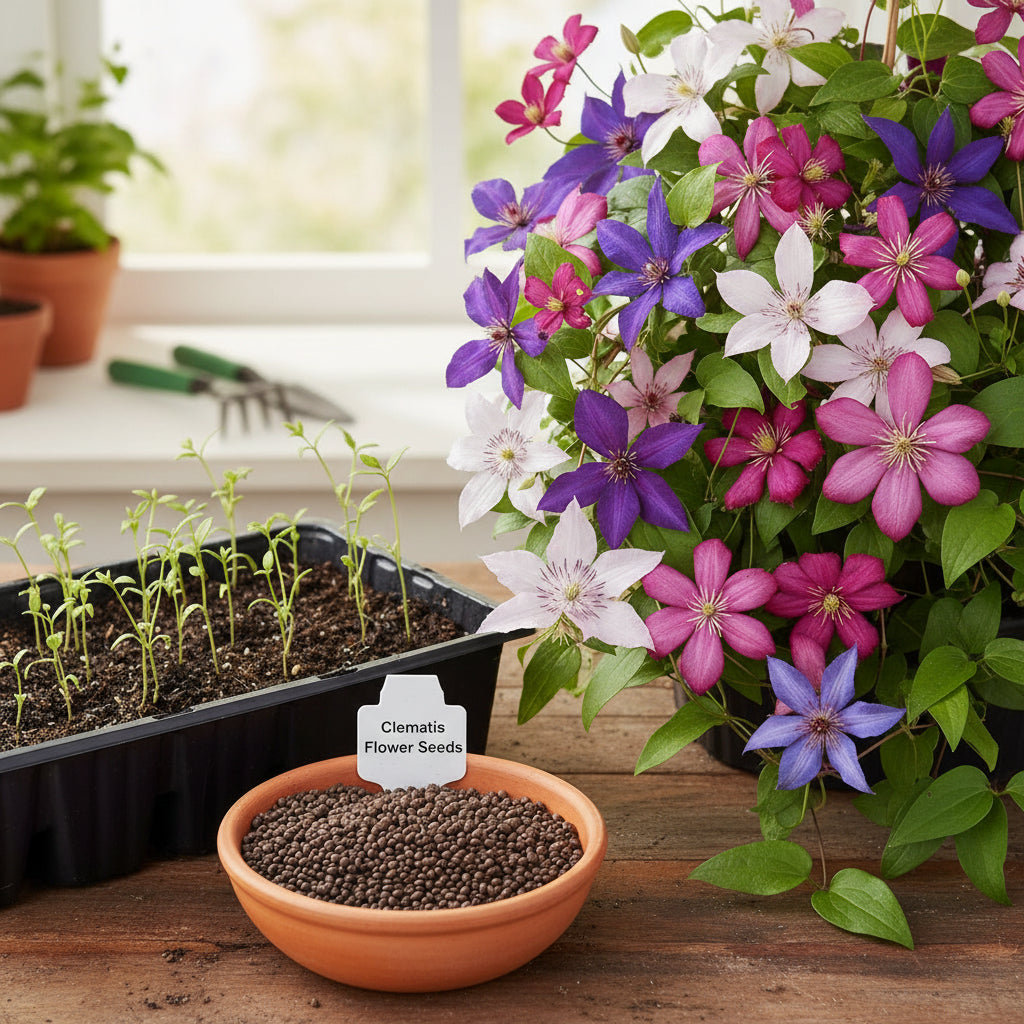
Yes. A mixed-color seed collection can produce flowers with varying colors and forms depending on the plants grown.
What garden feature is best for displaying Clematis flowers?
What garden feature is best for displaying Clematis flowers?
Vertical structures such as arches, pergolas and trellises provide a practical way to display its climbing growth and flowers.