



LIFE CYCLE
Perennial

PLANT CHARACTERISTICS
Large tropical

GROWTH HABIT
Fast-growing

BLOOM SEASON
Spring to early summer

FLAVOUR PROFILE
Mildly sweet

SUITABLE FOR
out door

PLANTING SEASON
Spring to Monsoon

FRUIT SIZE
Medium

PLANT HEIGHT
10–15 m

LIGHT REQUIREMENT
full sun

WATER NEEDS
Moderate

HARDINESS ZONES
USDA Zones 10–12

CONTAINER GARDEN
Suitable ( Early Stage)

PLANT SPACING
6–8 m

PLANTING DEPTH
Shallow

GROWING CONDITIONS
Warm climate
Frequently Asked Questions
Can Cluster Fig produce unique clusters of figs directly on its trunk and branches?
Can Cluster Fig produce unique clusters of figs directly on its trunk and branches?
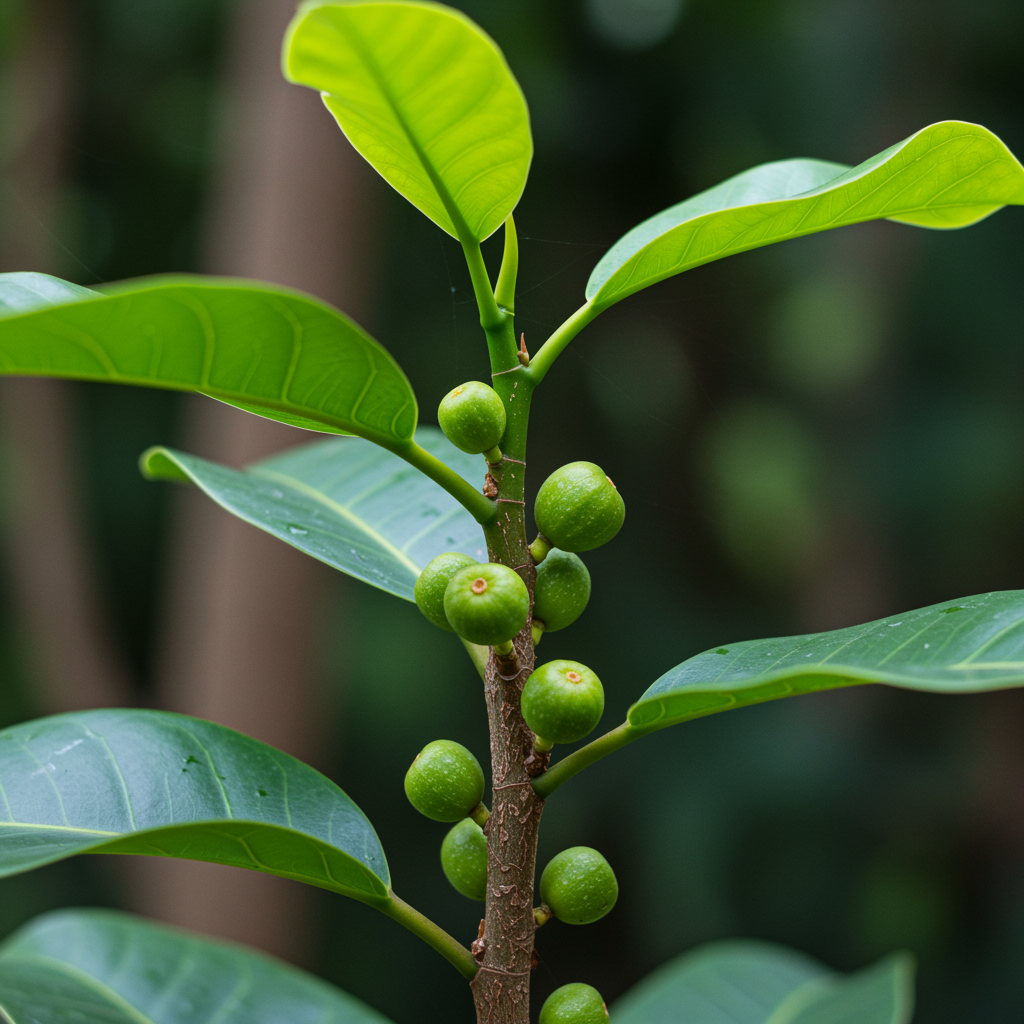
Yes. Cluster Fig is well known for producing distinctive clusters of rounded figs that develop directly on the trunk and older branches, creating a striking ornamental display.
Do the flowers support beneficial fig wasps and local wildlife?
Do the flowers support beneficial fig wasps and local wildlife?
Yes. The specialized fig structures support their natural pollination process and the fruits provide an important food source for birds and other wildlife.
Can Cluster Fig be grown as a shade or landscape tree?
Can Cluster Fig be grown as a shade or landscape tree?
Yes. It is well suited for large gardens, parks, orchards, and landscape plantings where it has ample space to develop its broad canopy.
Will occasional pruning help maintain a healthy tree structure?
Will occasional pruning help maintain a healthy tree structure?
Yes. Light pruning helps remove damaged branches, improves air circulation, and encourages a strong, balanced canopy.
Can the ripe fruits be enjoyed or used in homemade recipes?
Can the ripe fruits be enjoyed or used in homemade recipes?
Yes. Fully ripe fruits can be eaten fresh and are also suitable for jams, preserves, chutneys, and other traditional culinary preparations.
How is Cluster Fig different from Common Fig?
How is Cluster Fig different from Common Fig?
Cluster Fig (Ficus racemosa) produces its fruits in dense clusters directly on the trunk and main branches, while Common Fig (Ficus carica) bears larger individual fruits mainly along the younger branches and is widely cultivated for fresh and dried fruit production.