



Life Cycle
Perennial

Plant Characteristics
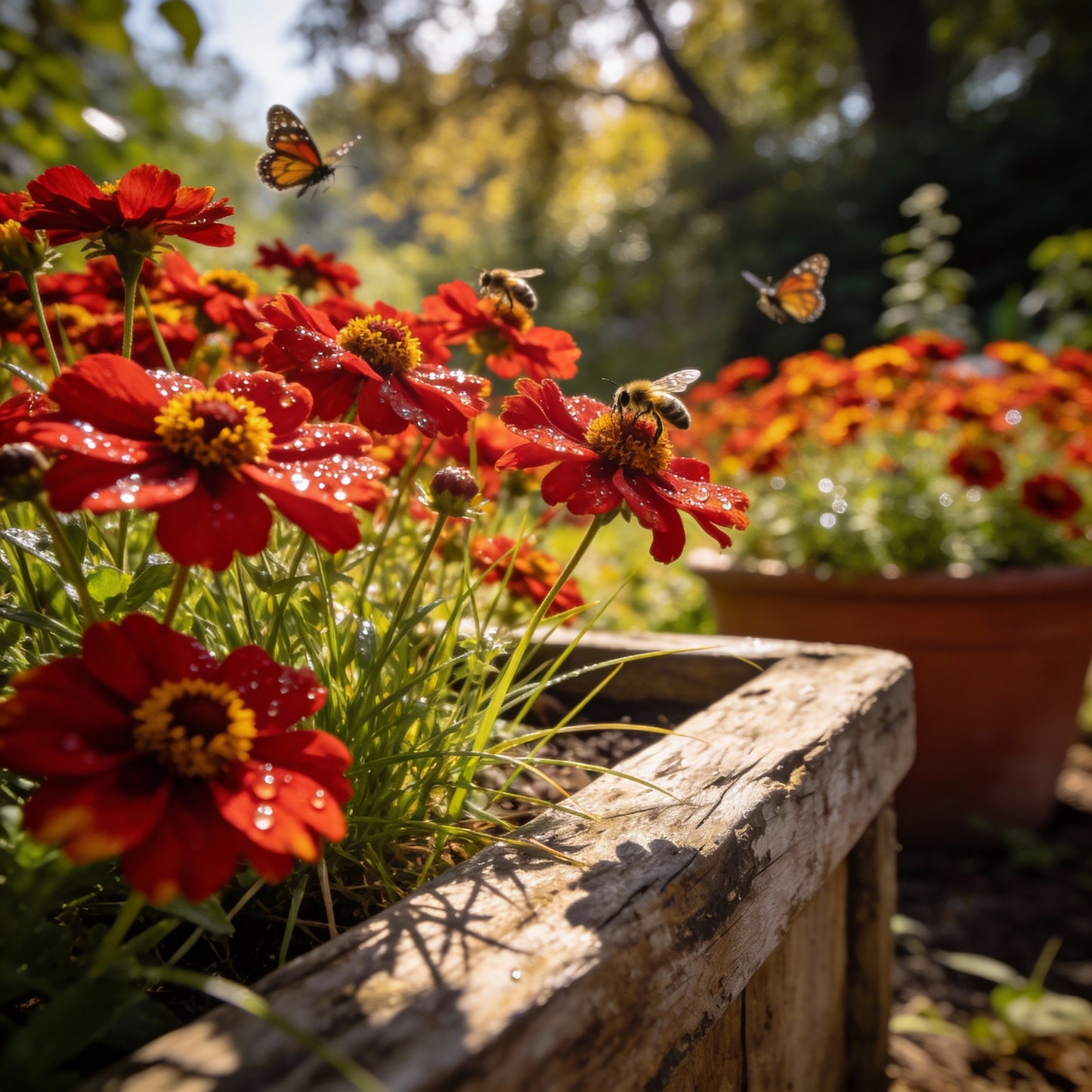
Red blooms

Growth Habit
Clump forming

Bloom Season
Summer

Flavour Profile
Not edible

Suitable for
Outdoor

Seed Type
Open Pollinated

Plant Type
Flowering Plant

Planting Season
Spring

Fruit Size
Not applicable

Plant Height
30–60 cm

Light Requirement
Full Sun

Water Needs
Low moderate

Hardiness Zones
4–9

Container Garden
Yes

Plant Spacing
25–30 cm

Planting Depth
Surface sow

Growing Conditions
Well drained soil
Frequently Asked Questions
What makes red coreopsis different from yellow varieties?
What makes red coreopsis different from yellow varieties?
Its rich red blooms provide bold contrast while retaining the light, airy flowering habit of coreopsis.
Can it be planted in sunny border gardens?
Can it be planted in sunny border gardens?
Yes. It performs well in borders, cottage gardens, and naturalistic perennial plantings.
Which flowers pair well with red coreopsis?
Which flowers pair well with red coreopsis?
Purple salvia, white daisies, lavender, and ornamental grasses create balanced combinations.
Are the blooms suitable for cut flower arrangements?
Are the blooms suitable for cut flower arrangements?
Yes. Fresh flowers can be used in seasonal bouquets and decorative floral displays.
Can it create colorful mass plantings?
Can it create colorful mass plantings?
Yes. Groups of plants provide vibrant seasonal color across sunny landscapes.
Do butterflies visit the flowers?
Do butterflies visit the flowers?
The nectar-rich blooms may attract butterflies, bees, and other beneficial pollinating insects.