



Life Cycle
Annual

Plant Characteristics
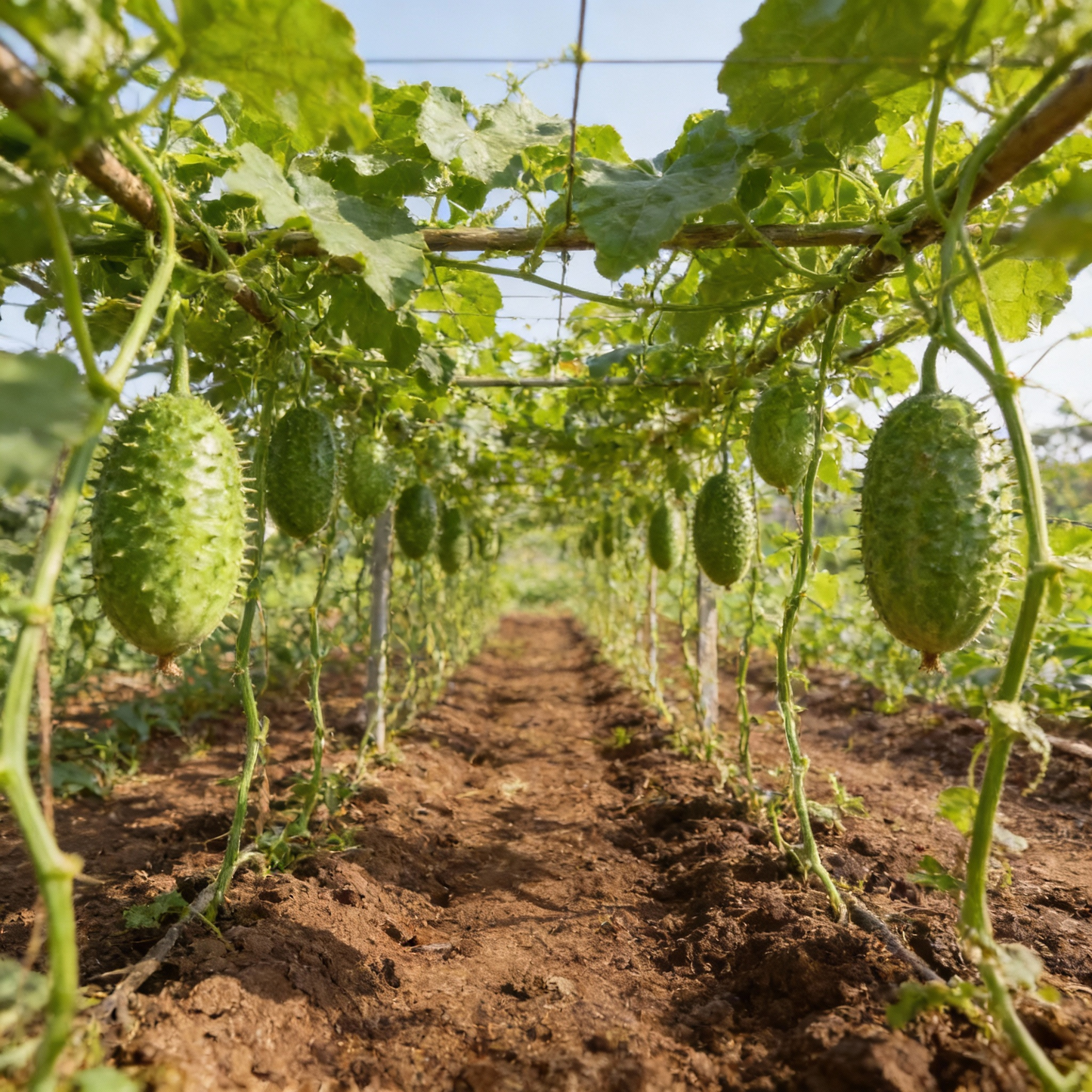
spiny fruits

Growth Habit
Vining

Bloom Season
Summer

Flavour Profile
tangy

Suitable for
Indoor/ out door

Seed Type
Non GMO

Planting Season
Spring

Fruit Size
Small

Plant Height
Medium

Light Requirement
Full Sun

Water Needs
Moderate

Hardiness Zones
9–11

Container Garden
30–40 cm

Plant Spacing
60–90 cm

Planting Depth
1–2 cm

Growing Conditions
20–30°C
Frequently Asked Questions
Can West Indian Gherkin be grown on a trellis?
Can West Indian Gherkin be grown on a trellis?
Yes. Training the vines on a sturdy trellis improves air circulation, saves space, and helps keep the fruits clean.
Do West Indian Gherkins have a naturally spiny fruit surface?
Do West Indian Gherkins have a naturally spiny fruit surface?
Yes. The small fruits are known for their distinctive spiny or prickly exterior, giving them a unique appearance.
Can the fruits be harvested young for pickling?
Can the fruits be harvested young for pickling?
Yes. Young, tender fruits are commonly harvested for pickling and other preserved preparations.
Will regular harvesting encourage more fruit production?
Will regular harvesting encourage more fruit production?
Yes. Picking mature fruits frequently encourages the vines to continue flowering and setting additional fruits.
Can West Indian Gherkin be grown in large containers?
Can West Indian Gherkin be grown in large containers?
Yes. It performs well in spacious containers with fertile soil, regular watering, and a climbing support.
How is West Indian Gherkin different from standard cucumber?
How is West Indian Gherkin different from standard cucumber?
West Indian Gherkin produces smaller, spiny fruits on vigorous vines, while standard cucumbers generally produce larger, smooth-skinned fruits for fresh slicing.