



Life Cycle
Perennial

Plant Characteristics
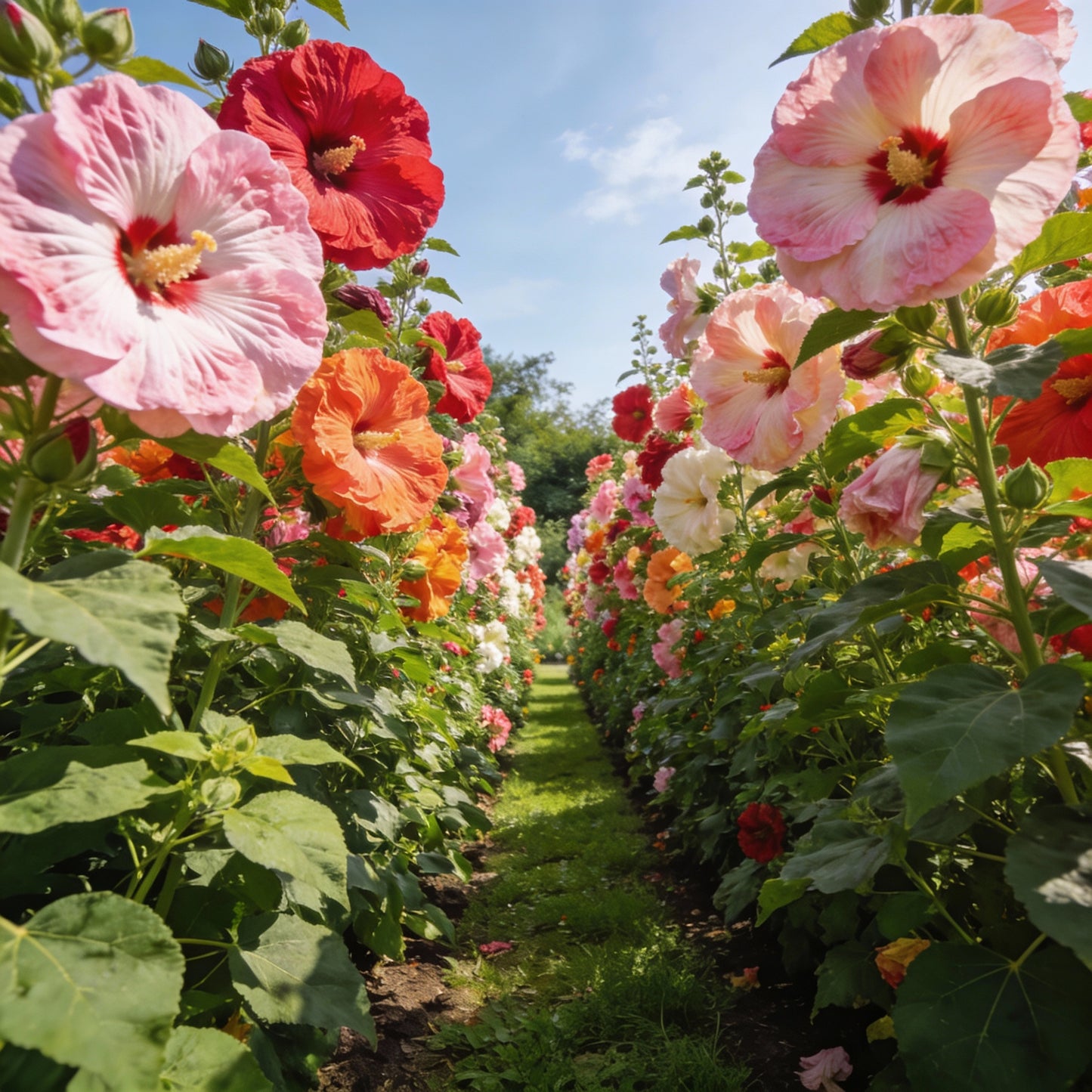
Giant blooms

Growth Habit
Upright bushy

Bloom Season
Summer autumn

Flavour Profile
Not edible

Suitable for
Outdoor

Seed Type
Open Pollinated

Plant Type
Flowering Plant

Planting Season
Spring

Fruit Size
Not applicable

Plant Height
120–180 cm

Light Requirement
Full Sun

Water Needs
High

Hardiness Zones
5–9

Container Garden
Yes

Plant Spacing
90–120 cm

Planting Depth
2–3 cm

Growing Conditions
Fertile well drained soil
Frequently Asked Questions
Why is it called Dinnerplate Hibiscus?
Why is it called Dinnerplate Hibiscus?
The name refers to its exceptionally large flowers, which create a bold focal point in ornamental landscapes.
Can it be planted as a feature plant?
Can it be planted as a feature plant?
Yes. Large blooms and upright growth make it an eye-catching specimen in garden beds.
Which companion plants pair well with Dinnerplate Hibiscus?
Which companion plants pair well with Dinnerplate Hibiscus?
Cannas, ornamental grasses, salvias, and daylilies complement its dramatic flowers.
Does it provide height in perennial borders?
Does it provide height in perennial borders?
Yes. Mature plants add vertical structure and seasonal color to mixed plantings.
Can the flowers attract pollinators?
Can the flowers attract pollinators?
The large blooms may attract bees, butterflies, and other beneficial pollinating insects.
Does it suit waterside landscapes?
Does it suit waterside landscapes?
Yes. It performs well in ornamental gardens with consistently moist soil conditions.