


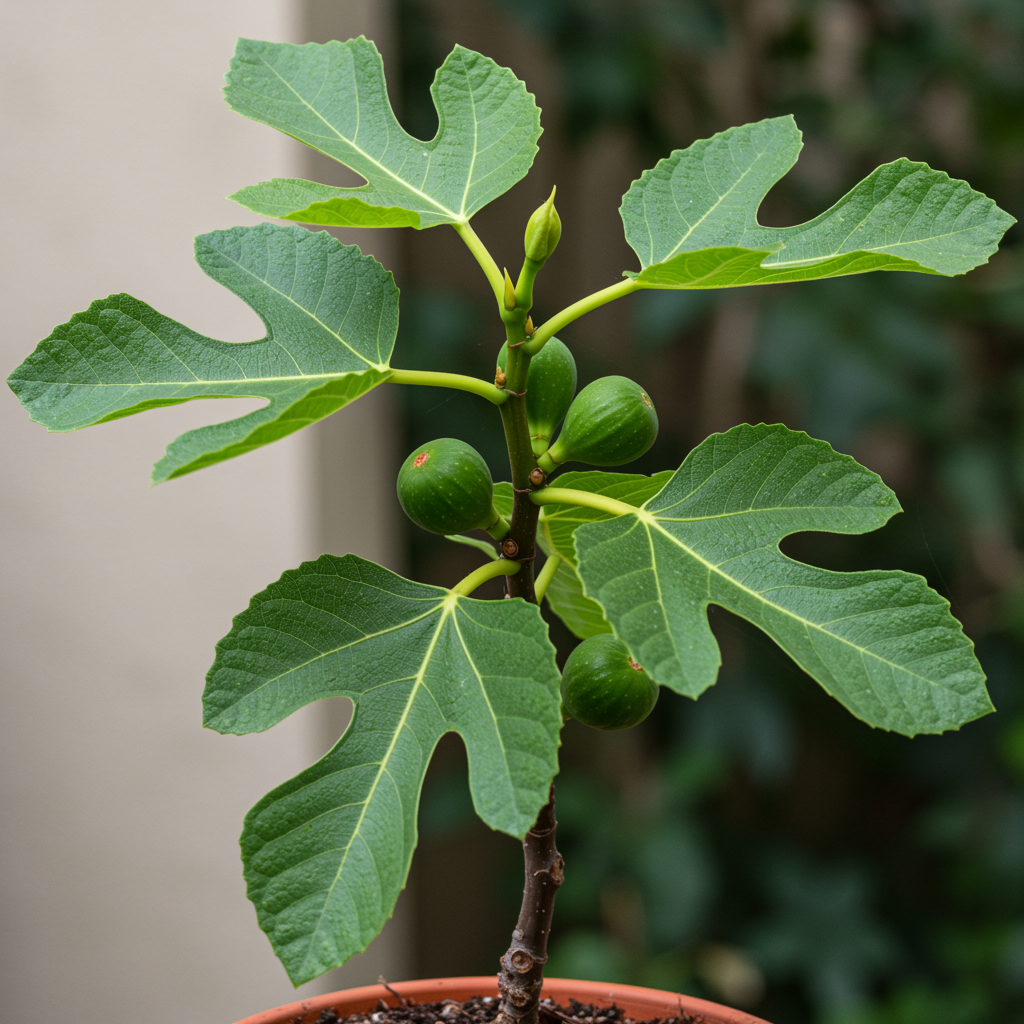

LIFE CYCLE
Perennial

PLANT CHARACTERISTICS
Compact fruit

GROWTH HABIT
Bushy compact

BLOOM SEASON
Spring to Summer

FLAVOUR PROFILE
Sweet

SUITABLE FOR
out door

PLANTING SEASON
Spring

FRUIT SIZE
Medium (2–3 inches)

PLANT HEIGHT
1.5–3 m

LIGHT REQUIREMENT
Full Sun

WATER NEEDS
Moderate

HARDINESS ZONES
USDA 8–11

CONTAINER GARDEN
Yes

PLANT SPACING
1.5–2 m

PLANTING DEPTH
Surface sow

GROWING CONDITIONS
Warm
Frequently Asked Questions
Why are dwarf figs useful for small gardens?
Why are dwarf figs useful for small gardens?
Their compact growth habit makes them more practical for restricted spaces than larger fig forms, especially when grown in appropriately sized containers.
Can dwarf fig trees stay in containers permanently?
Can dwarf fig trees stay in containers permanently?
Yes, container cultivation is suitable when the container provides adequate drainage, root space and regular maintenance as the plant develops.
How can a dwarf fig be kept compact?
How can a dwarf fig be kept compact?
Light formative pruning can help maintain a manageable shape. Remove crowded or crossing branches and avoid excessive pruning that removes productive growth.
Where should a container fig be positioned?
Where should a container fig be positioned?
Place it in a sunny location with good air circulation. A sheltered patio or balcony can work well when adequate sunlight is available.
How should container-grown figs be watered?
How should container-grown figs be watered?
Water thoroughly when the growing medium begins to dry, allowing excess water to drain. Avoid prolonged waterlogging around the roots.
Does a dwarf fig lose its leaves seasonally?
Does a dwarf fig lose its leaves seasonally?
Yes. Figs are generally deciduous, so leaf drop during a cooler or dormant period is a normal part of their seasonal growth cycle.