



Life Cycle
Perennial

Plant Characteristics
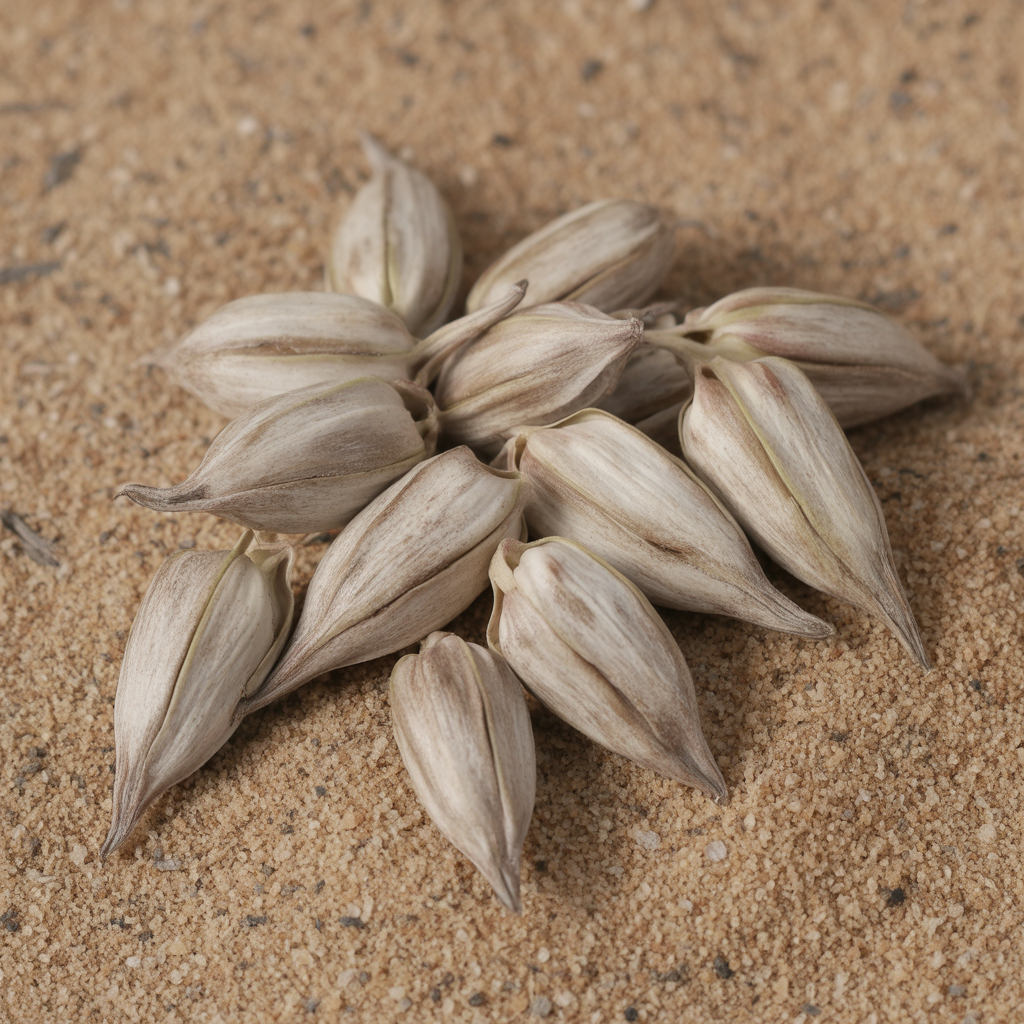
Silvery-white bracts

Growth Habit
Upright

Bloom Season
Summer

Flavour Profile
Not applicable

Suitable for
Outdoor

Seed Type
Non-GMO

Plant Type
Flowering Perennial

Planting Season
Spring or Autumn

Fruit Size
Not applicable

Plant Height
60–90 cm

Light Requirement
Full Sun

Water Needs
Low to Moderate

Hardiness Zones
5–8

Container Garden
Yes

Plant Spacing
45–60 cm

Planting Depth
Surface sow or lightly covered

Growing Conditions
Sunny location
Frequently Asked Questions
Can Eryngium giganteum 'Miss Willmott's Ghost' be used as a dried flower?
Can Eryngium giganteum 'Miss Willmott's Ghost' be used as a dried flower?
Yes. Its silvery bracts and sturdy stems dry well, making them popular for long-lasting floral arrangements and decorative displays.
Why is it called 'Miss Willmott's Ghost'?
Why is it called 'Miss Willmott's Ghost'?
The plant is named after horticulturist Ellen Willmott, who famously scattered its seeds in gardens, leading to its memorable nickname.
Will the silvery color remain attractive after flowering?
Will the silvery color remain attractive after flowering?
Yes. The metallic silver bracts continue to provide ornamental interest even after the flowers have faded.
Can this plant add structure to mixed perennial borders?
Can this plant add structure to mixed perennial borders?
Yes. Its upright stems and architectural flower heads create strong vertical accents in borders and naturalistic plantings.
Does Eryngium giganteum attract beneficial pollinators?
Does Eryngium giganteum attract beneficial pollinators?
Yes. The nectar-rich blooms are attractive to bees, butterflies, and other pollinating insects during the flowering season.
How is Eryngium giganteum different from sea holly?
How is Eryngium giganteum different from sea holly?
Eryngium giganteum is itself a type of sea holly, distinguished by its large cone-shaped flower heads and striking silvery-white bracts compared with many blue-flowered Eryngium species.