



Life Cycle
Perennial

Plant Characteristics
Aromatic

Growth Habit
Bushy

Bloom Season
Summer

Flavour Profile
Licorice-Anise

Suitable for
Outdoor

Planting Season
Spring

Fruit Size
N/A

Plant Height
60–90 cm

Light Requirement
Full Sun

Water Needs
Moderate

Hardiness Zones
4–9

Container Garden
Yes

Plant Spacing
30–45 cm

Planting Depth
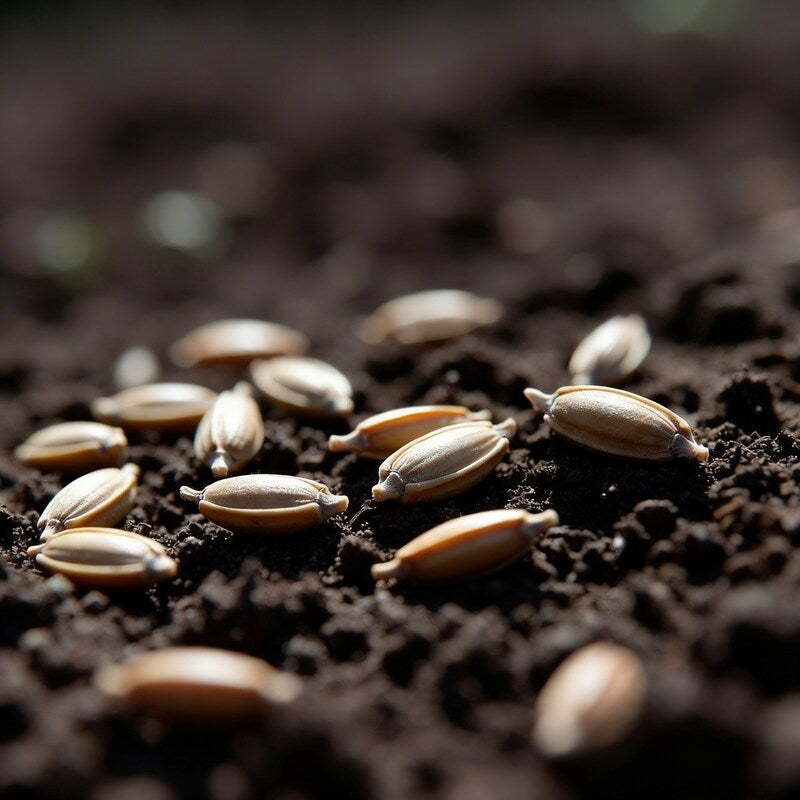
2–3 mm

Growing Conditions
Sunny Well-Drained
Frequently Asked Questions
How can I tell if I'm growing true French tarragon vs. Russian tarragon?
How can I tell if I'm growing true French tarragon vs. Russian tarragon?
True French tarragon has a strong, sweet anise flavor and narrower leaves, while Russian tarragon (a different variety) looks similar but tastes noticeably milder and less aromatic.
True French tarragon has a strong, sweet anise flavor and narrower leaves, while Russian tarragon (a different variety) looks similar but tastes noticeably milder and less aromatic.
True French tarragon has a strong, sweet anise flavor and narrower leaves, while Russian tarragon (a different variety) looks similar but tastes noticeably milder and less aromatic.
French tarragon is a classic hybrid often propagated by cuttings for guaranteed flavor consistency. Seed-grown plants can show some variation, so flavor intensity may differ slightly between plants.
Is tarragon related to wormwood used in absinthe?
Is tarragon related to wormwood used in absinthe?
Tarragon (Artemisia dracunculus) is in the same genus as wormwood (Artemisia absinthium), but it's a mild culinary herb without wormwood's distinct thujone-related reputation
Does French tarragon die back in winter, or stay evergreen?
Does French tarragon die back in winter, or stay evergreen?
It typically dies back to the ground in colder months within its hardiness range, then resprouts from the roots in spring as a returning perennial.
Can French tarragon be used as a substitute for anise or fennel in recipes?
Can French tarragon be used as a substitute for anise or fennel in recipes?
Its licorice-like flavor makes it a reasonable stand-in for a subtle anise note in sauces and dressings, though it has a distinct herbal quality rather than fennel's sweetness.
Do tarragon's summer flowers attract bees or pollinators?
Do tarragon's summer flowers attract bees or pollinators?
Its small yellow-green flowers are inconspicuous and produce little nectar, so tarragon isn't considered a notable pollinator plant compared to many flowering herbs.