



LIFE CYCLE
Perennial

PLANT CHARACTERISTICS
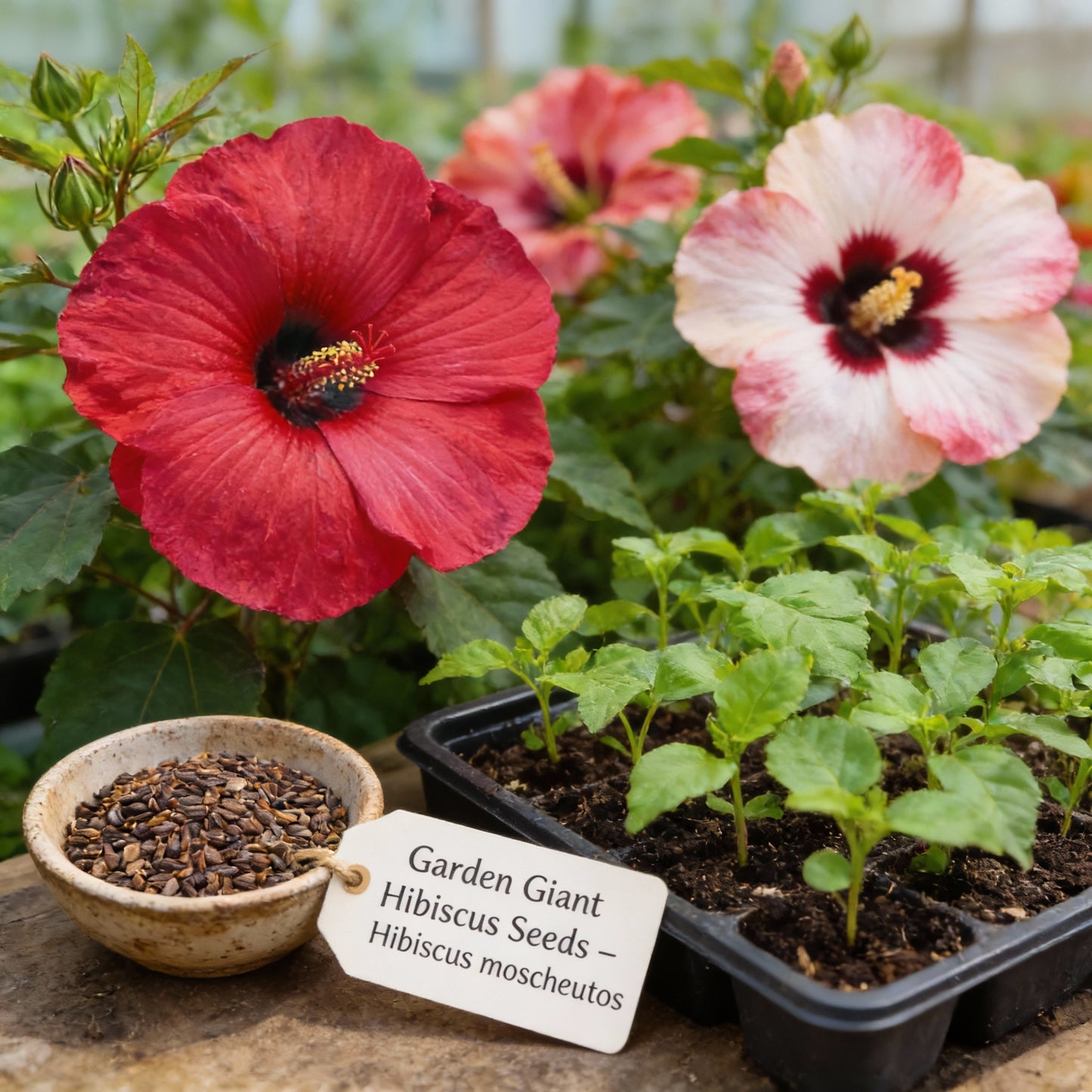
Large blooms

GROWTH HABIT
Upright bush

FLAVOUR PROFILE
Ornamental

BLOOM SEASON
Summer–Fall

SUITABLE FOR
Outdoor

PLANTING SEASON
Spring

FRUIT SIZE
N/A

PLANT HEIGHT
1.5–2.5 meters

LIGHT REQUIREMENT
Full sun

WATER NEEDS
Moderate

HARDINESS ZONES
5–9

CONTAINER GARDEN
Yes

PLANT SPACING
90–120 cm

PLANTING DEPTH
1 cm

GROWING CONDITIONS
Sunny moist
Frequently Asked Questions
Can Garden Giant Hibiscus produce exceptionally large “dinnerplate” flowers?
Can Garden Giant Hibiscus produce exceptionally large “dinnerplate” flowers?
Yes. Garden Giant Hibiscus is known for producing very large, showy blooms that can create a dramatic focal point in ornamental garden displays.
Does Garden Giant Hibiscus grow best in sunny conditions?
Does Garden Giant Hibiscus grow best in sunny conditions?
Yes. It generally performs well in full sun with fertile, well-drained soil and consistent moisture during active growth.
Will regular watering support healthy foliage and flowering?
Will regular watering support healthy foliage and flowering?
Yes. Consistent moisture during the growing season helps support vigorous foliage and flower development, while avoiding prolonged waterlogging helps protect the roots.
Can the large flowers be used for ornamental displays?
Can the large flowers be used for ornamental displays?
Yes. The oversized blooms make an attractive feature in flower beds, borders, and seasonal landscape displays.
Can the large flowers be used for ornamental displays?
Can the large flowers be used for ornamental displays?
Yes. The oversized blooms make an attractive feature in flower beds, borders, and seasonal landscape displays.
How is Garden Giant Hibiscus different from standard Hibiscus?
How is Garden Giant Hibiscus different from standard Hibiscus?
Garden Giant Hibiscus (Hibiscus species) is selected for exceptionally large, dinnerplate-sized flowers, while standard Hibiscus varieties can have smaller blooms and a wider range of plant sizes and flower forms.