


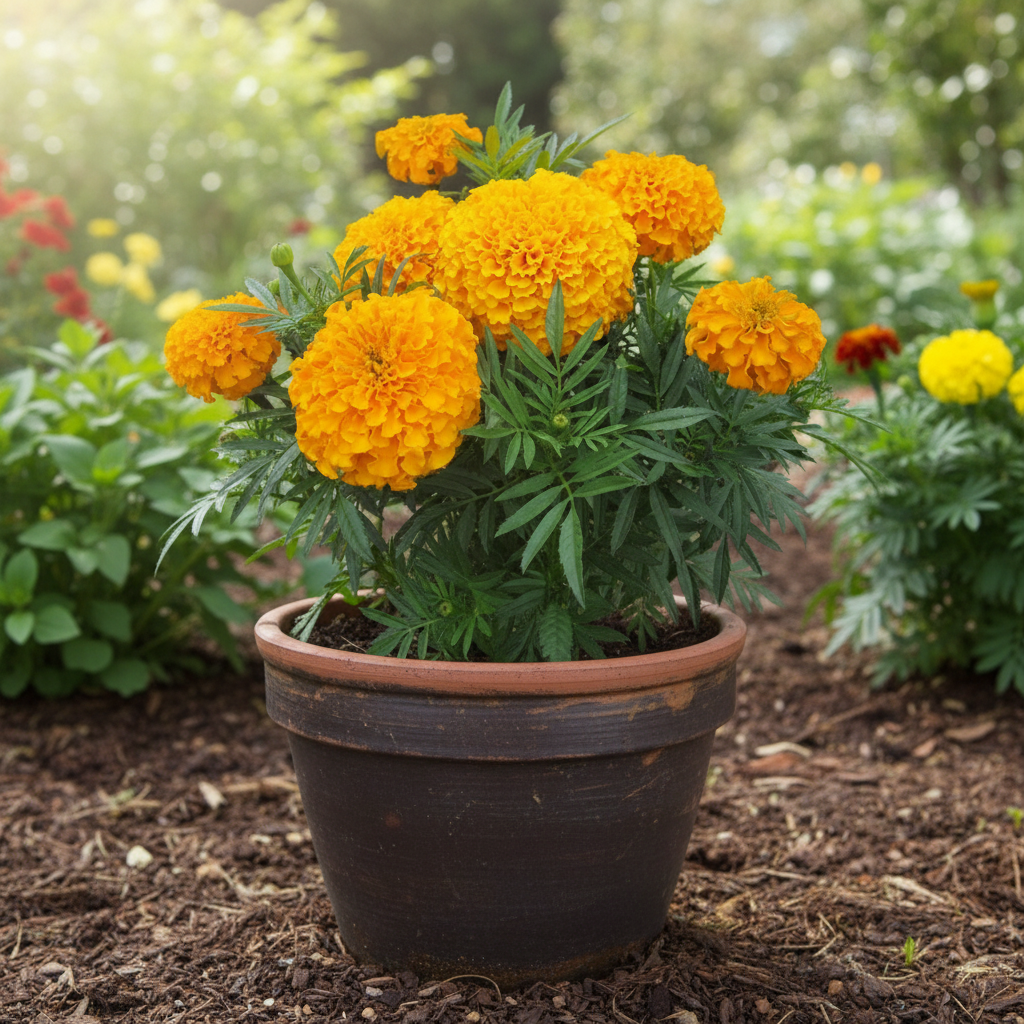

LIFE CYCLE
Annual

PLANT CHARACTERISTICS
Vibrant Blooms

GROWTH HABIT
Bushy

BLOOM SEASON
Summer to autumn

FLAVOUR PROFILE
Ornamental

SUITABLE FOR
Outdoor

PLANTING SEASON
Spring–Summer

FRUIT SIZE
N/A

PLANT HEIGHT
40–90 cm

LIGHT REQUIREMENT
Full Sun

WATER NEEDS
Moderate

HARDINESS ZONES
2–11

CONTAINER GARDEN
Yes

PLANT SPACING
30–45 cm

PLANTING DEPTH
0.5–1 cm

GROWING CONDITIONS
well-drained soil
Frequently Asked Questions
Should giant marigolds be deadheaded regularly?
Should giant marigolds be deadheaded regularly?
Yes. Removing faded flowers can encourage continued flowering and keeps the plants looking tidy throughout the blooming period.
Can giant hybrid marigolds be grown in pots?
Can giant hybrid marigolds be grown in pots?
Yes. The product page lists container growing as suitable. Choose a container with drainage and enough room for the plant's mature size.
How can I prevent tall marigolds from becoming crowded?
How can I prevent tall marigolds from becoming crowded?
Follow the listed 30–45 cm spacing and thin seedlings after germination. Adequate spacing gives the bushy plants room to develop.
Do giant marigolds attract garden pollinators?
Do giant marigolds attract garden pollinators?
Yes. Marigold flowers can attract pollinating insects such as bees and butterflies, making them useful in pollinator-friendly planting areas.
Can giant hybrid marigold seeds be saved for the next season?
Can giant hybrid marigold seeds be saved for the next season?
Seeds from hybrid plants may not produce plants identical to the original hybrid, so saved seed can show variation in flower form and plant characteristics.
When should giant marigold seedlings be thinned?
When should giant marigold seedlings be thinned?
Thin seedlings after emergence once they are large enough to handle. Leave approximately 30–45 cm between established plants.