





LIFE CYCLE
Perennial

PLANT CHARACTERISTICS
Fleshy

GROWTH HABIT
Low

BLOOM SEASON
Summer to fall

FLAVOUR PROFILE
Ornamental

SUITABLE FOR
Outdoor

PLANTING SEASON
summer

FRUIT SIZE
N/A

PLANT HEIGHT
20–30 cm

LIGHT REQUIREMENT
Full sun

WATER NEEDS
Low to moderate

HARDINESS ZONES
9–11

CONTAINER GARDEN
Yes

PLANT SPACING
30–90 cm

PLANTING DEPTH
¼ inch

GROWING CONDITIONS
Well-drained soil
Frequently Asked Questions
Can Giant Starfish Flower produce unusual star-shaped blooms?
Can Giant Starfish Flower produce unusual star-shaped blooms?
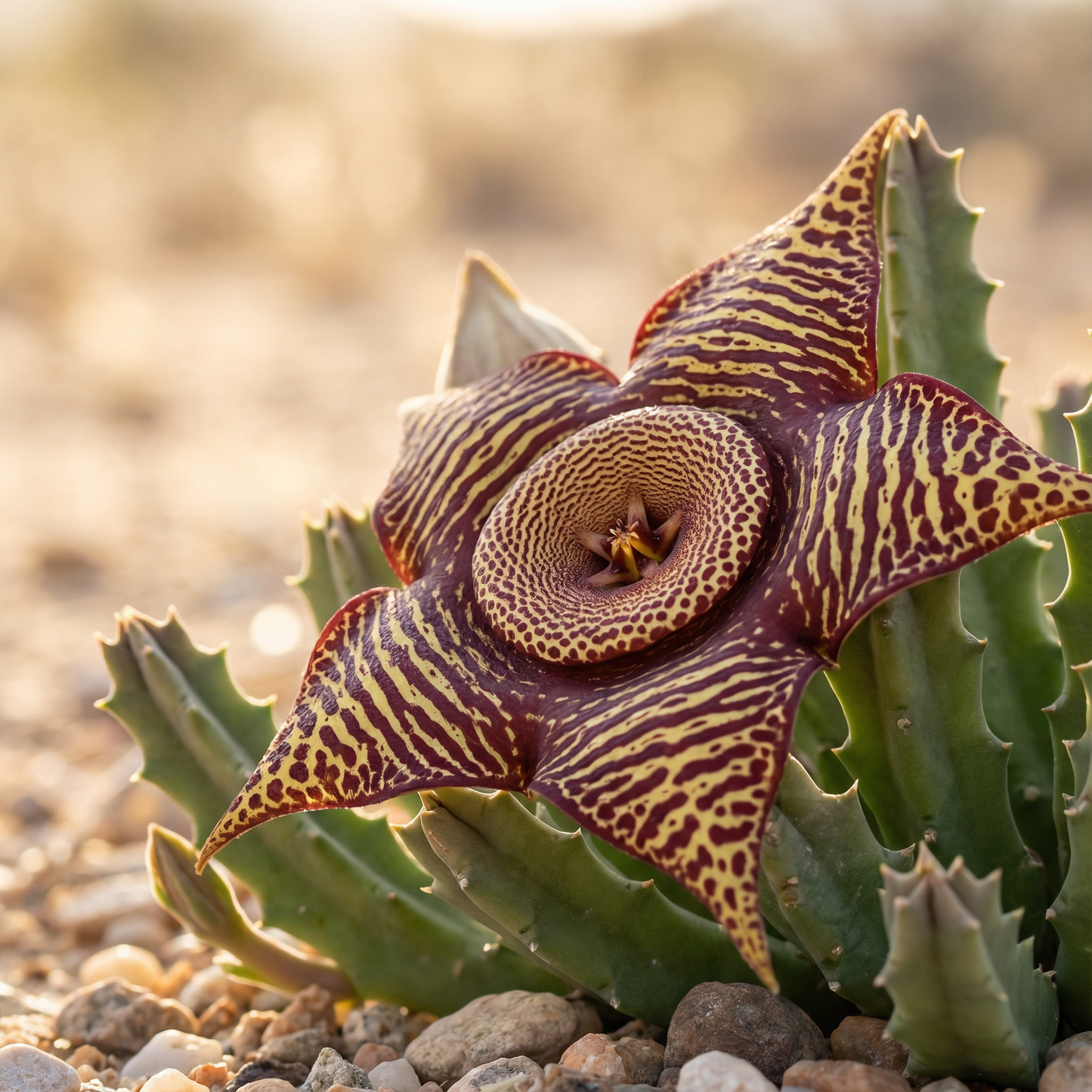
Yes. Giant Starfish Flower (Huernia / related carrion-flower types) is known for its distinctive star-shaped flowers and unusual ornamental appearance.
Do the flowers have a specialized appearance associated with carrion flowers?
Do the flowers have a specialized appearance associated with carrion flowers?
Yes. Carrion-flower species often have unusual colors, textures, and markings that mimic characteristics associated with decaying organic matter as part of their pollination strategy.
Can Giant Starfish Flower be grown in containers?
Can Giant Starfish Flower be grown in containers?
Yes. It is well suited to containers and succulent collections with a very well-drained growing medium and suitable light.
Will careful watering help maintain healthy growth?
Will careful watering help maintain healthy growth?
Yes. Allowing the growing medium to dry between waterings and avoiding prolonged excess moisture helps support healthy growth.
Can Giant Starfish Flower be used as an unusual ornamental specimen?
Can Giant Starfish Flower be used as an unusual ornamental specimen?
Yes. Its distinctive star-shaped flowers and succulent growth habit make it an interesting specimen for indoor collections, patios, rock gardens, and sheltered outdoor displays.
How is Giant Starfish Flower different from Stapelia?
How is Giant Starfish Flower different from Stapelia?
Giant Starfish Flower is generally associated with smaller, more compact succulent growth and distinctive star-shaped blooms, while Stapelia species typically form larger clumping stems and produce very large, starfish-like carrion flowers.