


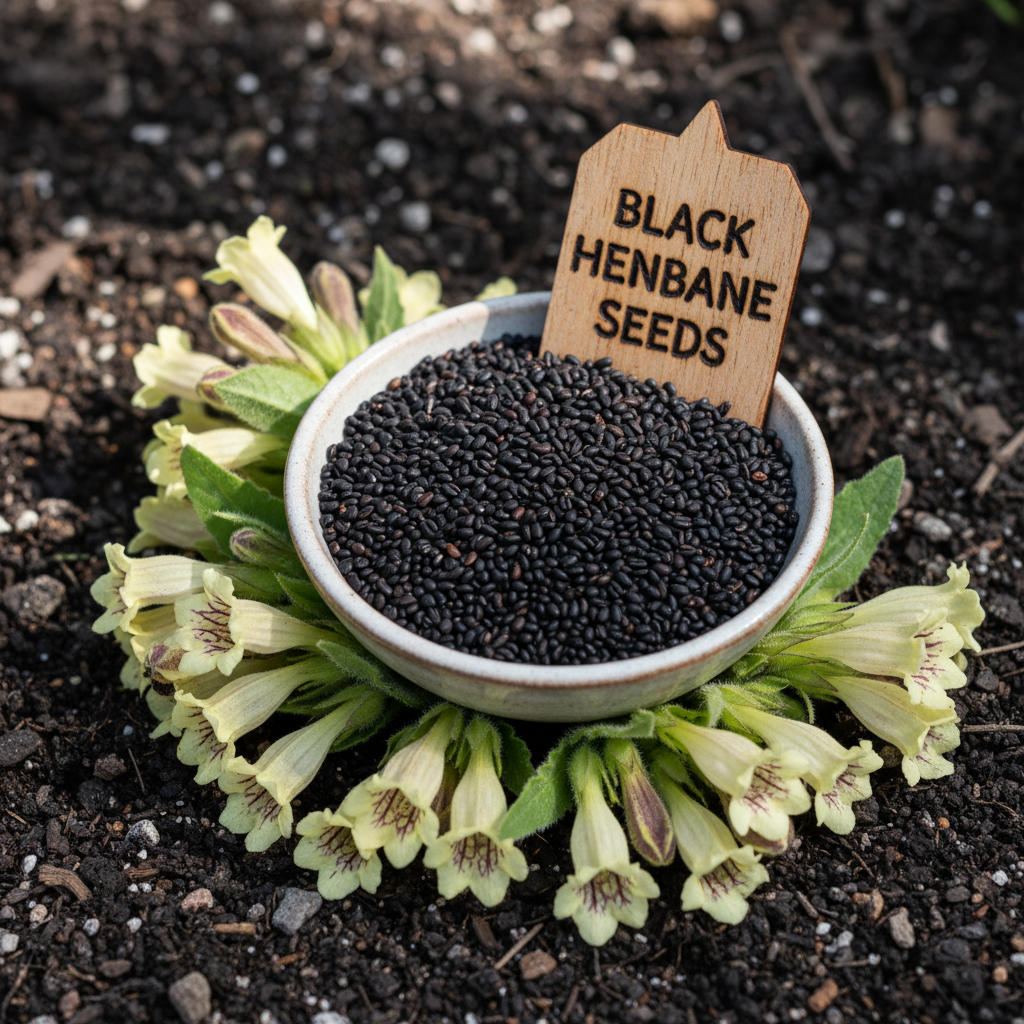

Life Cycle
Annual

Plant Characteristics
Coarse Foliage

Growth Habit
Upright

Bloom Season
Late Spring

Flavour Profile
Ornamental use

Suitable for
Outdoor

Seed Type
Open Pollinated

Plant Type
Herbaceous Flowering Plant

Planting Season
Spring

Fruit Size
NA

Plant Height
30–90 cm

Light Requirement
Full Sun

Water Needs
Moderate

Hardiness Zones
USDA 5–9

Container Garden
No

Plant Spacing
30–45 cm

Planting Depth
Surface sowing

Growing Conditions
Well-drained soil
Frequently Asked Questions
Can Pompon dahlias be grown from open-pollinated seeds?
Can Pompon dahlias be grown from open-pollinated seeds?
Yes. Open-pollinated Pompon dahlia seeds can be grown as annual flowering plants under suitable garden conditions.
Is Black Henbane suitable for ornamental planting only?
Is Black Henbane suitable for ornamental planting only?
Black Henbane is primarily treated as an ornamental plant here. It has a toxic reputation, so it should not be grown for food or home remedies.
What makes Black Henbane visually distinctive?
What makes Black Henbane visually distinctive?
It has coarse foliage and unusual flowers, giving it a distinctive appearance compared with common garden flowering plants.
Should Black Henbane be handled carefully around children?
Should Black Henbane be handled carefully around children?
Yes. Because Black Henbane contains toxic compounds, it should be positioned where children and pets cannot access or handle the plant.
Is Black Henbane suitable for edible gardens?
Is Black Henbane suitable for edible gardens?
No. It should be kept separate from edible crops and should not be treated as a culinary herb or food plant.
Can Black Henbane be used as an unusual ornamental specimen?
Can Black Henbane be used as an unusual ornamental specimen?
Yes, but only with responsible placement and handling. Its unusual appearance makes it a specimen plant for gardeners who understand its toxic nature.