


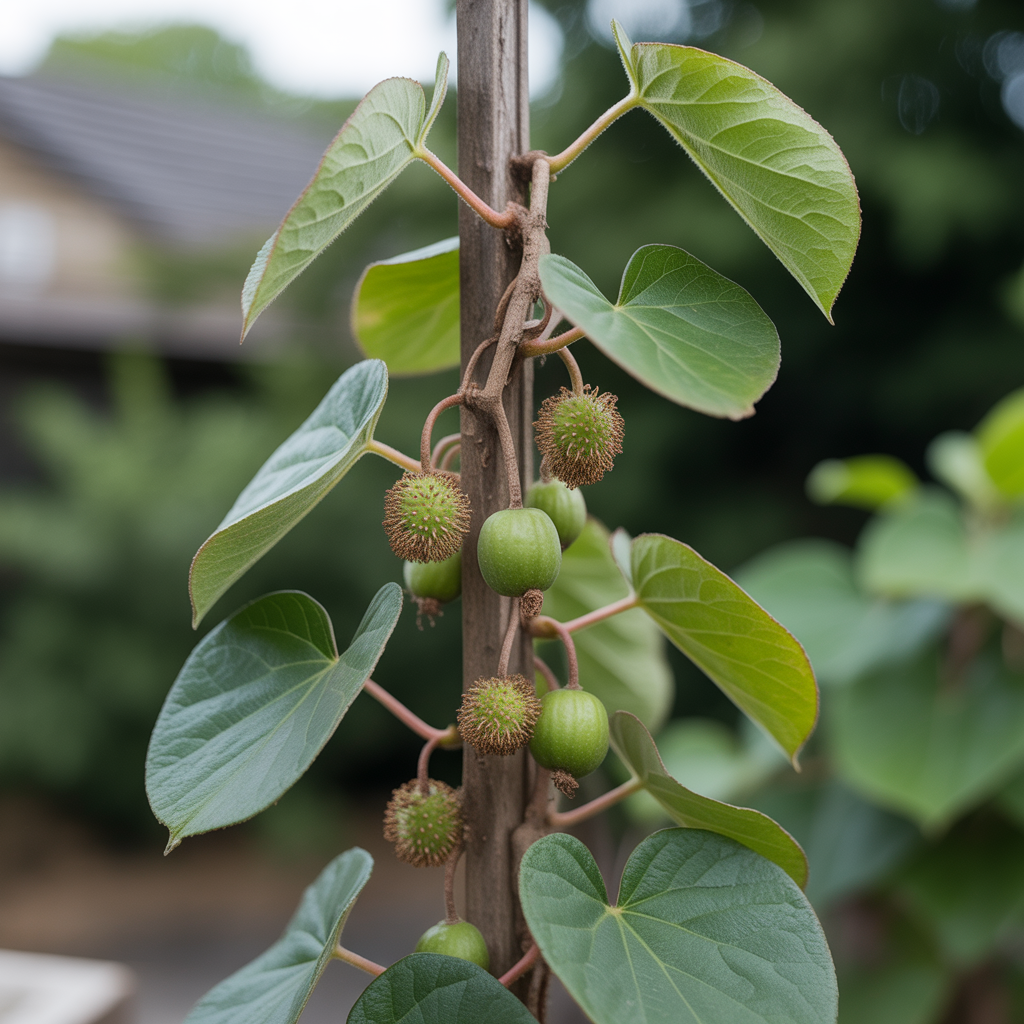


LIFE CYCLE
Perennial

PLANT CHARACTERISTICS
Fruiting

GROWTH HABIT
Climbing

BLOOM SEASON
Spring

FLAVOUR PROFILE
Sweet

SUITABLE FOR
out door

PLANTING SEASON
Spring

FRUIT SIZE
1 to 2 inches

PLANT HEIGHT
180 to 300 inches

LIGHT REQUIREMENT
Full sun

WATER NEEDS
Moderate

CONTAINER GARDEN
yes

PLANT SPACING
120 to 180 inches

PLANTING DEPTH
0.25 inches

GROWING CONDITIONS
Well drained
Frequently Asked Questions
Can Issai Kiwi produce sweet, small fruits on a compact, self-pollinating vine?
Can Issai Kiwi produce sweet, small fruits on a compact, self-pollinating vine?
Yes. Issai Kiwi (Actinidia arguta 'Issai') is known for producing small, smooth-skinned kiwi fruits with sweet, juicy flesh under suitable growing conditions.
Does Issai Kiwi grow best in sunny conditions?
Does Issai Kiwi grow best in sunny conditions?
Yes. It generally performs well in full sun to partial shade with fertile, well-drained soil and consistent moisture.
Can Issai Kiwi be grown on trellises or other sturdy supports?
Can Issai Kiwi be grown on trellises or other sturdy supports?
Yes. Its vigorous climbing habit makes it suitable for trellises, pergolas, fences, and other sturdy support structures.
Will regular pruning help manage the vine and support fruit production?
Will regular pruning help manage the vine and support fruit production?
Yes. Pruning helps control the vine's size, maintain good air circulation, and encourage productive growth.
Can Issai Kiwi fruits be eaten fresh?
Can Issai Kiwi fruits be eaten fresh?
Yes. The smooth-skinned fruits can generally be eaten whole when ripe, making them convenient for fresh snacking and fruit salads.
How is Issai Kiwi different from common fuzzy Kiwi?
How is Issai Kiwi different from common fuzzy Kiwi?
Issai Kiwi (Actinidia arguta 'Issai') produces smaller, smooth-skinned hardy kiwi fruits that can be eaten without peeling, while common fuzzy kiwi (Actinidia deliciosa) produces larger fruits with brown, fuzzy skin that is normally removed before eating.