


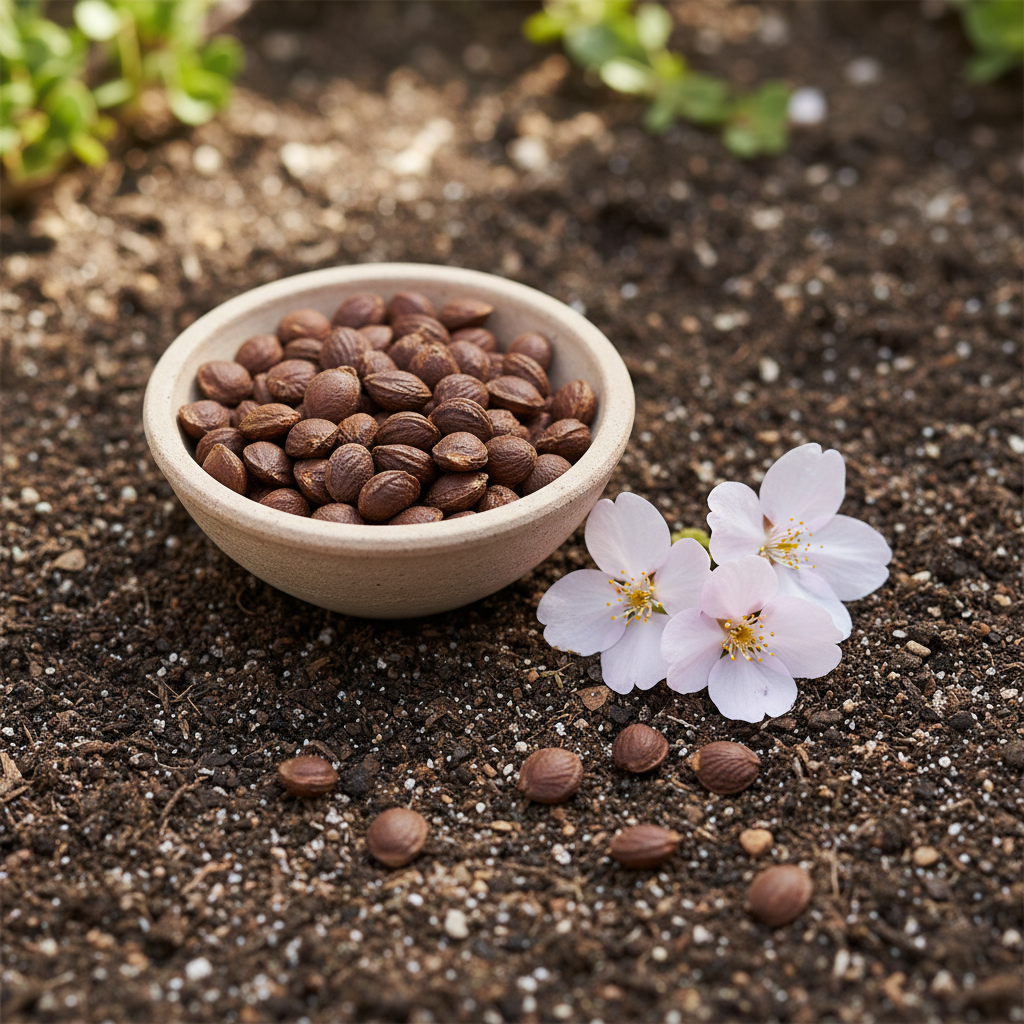

Life Cycle
Perennial

Plant Characteristics
Spreading canopy

Growth Habit
Upright tree

Bloom Season
Early to mid-spring

Flavour Profile
Ornamental

Suitable for
Outdoor

Planting Season
Spring

Plant Height
15–25 ft

Light Requirement
Full Sun

Fruit Size
N/A

Water Needs
Moderate

Hardiness Zones
USDA 5–9

Container Garden
Yes

Plant Spacing
15–20 ft

Planting Depth
¼ inch

Growing Conditions
Well-drained fertile soil
Frequently Asked Questions
What makes Japanese cherry trees famous in ornamental landscapes?
What makes Japanese cherry trees famous in ornamental landscapes?
They are admired for their spectacular spring blossoms that create soft pink displays across gardens and avenues.
Can it be planted as a standalone feature tree?
Can it be planted as a standalone feature tree?
Yes. Its graceful branching and seasonal flowers make it an attractive landscape centerpiece.
Which plants pair well with Japanese cherry trees?
Which plants pair well with Japanese cherry trees?
Azaleas, hostas, Japanese maples, and spring bulbs create elegant companion plantings.
Does it create seasonal interest after flowering?
Does it create seasonal interest after flowering?
Yes. Attractive foliage and graceful branching continue adding ornamental value beyond bloom time.
Is it associated with Japanese garden design?
Is it associated with Japanese garden design?
Yes. It is traditionally featured in Japanese-inspired landscapes for its seasonal floral display.
Do spring pollinators visit the blossoms?
Do spring pollinators visit the blossoms?
The flowers may attract bees and other beneficial pollinating insects during spring bloom.