


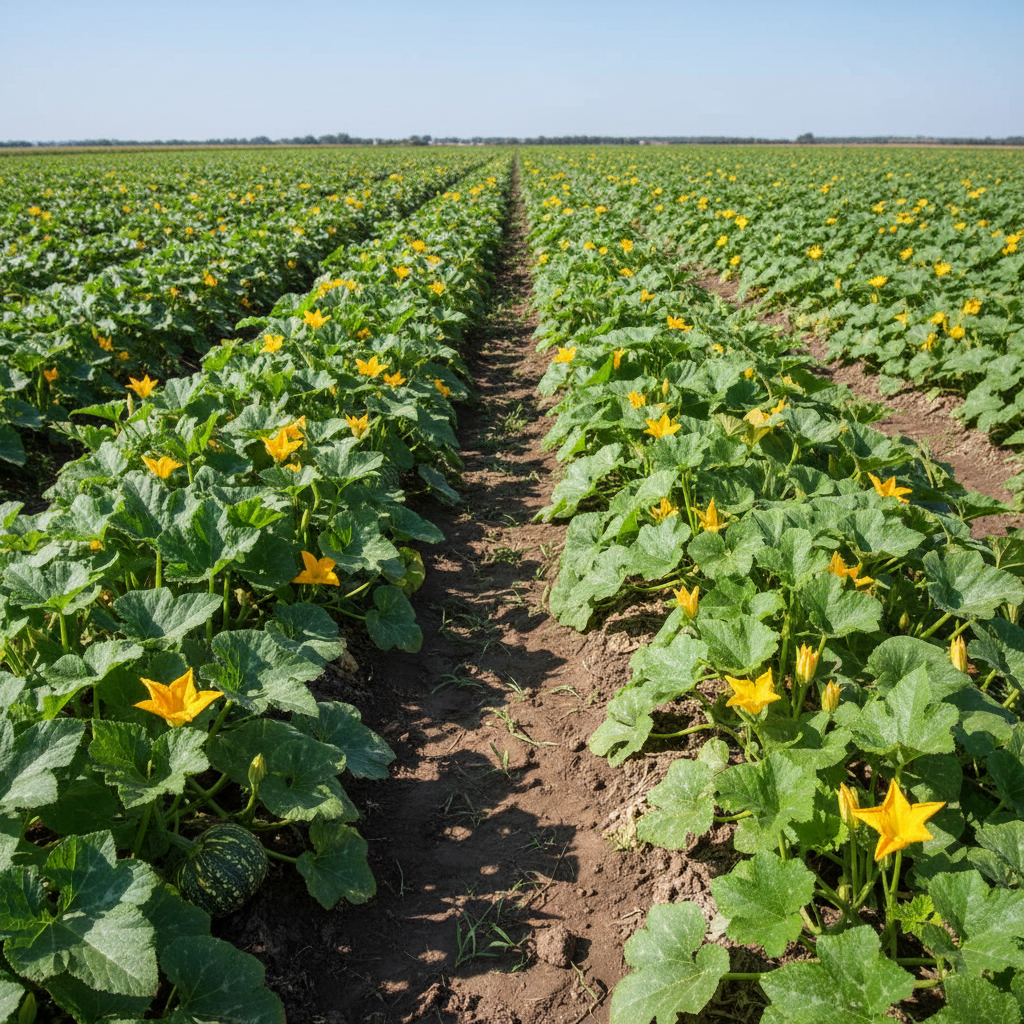

Life Cycle
Annual

Plant Characteristics
round

Growth Habit
Trailing vine

Bloom Season
Spring

Flavour Profile
Sweet

Suitable for
Outdoor

Seed Type
Open pollinated

Plant Type
Fruit vegetable

Planting Season
Spring

Fruit Size
2 to 4 kg

Plant Height
12 feet

Light Requirement
Full sun

Water Needs
Moderate

Hardiness Zones
9 to 11

Container Garden
No

Plant Spacing
4 to 6 feet

Planting Depth
1 inch

Growing Conditions
Warm climate
Frequently Asked Questions
Can Japanese Kent Pumpkin produce large, flavorful pumpkins with excellent yields?
Can Japanese Kent Pumpkin produce large, flavorful pumpkins with excellent yields?
Yes. This variety is known for producing abundant, well-shaped pumpkins with firm flesh and dependable performance throughout the growing season.
Does Japanese Kent Pumpkin grow best in warm, sunny conditions?
Does Japanese Kent Pumpkin grow best in warm, sunny conditions?
Yes. It thrives in full sun with fertile, well-drained soil and consistent moisture for vigorous vine growth and reliable fruit production.
Can Japanese Kent Pumpkin be grown in raised beds or spacious garden plots?
Can Japanese Kent Pumpkin be grown in raised beds or spacious garden plots?
Yes. It performs well in raised beds and traditional vegetable gardens where the vines have ample room to spread.
Will harvesting mature pumpkins at the proper stage improve storage quality?
Will harvesting mature pumpkins at the proper stage improve storage quality?
Yes. Harvesting fully mature fruits with firm rinds and leaving a short stem attached helps improve storage life and overall quality.
Can Japanese Kent Pumpkin be used in a variety of culinary recipes?
Can Japanese Kent Pumpkin be used in a variety of culinary recipes?
Yes. The pumpkins are excellent for roasting, soups, curries, baking, purees, casseroles, and many other homemade dishes.
How is Japanese Kent Pumpkin different from Butternut Squash?
How is Japanese Kent Pumpkin different from Butternut Squash?
Japanese Kent Pumpkin (Cucurbita maxima) produces round to slightly flattened fruits with dense, sweet flesh and vigorous vines, while Butternut Squash (Cucurbita moschata) develops elongated, pear-shaped fruits with smooth tan skin and rich orange flesh.