



Life Cycle
Annual

Plant Characteristics
Finely curled foliage

Growth Habit
Upright

Bloom Season
Spring–Early Summer

Flavour Profile
Mild anise-like

Suitable for
Indoor & Outdoor

Planting Season
Winter–Spring

Fruit Size
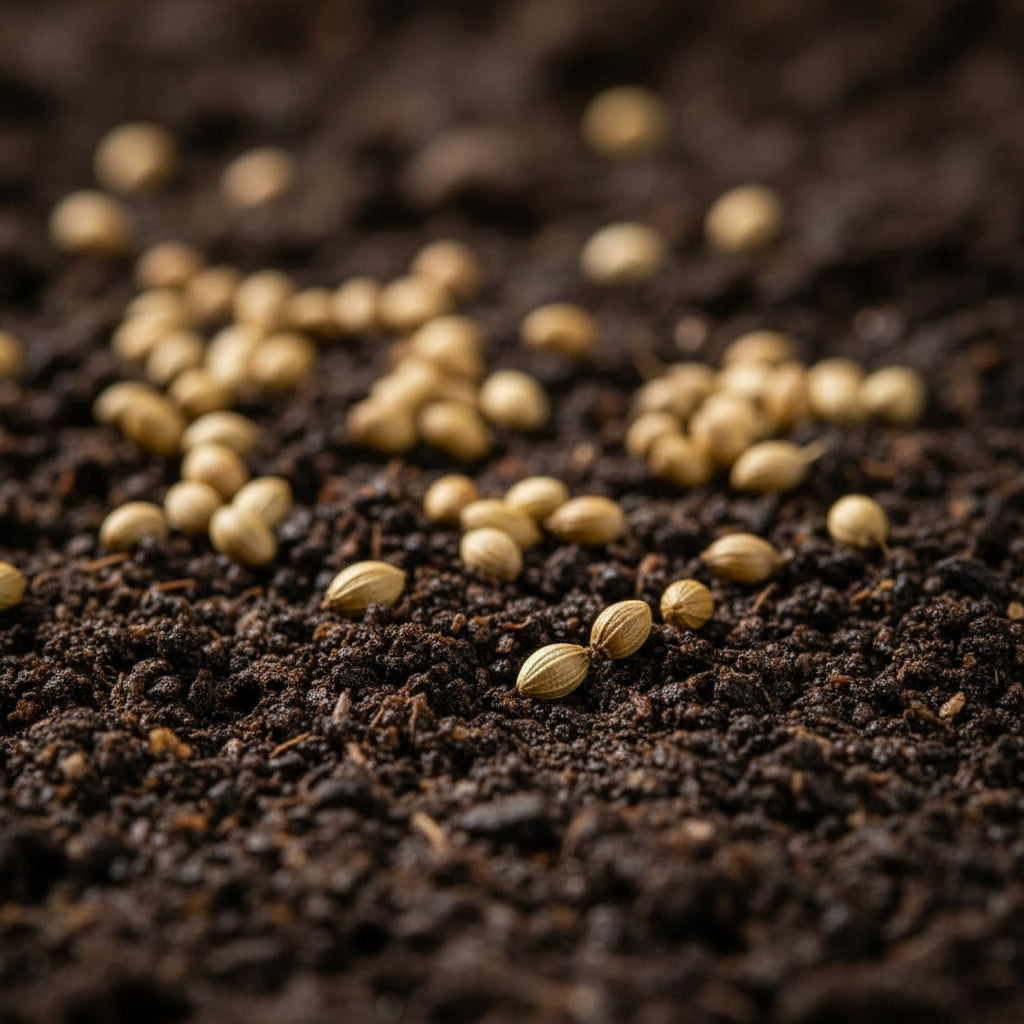
Small seeds

Plant Height
30–50 cm

Light Requirement
Partial Sun

Water Needs
Moderate

Hardiness Zones
4–9

Container Garden
Yes

Plant Spacing
20–25 cm

Planting Depth
0.5–1 cm

Growing Conditions
Cool
Frequently Asked Questions
Why should Curly Chervil be sown directly?
Why should Curly Chervil be sown directly?
Chervil dislikes transplanting, so direct sowing helps avoid disturbance to its developing roots.
Can Curly Chervil grow indoors?
Can Curly Chervil grow indoors?
Yes. The product lists it as suitable for indoor and outdoor growing, particularly in cool conditions.
When is Curly Chervil best harvested?
When is Curly Chervil best harvested?
Harvest the young leaves for the best flavor and fresh aroma, as recommended on the product page.
Why should Curly Chervil avoid strong midday sun?
Why should Curly Chervil avoid strong midday sun?
The herb prefers cooler conditions and partial sun, while strong heat can reduce growing quality.
Can Curly Chervil reseed naturally?
Can Curly Chervil reseed naturally?
Yes. Allowing some plants to flower can permit them to produce seeds for future growth.
What makes Curly Chervil visually different from standard chervil?
What makes Curly Chervil visually different from standard chervil?
Its finely curled foliage gives the plant a textured appearance while retaining the characteristic herb growth habit.