


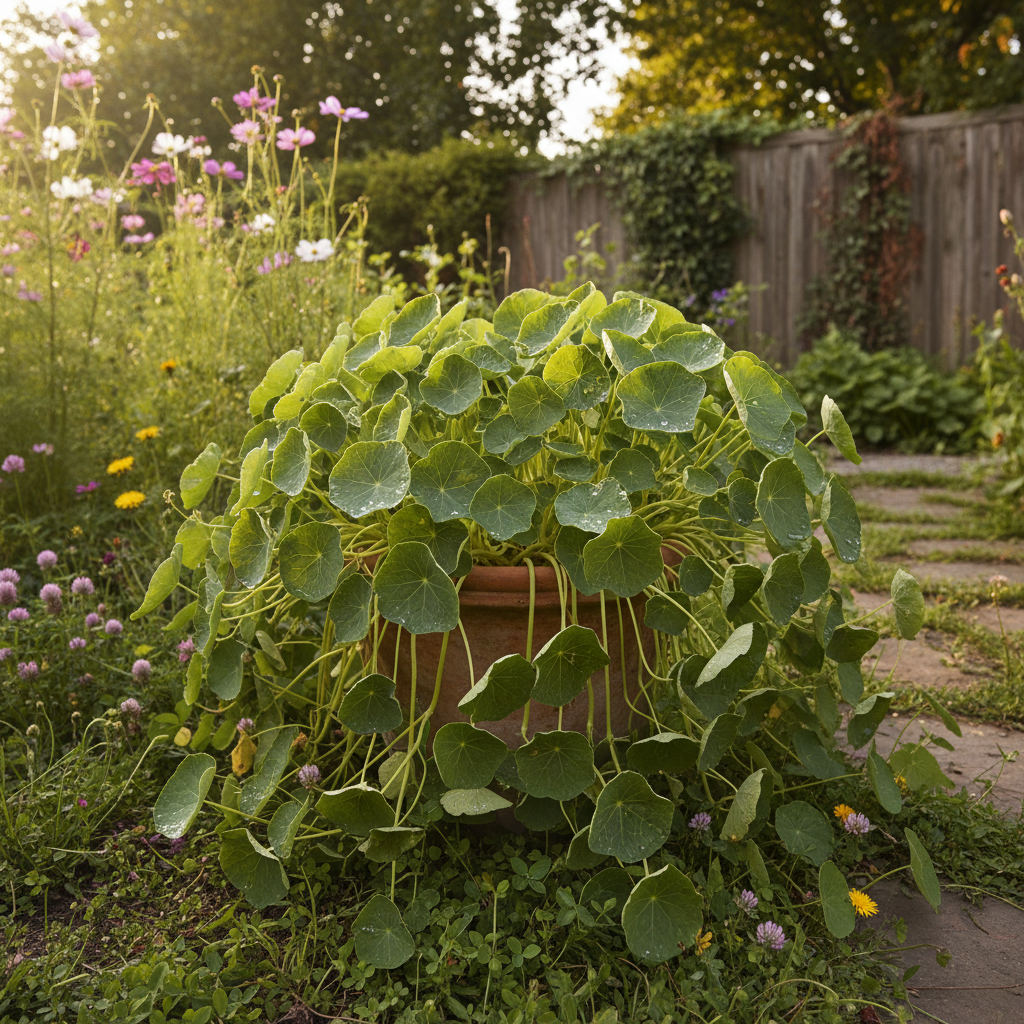

Life Cycle
Annual

Plant Characteristics
Trailing Blooms

Growth Habit
Climbing

Bloom Season
Summer–Fall

Flavour Profile
Ornamental

Suitable for
Outdoor

Planting Season
Spring

Fruit Size
N/A

Plant Height
Medium

Light Requirement
Full Sun

Water Needs
Moderate

Hardiness Zones
9–11

Container Garden
Yes

Plant Spacing
10–12 in

Planting Depth
Shallow

Growing Conditions
Well-drained
Frequently Asked Questions
What makes Lady Bird nasturtiums different from trailing nasturtiums?
What makes Lady Bird nasturtiums different from trailing nasturtiums?
Lady Bird varieties generally have a more compact, bushy habit with distinctive cream and purple flowers.
Can these nasturtiums brighten vegetable gardens?
Can these nasturtiums brighten vegetable gardens?
Yes. They are often planted among vegetables to add ornamental color and seasonal interest.
Are nasturtium flowers and leaves commonly used in recipes?
Are nasturtium flowers and leaves commonly used in recipes?
Yes. The flowers and young leaves are traditionally used as edible garnishes and in fresh salads. Consume only plants grown specifically for culinary use and prepared appropriately.
Which vegetables pair well with Lady Bird nasturtiums?
Which vegetables pair well with Lady Bird nasturtiums?
Tomatoes, beans, cucumbers, squash, and lettuce are commonly grown nearby.
Can the flowers be displayed in small bouquets?
Can the flowers be displayed in small bouquets?
Yes. Fresh blooms can be used in short-lived floral arrangements and table displays.
Do nasturtium flowers attract pollinators?
Do nasturtium flowers attract pollinators?
The blooms may attract bees, butterflies, and other beneficial pollinating insects.