Skip to product information
1 of 10

Pink Lily of the Valley Seeds for Planting

Pink Lily of the Valley Seeds for Planting

Regular price $16.99 USD
Regular price Sale price $16.99 USD
Sale Sold out
Quantity

How to Sow and Plant

Stratify seeds (optional but beneficial): Many growers recommend cold-stratification by refrigerating moist seeds for several weeks before sowing — this mimics natural winter dormancy and improves germination.
Sow on soil surface / very shallow cover: Use moist, rich, well-draining soil. Lightly press seeds on top — do not bury deep.
Keep soil moist (not waterlogged): Maintain consistent moisture until germination. Avoid letting soil dry out completely.
Place in partial to full shade: Shade or dappled light mimics natural woodland conditions for best growth.
Be patient: Germination and establishment may take time; seedlings are delicate — avoid disturbing ground early on.

How to Grow

Soil: Prefer moist, rich, humus-rich soil — amend with compost or leaf mold if needed.
Light: Partial to full shade; avoid strong direct sun, especially in hot climates.
Water: Consistently moist soil — water more frequently during dry spells, especially until plants are established. Once mature, foliage helps retain ground moisture.
Mulch & organic matter: Mulch helps conserve moisture and keeps soil cool — beneficial for woodland perennials.
Avoid overcrowding: Spread rhizomes gradually; control spread if you want to maintain boundaries. Lily of the Valley can naturalize aggressively.

Tips

Perfect under trees, shrubs, or in shaded border edges where other flowers struggle.
Combine with ferns, hostas, or shade-loving perennials for layered shade gardening.
If soil drains poorly, raise planting bed or use containers with good drainage.
Use gloves — all parts of Lily of the Valley are toxic if ingested.

View full details
About
Product Information
Features
life-cycle

LIFE CYCLE

Perennial

plant-characteristics

PLANT CHARACTERISTICS

Woodland Perennial

growth-habit

GROWTH HABIT

Clumping

bloom-season

BLOOM SEASON

Late spring

flavour-profile

FLAVOUR PROFILE

Ornamental

suitable-for

SUITABLE FOR

Outdoor

About
Pink Lily of the Valley Seeds for Planting
seed-type

SEED TYPE

Non-GMO

plant-type

PLANT TYPE

Herbaceous perennial

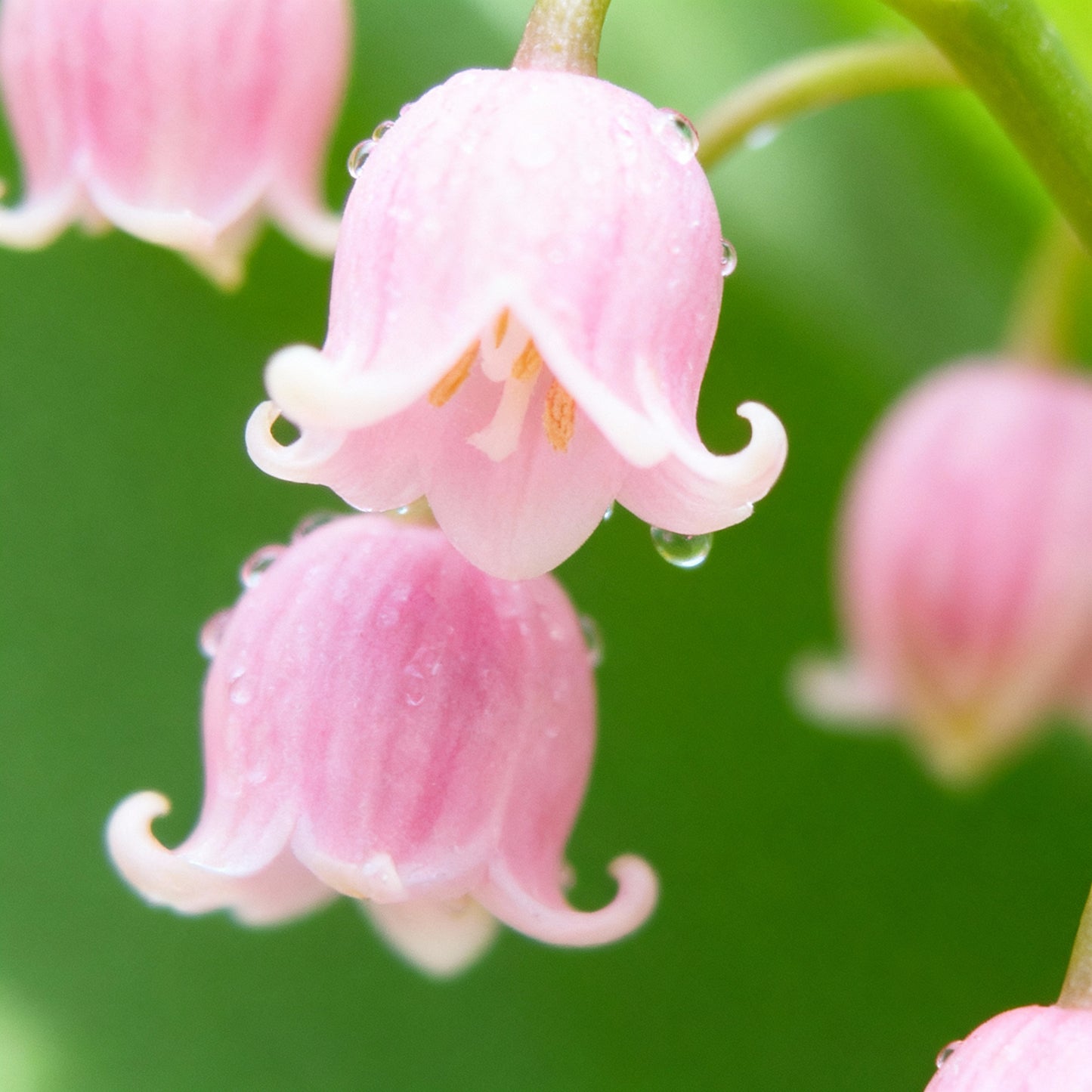
Lily of the Valley is a classic shade-loving woodland perennial known for its delicate, fragrant bell-shaped flowers and attractive green foliage. The pink-flower variant offers a soft blush hue, adding unique charm compared to the traditional white form. Because it spreads via rhizomes, once established, it forms dense, carpet-like patches — perfect for woodland gardens, shaded borders, or under-tree plantings. Hardy and low-maintenance, it returns each year with minimal care, offering timeless elegance and a fragrant welcome in spring.

Planting information
planting-season

PLANTING SEASON

Spring

fruit-size

FRUIT SIZE

N/A

plant-height

PLANT HEIGHT

6–12 in

light-requirement

LIGHT REQUIREMENT

Shade

water-needs

WATER NEEDS

Moist soil

hardiness-zones

HARDINESS ZONES

Zones 3–8

container-garden

CONTAINER GARDEN

Yes

plant-spacing

PLANT SPACING

6–12 in

planting-depth

PLANTING DEPTH

Surface

growing-conditions

GROWING CONDITIONS

Moist

Coverage
Seed Count
Recommended Coverage
SEED COUNT
100
GTIN
036000134339

Frequently Asked Questions

Does Pink Lily of the Valley spread beyond its original planting spot?

Yes. It spreads gradually through underground rhizomes and can form broad clumps over time, so define its planting area if you want to keep it contained.

What plants pair well with Lily of the Valley in a woodland bed?

Its low clumping form works well visually with other shade plants such as ferns, heucheras and hostas, especially where layered foliage is desired.

Does Lily of the Valley die back after flowering?

Its flowering period is followed by a foliage phase, and the leaves can decline later in the season as the plant enters dormancy.

Can Lily of the Valley be used as a low border planting?

Yes. Its short, clumping growth makes it suitable for shaded border edges, beneath shrubs, and along woodland-style pathways.

How does the pink-flowering form differ visually from common Lily of the Valley?

The main visual distinction is flower color. This form is selected for pink-toned bell-shaped blooms rather than the more familiar white flowers.

Is Lily of the Valley suitable for a small shaded container?

It can be grown in a container when the pot provides drainage and enough room for its rhizomes. Monitor spread and keep the growing medium evenly moist.