



Life Cycle
Annual

Plant Characteristics
Mixed bright flowers succulent foliage

Growth Habit
Low spreading

Bloom Season
Spring to summer

Flavour Profile
Not applicable

Suitable for
Outdoor

Seed Type
Open pollinated

Plant Type
Ornamental succulent flowering plant

Planting Season
Spring

Fruit Size
Not applicable

Plant Height
10 to 15 cm

Light Requirement
Full Sun

Water Needs
Low

Hardiness Zones
Warm temperate climates

Container Garden
Yes

Plant Spacing
20 to 25 cm

Planting Depth
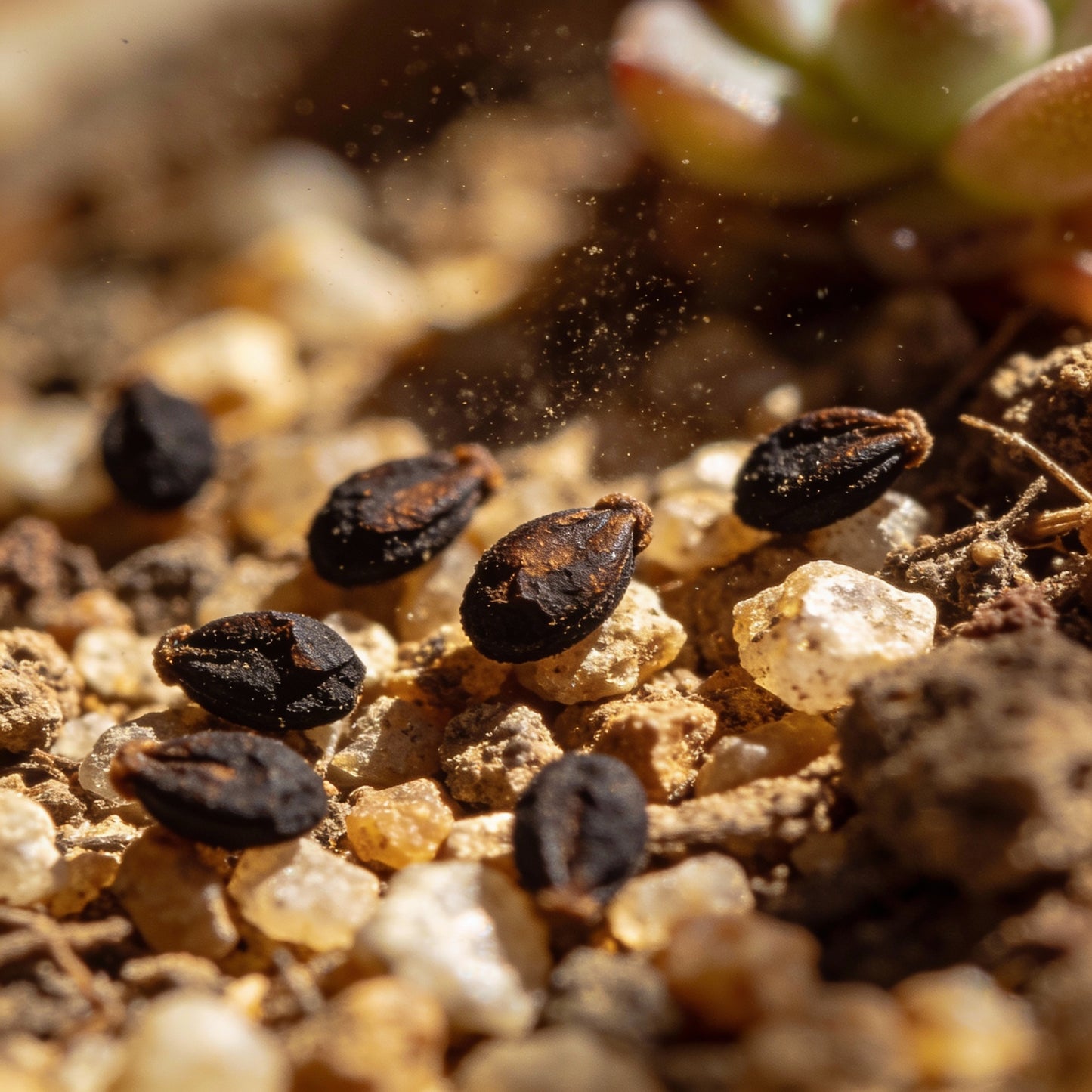
Surface sow

Growing Conditions
Sunny dry locations
Frequently Asked Questions
What makes Livingstone Daisy different from other flowering ground covers?
What makes Livingstone Daisy different from other flowering ground covers?
Its succulent foliage and vibrant daisy-like blooms create a colorful, low-growing carpet in sunny gardens.
Can Livingstone Daisy be grown in rock gardens and coastal landscapes?
Can Livingstone Daisy be grown in rock gardens and coastal landscapes?
Yes, it performs well in rock gardens, gravel beds, borders, and coastal-style plantings with well-drained soil.
Will the mixed seeds produce flowers in a variety of colors?
Will the mixed seeds produce flowers in a variety of colors?
Yes, the mix can produce blooms in a wide range of bright shades with natural color variation.
Can Livingstone Daisy be planted in containers and hanging planters?
Can Livingstone Daisy be planted in containers and hanging planters?
Yes, it grows beautifully in pots, window boxes, and containers where its spreading habit can be appreciated.
Do bees and butterflies visit the flowers?
Do bees and butterflies visit the flowers?
Yes, the nectar-rich blooms may attract bees, butterflies, and other beneficial pollinating insects.
Does Livingstone Daisy tolerate warm, sunny growing conditions?
Does Livingstone Daisy tolerate warm, sunny growing conditions?
Yes, established plants perform well in full sun and are well suited to well-drained soils during warm weather.