Skip to product information
1 of 8

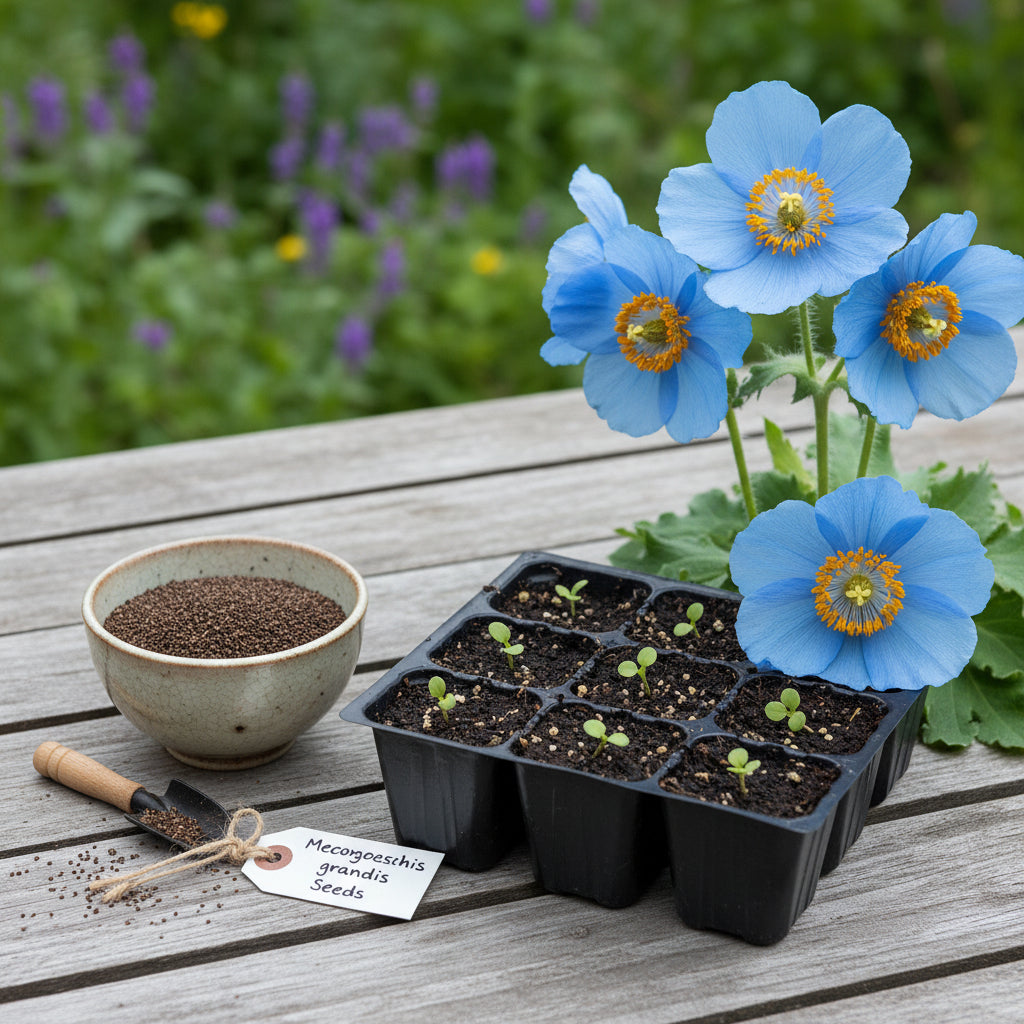
Meconopsis Grandis Flower Seeds for Planting – Stunning Blue Himalayan Poppy Seeds for Garden Perennial Blooms

Meconopsis Grandis Flower Seeds for Planting – Stunning Blue Himalayan Poppy Seeds for Garden Perennial Blooms

Regular price $16.59 USD
Regular price Sale price $16.59 USD
Sale Sold out
Quantity

How to Sow and Plant

Cold Stratification: Refrigerate seeds in a damp paper towel inside a sealed bag for 4–6 weeks before sowing to improve germination.
Soil: Use moist, rich, well-draining soil with slight acidity.
Sowing: Sow seeds on soil surface; press lightly — do not cover deeply.
Germination Conditions: Maintain cool temperatures (~10–15°C) and shaded light for 3–6 weeks for sprouting.
Transplanting: Transplant seedlings once they have a few true leaves; space plants ~30–45 cm apart.

How to Grow

Light: Partial shade or dappled sunlight preferred; avoid hot afternoon sun.
Water: Keep soil consistently moist but well-drained.
Soil: Rich in organic matter with slight acidity.
Mulch: Apply mulch to retain moisture and moderate soil temperature.
Deadheading: Remove spent blooms to encourage further flowering and strong growth.

Tips

Companion plants like hostas, ferns, Astilbe enhance the woodland garden aesthetic.
Provide cool summer conditions for best performance; hot, dry climates can stress plants.

View full details
About
Product Information
Features
life-cycle

LIFE CYCLE

Perennial

plant-characteristics

PLANT CHARACTERISTICS

True-Blue Blooms

growth-habit

GROWTH HABIT

Upright Clumps

bloom-season

BLOOM SEASON

Late spring

flavour-profile

FLAVOUR PROFILE

Ornamental fragrant

suitable-for

SUITABLE FOR

Outdoor

About
Meconopsis Grandis Flower Seeds for Planting – Stunning Blue Himalayan Poppy Seeds for Garden Perennial Blooms
seed-type

SEED TYPE

Non-GMO

plant-type

PLANT TYPE

Herbaceous perennial

Meconopsis Grandis, the celebrated Blue Himalayan Poppy, is one of the most striking and sought-after perennials for gardeners who appreciate rare flower colors. Featuring large, silky sky-blue flowers with bright yellow centers, it brings a dramatic and elegant presence to shaded garden spots, woodland plantings, and perennial borders. Native to cooler Himalayan regions, this plant prefers moist, humus-rich, well-drained, slightly acidic soil and partial shade. While considered a challenging species to cultivate, its magnificent blooms reward patient gardeners with unforgettable visual impact in cool climate gardens.

Planting information
planting-season

PLANTING SEASON

Spring

fruit-size

FRUIT SIZE

N/A

plant-height

PLANT HEIGHT

Tall Stems

light-requirement

LIGHT REQUIREMENT

Partial Shade

water-needs

WATER NEEDS

High Moisture

hardiness-zones

HARDINESS ZONES

5–7

container-garden

CONTAINER GARDEN

Yes

plant-spacing

PLANT SPACING

Medium

planting-depth

PLANTING DEPTH

Surface

growing-conditions

GROWING CONDITIONS

Cool

Coverage
Seed Count
Recommended Coverage
SEED COUNT
100
GTIN
036000144765

Frequently Asked Questions

Why is Meconopsis Grandis known for its blue flowers?

It is valued for its large, vivid blue blooms, which provide a distinctive cool-toned display during the summer flowering period.

Can Meconopsis Grandis be planted beside woodland-style plants?

Yes. Its preference for partial shade and moist, humus-rich soil makes it compatible with woodland-inspired garden designs.

What type of leaf arrangement does Meconopsis Grandis have?

The plant develops a basal rosette of green leaves, from which the flowering stems emerge during the growing season.

Why should Meconopsis Grandis avoid drying out?

The product recommends consistently moist soil. Maintaining moisture is particularly important because the plant is not suited to dry growing conditions.

Is Meconopsis Grandis better suited to exposed or sheltered beds?

A sheltered position is preferable because the product recommends protection from strong winds and intense afternoon sun.

Can compost improve a Meconopsis Grandis planting area?

Yes. The product recommends adding organic matter or compost to create the rich, moisture-retentive soil this perennial prefers.