



LIFE CYCLE
Perennial

PLANT CHARACTERISTICS
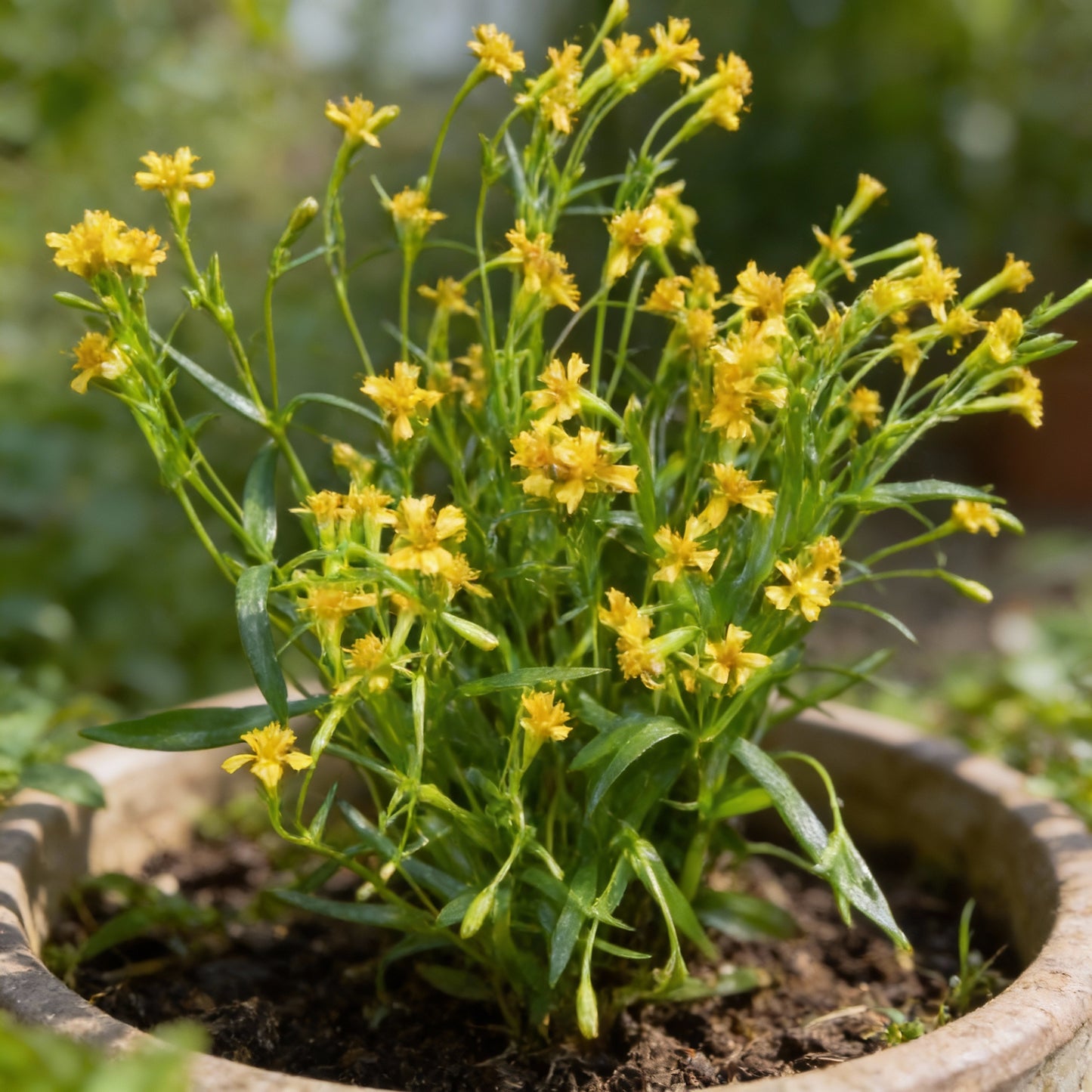
yellow flowers

GROWTH HABIT
Bushy

BLOOM SEASON
Late Summer

FLAVOUR PROFILE
Anise-like

SUITABLE FOR
Outdoor

SEED TYPE
Non-GMO

PLANT TYPE
Herb

PLANTING SEASON
Spring

FRUIT SIZE
N/A

PLANT HEIGHT
24–36 inches

LIGHT REQUIREMENT
Full Sun

WATER NEEDS
Low

HARDINESS ZONES
9–11

CONTAINER GARDEN
Yes

PLANT SPACING
12–18 inches

PLANTING DEPTH
¼ inch

GROWING CONDITIONS
Well-drained
Frequently Asked Questions
Can Mexican Tarragon be grown as both an herb and an ornamental plant?
Can Mexican Tarragon be grown as both an herb and an ornamental plant?
Yes. It is valued for its aromatic foliage as well as its clusters of golden flowers, making it suitable for herb gardens and ornamental borders.
Do the leaves have a flavor similar to French tarragon?
Do the leaves have a flavor similar to French tarragon?
Yes. The leaves have a mild anise-like flavor and are commonly used as a warm-climate alternative to French tarragon.
Can Mexican Tarragon attract pollinators to the garden?
Can Mexican Tarragon attract pollinators to the garden?
Yes. Its bright golden flowers attract bees, butterflies, and other beneficial pollinating insects during the blooming season.
Will regular harvesting encourage bushier growth?
Will regular harvesting encourage bushier growth?
Yes. Frequent harvesting or light pruning encourages branching and promotes fresh leafy growth throughout the growing season.
Can Mexican Tarragon tolerate hot summer climates?
Can Mexican Tarragon tolerate hot summer climates?
Yes. It is well adapted to warm, sunny conditions and performs better than French tarragon in regions with heat and humidity.
Are the leaves commonly used in cooking?
Are the leaves commonly used in cooking?
Yes. The aromatic leaves are traditionally used to season sauces, poultry, fish, egg dishes, and herbal infusions when correctly identified and prepared.