


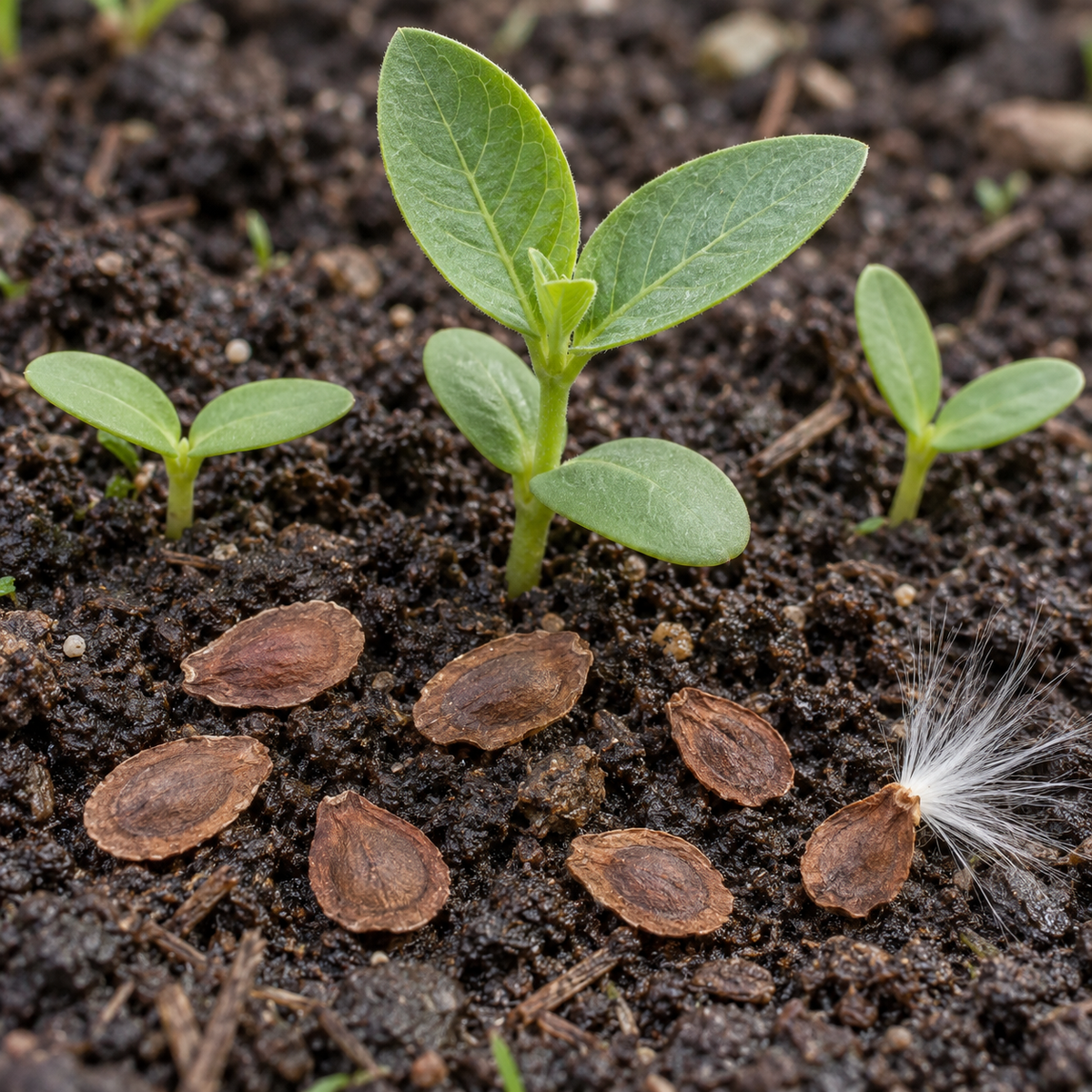

LIFE CYCLE
Perennial

PLANT CHARACTERISTICS
Wildlife-friendly

GROWTH HABIT
Upright

BLOOM SEASON
Summer

FLAVOUR PROFILE
Ornamental

SUITABLE FOR
Outdoor

PLANTING SEASON
Spring

FRUIT SIZE
Pod

PLANT HEIGHT
60–120 cm

LIGHT REQUIREMENT
Full Sun

WATER NEEDS
Low

HARDINESS ZONES
3–9

CONTAINER GARDEN
Yes

PLANT SPACING
30–45 cm

PLANTING DEPTH
Surface

GROWING CONDITIONS
Well-drained
Frequently Asked Questions
Why is milkweed important in butterfly gardens?
Why is milkweed important in butterfly gardens?
Milkweed provides nectar-rich flowers and serves as a host plant for monarch butterfly caterpillars.
Can milkweed be used in naturalized landscapes?
Can milkweed be used in naturalized landscapes?
Yes. It blends well into meadows, prairie gardens, and wildlife-friendly plantings.
Does milkweed spread over time?
Does milkweed spread over time?
Some species gradually expand by seed or underground roots, depending on the variety.
Which pollinators visit milkweed flowers?
Which pollinators visit milkweed flowers?
Bees, butterflies, and other nectar-feeding insects frequently visit the blooms.
Should faded seed pods be removed?
Should faded seed pods be removed?
Remove pods if you want to reduce self-seeding, or leave them for seasonal interest.
Does milkweed tolerate dry conditions?
Does milkweed tolerate dry conditions?
Once established, many milkweed species perform well in sunny, well-drained sites.