



LIFE CYCLE
Perennial

PLANT CHARACTERISTICS
Drought-tolerant

GROWTH HABIT
Sculptural

BLOOM SEASON
Spring

FLAVOUR PROFILE
Ornamental

SUITABLE FOR
Both

SEED TYPE
Adenium Obesum

PLANT TYPE
Perennial Flowering Plant

PLANTING SEASON
Spring

FRUIT SIZE
N/A

PLANT HEIGHT
2–5 ft

LIGHT REQUIREMENT
Full Sun

WATER NEEDS
Low

HARDINESS ZONES
10–12

CONTAINER GARDEN
Yes

PLANT SPACING
12–18 inches

PLANTING DEPTH
0.2–0.3 inches

GROWING CONDITIONS
Well-draining
Frequently Asked Questions
Can Mixed Color Desert Rose produce colorful flowers on a sculptural, drought-tolerant plant?
Can Mixed Color Desert Rose produce colorful flowers on a sculptural, drought-tolerant plant?
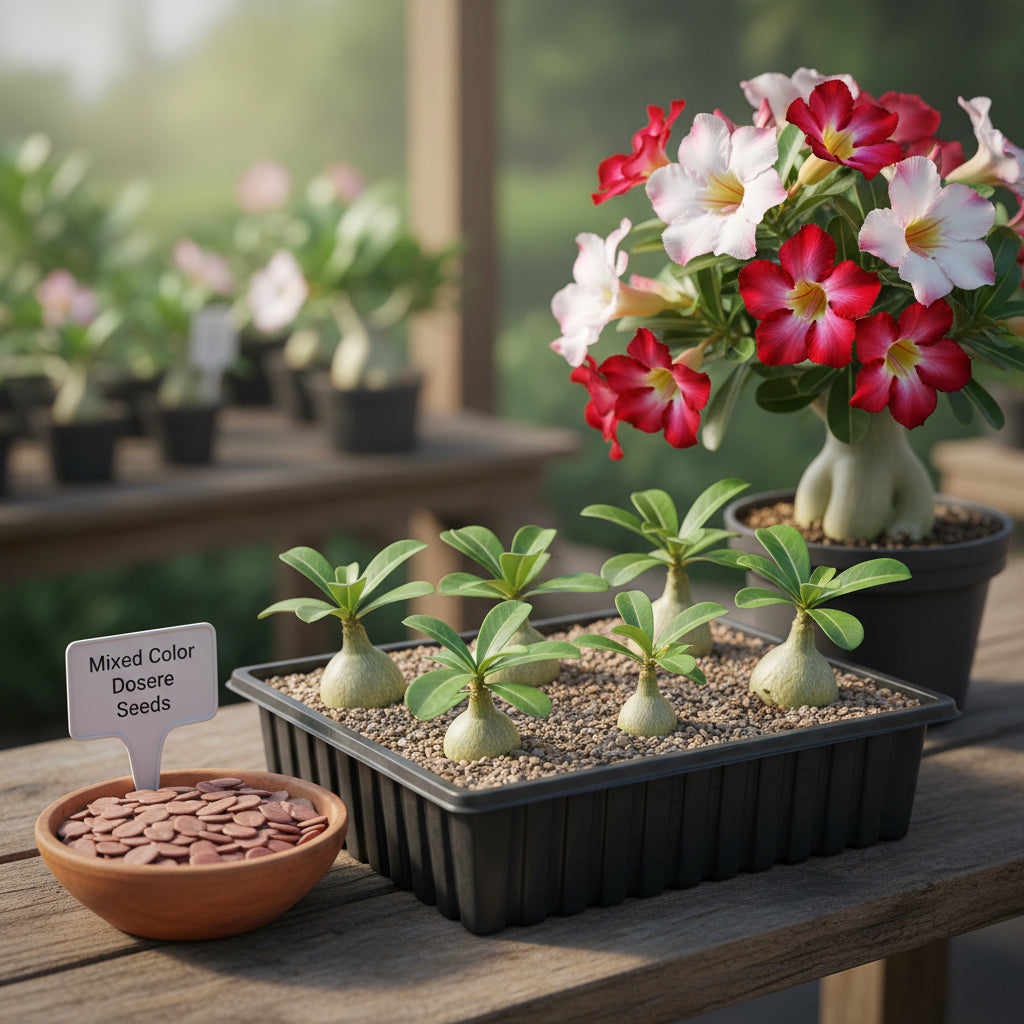
Yes. Desert Rose (Adenium obesum) is known for producing attractive flowers in a variety of colors along with a distinctive swollen stem that gives the plant a bonsai-like appearance.
Does Desert Rose grow best in warm, sunny conditions?
Does Desert Rose grow best in warm, sunny conditions?
Yes. It performs best in warm conditions with plenty of sunlight and a well-drained growing medium.
Can Mixed Color Desert Rose be grown in containers or bonsai-style displays?
Can Mixed Color Desert Rose be grown in containers or bonsai-style displays?
Yes. Its compact growth habit and distinctive form make it well suited for containers, patios, sunny windows, and ornamental bonsai-style displays.
Will careful watering help maintain healthy growth?
Will careful watering help maintain healthy growth?
Yes. Allowing the growing medium to dry between waterings and avoiding prolonged excess moisture helps support healthy growth and reduces the risk of root problems.
Can Desert Rose flowers be used as an ornamental feature?
Can Desert Rose flowers be used as an ornamental feature?
Yes. The colorful blooms and unusual plant structure make Desert Rose an attractive focal point for indoor or outdoor ornamental displays in suitable climates.
How is Desert Rose different from Plumeria?
How is Desert Rose different from Plumeria?
Desert Rose (Adenium obesum) has a thick, swollen stem and compact growth habit with trumpet-shaped flowers, while Plumeria (Plumeria species) develops a more tree-like form with broader leaves and clusters of fragrant, waxy flowers.