



Life Cycle
Perennial

Growth Habit
Upright

Plant Characteristics
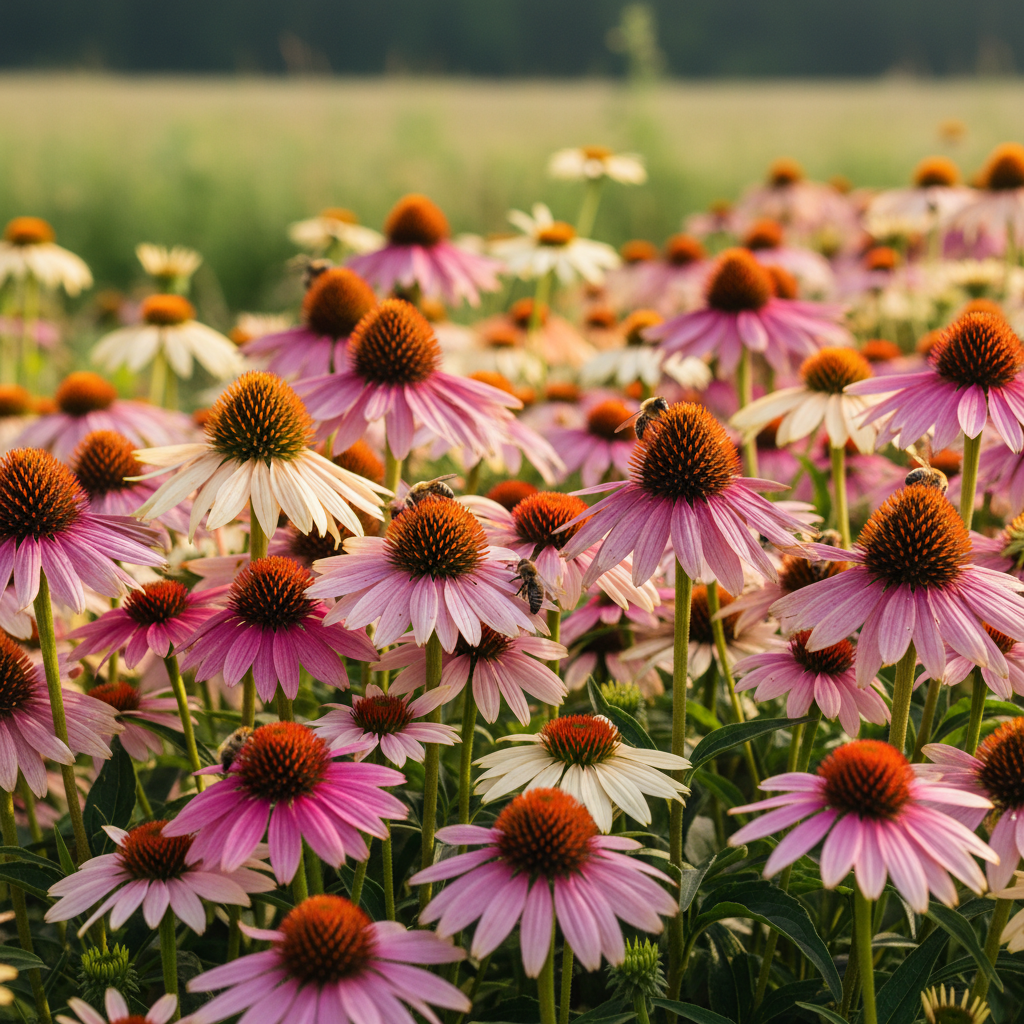
Cone-centered blooms

Bloom Season
Summer

Flavour Profile
Ornamental

Suitable for
Outdoor

Planting Season
Spring

Fruit Size
N/A

Plant Height
2–4 Feet

Light Requirement
Full Sun

Water Needs
Moderate

Hardiness Zones
USDA Zones 3–9

Container Garden
Yes

Plant Spacing
12–18 Inches

Planting Depth
Surface Sow

Growing Conditions
Well-drained soil
Frequently Asked Questions
Can Mixed Coneflower create long-lasting color in perennial borders?
Can Mixed Coneflower create long-lasting color in perennial borders?
Yes. The mix provides an extended display of colorful blooms that brighten perennial borders, cottage gardens, and naturalized landscapes.
Do the flower colors vary throughout the planting?
Do the flower colors vary throughout the planting?
Yes. The seed mix typically produces a range of bloom colors, adding visual diversity and seasonal interest.
Can Mixed Coneflower thrive in sunny, low-maintenance gardens?
Can Mixed Coneflower thrive in sunny, low-maintenance gardens?
Yes. It performs best in full sun and is well suited to low-maintenance perennial plantings with well-drained soil.
Will removing faded flowers encourage additional blooms?
Will removing faded flowers encourage additional blooms?
Yes. Deadheading spent flowers helps extend the blooming period and keeps the plants looking tidy.
Can the flowers attract butterflies, bees, and other pollinators?
Can the flowers attract butterflies, bees, and other pollinators?
Yes. The nectar-rich blooms are highly attractive to butterflies, bees, and other beneficial pollinating insects.
How is Mixed Coneflower different from Rudbeckia?
How is Mixed Coneflower different from Rudbeckia?
Mixed Coneflower (Echinacea) has raised cone-shaped centers with drooping petals, while Rudbeckia typically features darker central cones and flatter, daisy-like blooms.