



LIFE CYCLE
Annual

PLANT CHARACTERISTICS
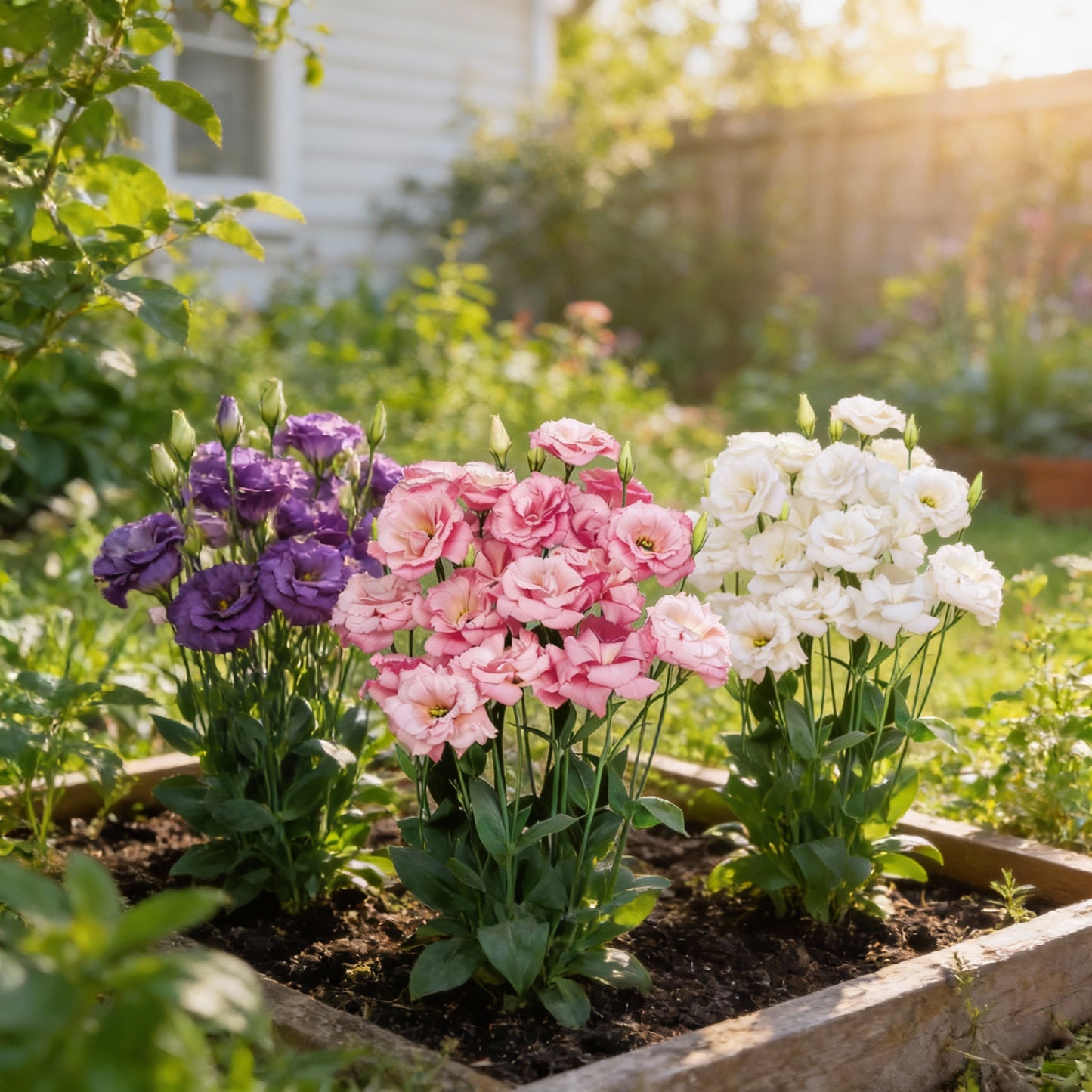
Rose-like Blooms

GROWTH HABIT
Upright

BLOOM SEASON
Spring–Summer

FLAVOUR PROFILE
Ornamental

SUITABLE FOR
Outdoor

PLANTING SEASON
Spring

FRUIT SIZE
N/A

PLANT HEIGHT
40–60 cm

LIGHT REQUIREMENT
Full Sun

WATER NEEDS
Moderate

HARDINESS ZONES
USDA 8–11

CONTAINER GARDEN
Yes

PLANT SPACING
20–25 cm

PLANTING DEPTH
Surface Sow

GROWING CONDITIONS
Well-drained Soil
Frequently Asked Questions
Why are Lisianthus flowers often mistaken for roses?
Why are Lisianthus flowers often mistaken for roses?
Lisianthus has layered, rose-like blooms and smooth petals, giving its flowers a similar visual appearance without being a rose.
Can Lisianthus be grown as a container flower?
Can Lisianthus be grown as a container flower?
Yes. The product page lists container growing as suitable when plants have well-drained soil and adequate sunlight.
How can tall Lisianthus stems be kept upright?
How can tall Lisianthus stems be kept upright?
Plant supports can be used when stems become tall or carry multiple blooms, particularly in exposed garden locations.
Why should Lisianthus seeds remain near the soil surface?
Why should Lisianthus seeds remain near the soil surface?
Light aids germination, so the page recommends surface sowing rather than burying the small seeds deeply.
Can mixed Lisianthus be used for repeated flower arrangements?
Can mixed Lisianthus be used for repeated flower arrangements?
Yes. Its ornamental blooms and suitability for cut flower harvesting make it useful for home floral arrangements.
What type of soil suits Lisianthus seedlings?
What type of soil suits Lisianthus seedlings?
Well-drained soil is recommended, with consistent moisture while avoiding waterlogged conditions.