Skip to product information
1 of 3

Mixed Rose Seeds for Planting – Blooms for Home Garden (50 Seeds)

Mixed Rose Seeds for Planting – Blooms for Home Garden (50 Seeds)

Regular price $16.39 USD
Regular price Sale price $16.39 USD
Sale Sold out
Quantity

How to Sow and Plant

Soil Preparation: Choose a well-draining garden bed or container filled with fertile, loamy soil enriched with compost or organic matter.
Sowing Seeds: Sow rose seeds about 1 cm deep, spacing them 3–5 cm apart if planting multiple seeds in a container or tray.
Moisture & Warmth: Keep the soil consistently moist but not waterlogged. Cover seeds lightly with soil or vermiculite.
Temperature: Maintain a warm environment (20–25°C) to encourage germination. Germination may take 2–4 weeks depending on variety.
Light: Place in a location with indirect sunlight until seedlings emerge.

How to Grow

Transplanting: Once seedlings have developed 2–3 sets of true leaves, transplant them to the garden or larger pots with 45–60 cm spacing.
Sunlight: Roses thrive in full sun, requiring at least 6–8 hours of direct sunlight daily.
Watering: Water deeply but infrequently to encourage strong root development. Avoid wetting the foliage to reduce fungal diseases.
Fertilizing: Feed with a balanced rose fertilizer every 4–6 weeks during the growing season. Organic alternatives like compost or well-rotted manure also work well.
Pruning: Lightly prune dead or weak stems after flowering to maintain plant shape and promote further blooms.

Tips

Use well-drained soil and avoid overwatering.
Regular feeding improves flowering performance.

View full details
About
Product Information
Features
life-cycle

LIFE CYCLE

Perennial

plant-characteristics

PLANT CHARACTERISTICS

Fragrant blooms

growth-habit

GROWTH HABIT

Woody shrub

bloom-season

BLOOM SEASON

Spring

flavour-profile

FLAVOUR PROFILE

Ornamental

suitable-for

SUITABLE FOR

Outdoor

About
Mixed Rose Seeds for Planting – Blooms for Home Garden (50 Seeds)
seed-type

SEED TYPE

Open pollinated

plant-type

PLANT TYPE

Flowering shrub

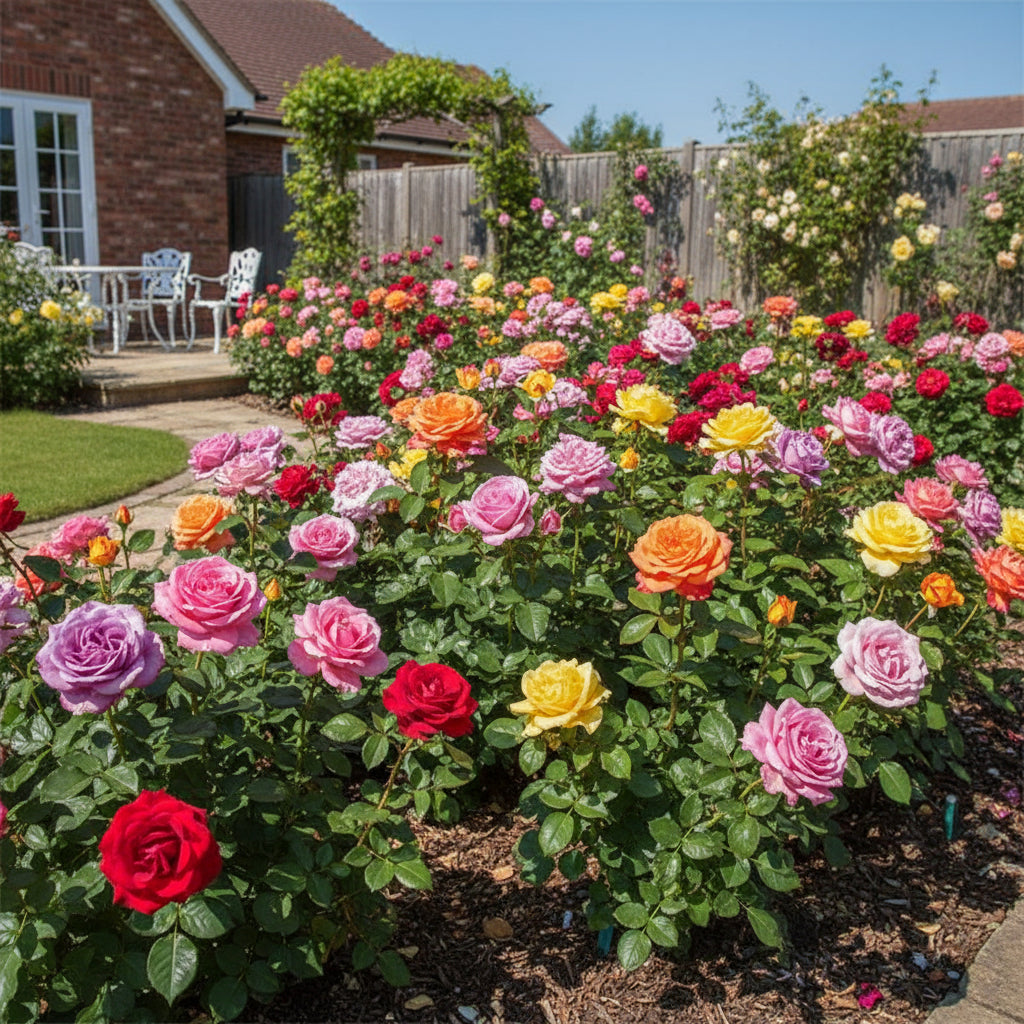
Roses (Rosa spp.) are classic perennial flowering shrubs, celebrated worldwide for their stunning, fragrant blooms and striking variety of colors. These plants not only enhance the beauty of gardens but are also ideal for cut flowers, bouquets, and floral arrangements. Mixed Rose varieties offer a combination of vibrant shades, creating a visually appealing garden display. They thrive in outdoor settings, are relatively hardy, and with proper care, can bloom multiple times per season, making them a favorite among gardeners, landscapers, and flower enthusiasts alike.

Planting information
planting-season

PLANTING SEASON

Winter–Spring

fruit-size

FRUIT SIZE

N/A

plant-height

PLANT HEIGHT

60–120 cm

light-requirement

LIGHT REQUIREMENT

Full sun

water-needs

WATER NEEDS

Moderate

hardiness-zones

HARDINESS ZONES

5–9

container-garden

CONTAINER GARDEN

Yes

plant-spacing

PLANT SPACING

45–60 cm

planting-depth

PLANTING DEPTH

1 cm

growing-conditions

GROWING CONDITIONS

Well-drained soil

Coverage
Seed Count
Recommended Coverage
SEED COUNT
100
GTIN
036000161083

Frequently Asked Questions

Will roses grown from mixed seeds have identical flower colors?

Not necessarily. Mixed rose seeds can produce seedlings with different flower characteristics, so bloom color and form may vary between plants.

Can mixed rose seedlings be grown as cut flowers?

Yes. Roses are commonly used for bouquets and floral arrangements. Select healthy plants with suitable stems and harvest flowers at an appropriate opening stage.

How much space should a mature rose seedling have?

The product page recommends 45–60 cm spacing between plants. Adequate spacing helps provide room for foliage development and airflow.

Can these rose seeds be started in trays before transplanting?

Yes. The instructions recommend sowing in trays or containers and transplanting seedlings after they develop 2–3 sets of true leaves.

Do seed-grown roses take longer to establish than established plants?

Seed-grown roses generally require a longer development period because they begin from seed rather than an established plant. Growth time can vary by variety and conditions.

Can mixed roses be combined with other flowering plants?

Yes. Their woody shrub form makes them suitable for mixed ornamental beds, provided neighboring plants have compatible light, spacing, and moisture requirements.