



Life Cycle
Perennial

Plant Characteristics
mushroom

Growth Habit
fungal

Bloom Season
autumn

Flavour Profile
Rich

Suitable for
Indoor /out door

Seed Type
spawn

Plant Type
mushroom

Planting Season
autumn

Fruit Size
Medium

Plant Height
10–20 cm

Light Requirement
Low light

Water Needs
High humidity

Hardiness Zones
3–9

Container Garden
Yes

Plant Spacing
Not applicable

Planting Depth
Surface

Growing Conditions
Cool
Frequently Asked Questions
Can King Bolete mushrooms produce large, thick-capped mushrooms under suitable conditions?
Can King Bolete mushrooms produce large, thick-capped mushrooms under suitable conditions?
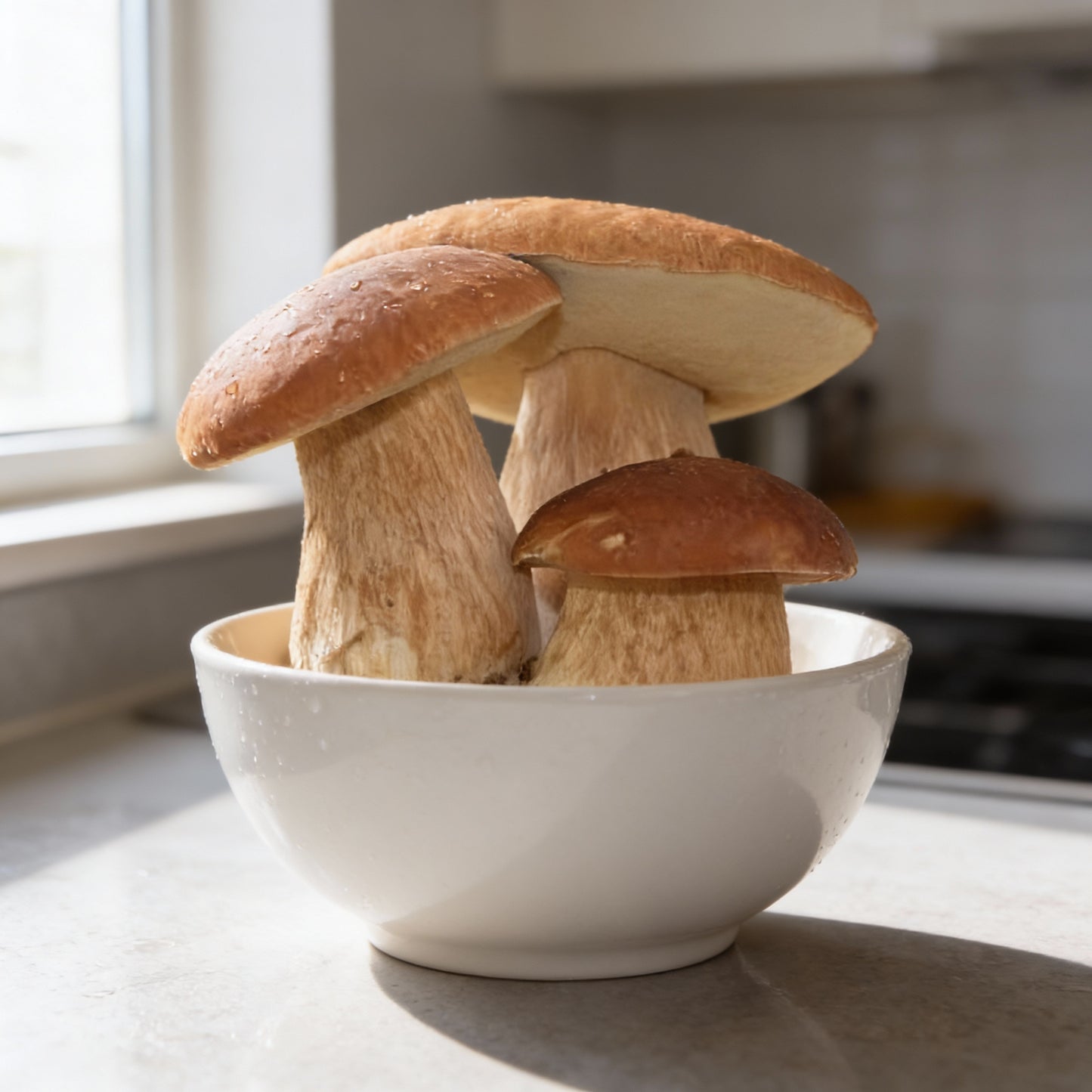
Yes. King Bolete is known for producing impressive mushrooms with broad brown caps and thick, sturdy stems when grown in appropriate environments.
Does King Bolete prefer growing in association with trees?
Does King Bolete prefer growing in association with trees?
Yes. This species naturally forms a beneficial relationship with the roots of certain trees, making suitable woodland conditions important for successful establishment.
Can King Bolete be cultivated in outdoor woodland-style settings?
Can King Bolete be cultivated in outdoor woodland-style settings?
Yes. It is best suited to outdoor environments that closely resemble its natural forest habitat with suitable host trees.
Will maintaining consistent moisture support healthy mycelium development?
Will maintaining consistent moisture support healthy mycelium development?
Yes. Even moisture and appropriate environmental conditions help support the establishment and growth of the mycelium.
Can King Bolete mushrooms be used in a variety of culinary recipes?
Can King Bolete mushrooms be used in a variety of culinary recipes?
Yes. The harvested mushrooms are widely enjoyed in soups, risottos, pasta dishes, sauces, roasting, sautéing, and many other cooked recipes.
How is King Bolete different from Shiitake mushrooms?
How is King Bolete different from Shiitake mushrooms?
King Bolete (Boletus edulis) naturally grows in association with living trees and produces thick-stemmed mushrooms with sponge-like pores beneath the cap, while Shiitake (Lentinula edodes) is typically cultivated on hardwood logs or sawdust and develops mushrooms with gills beneath the cap.