


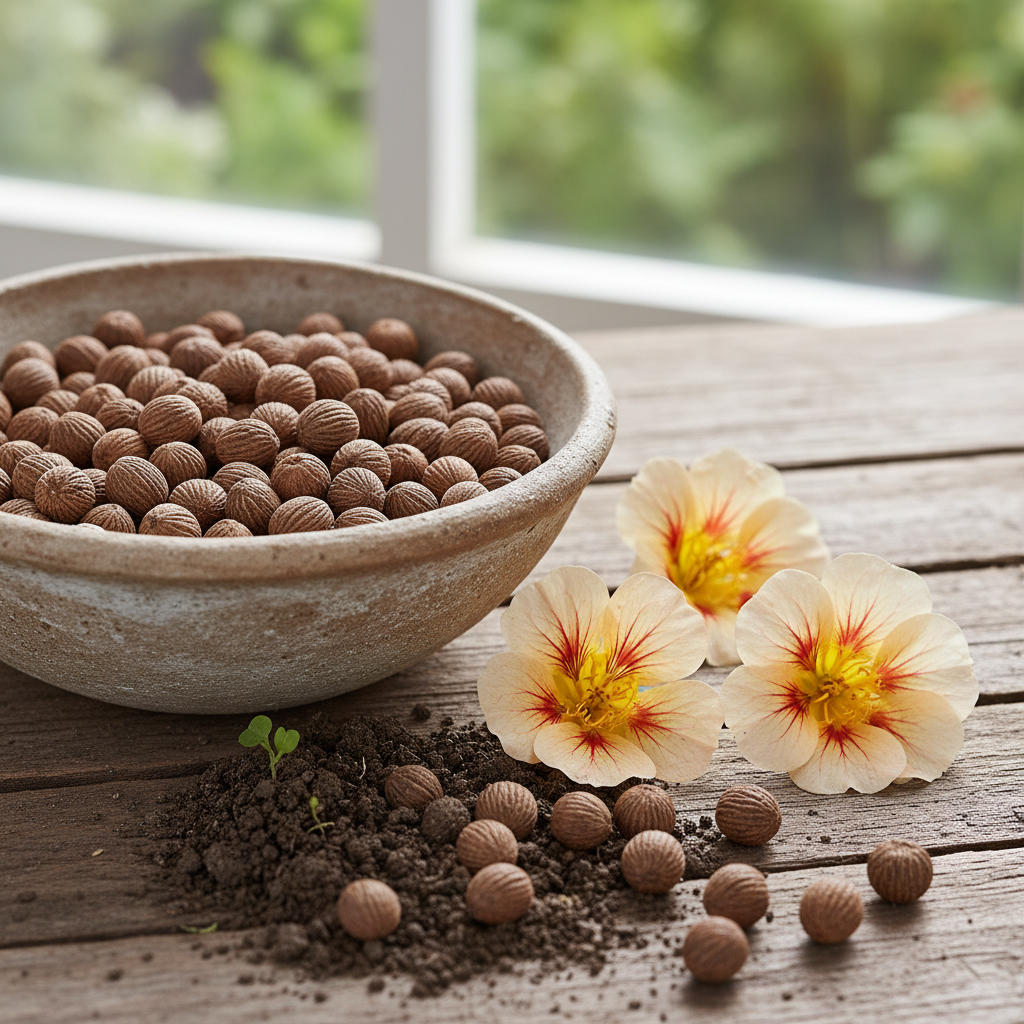

Life Cycle
Annual

Plant Characteristics
Edible Blooms

Growth Habit
Trailing

Bloom Season
Spring

Flavour Profile
Peppery

Suitable for
Outdoor

Planting Season
Spring

Fruit Size

Plant Height
25–30 cm

Light Requirement
Full Sun

Water Needs
Moderate

Hardiness Zones
Zones 2–11

Container Garden
Yes

Plant Spacing
20–25 cm

Planting Depth
1–2 cm

Growing Conditions
Well-drained Soil
Frequently Asked Questions
What makes Ladybird Rose different from climbing nasturtiums?
What makes Ladybird Rose different from climbing nasturtiums?
It forms compact, bushy plants with rose-toned flowers, making it suitable for borders and containers rather than vigorous climbing.
Can it brighten patio planters?
Can it brighten patio planters?
Yes. Its compact habit and colorful blooms make it an excellent choice for decorative pots and window boxes.
Which flowers pair well with Ladybird Rose?
Which flowers pair well with Ladybird Rose?
Alyssum, violas, marigolds, and lobelia create colorful companion plantings.
Can the flowers be used as edible garnishes?
Can the flowers be used as edible garnishes?
Yes. Nasturtium flowers are traditionally used as edible garnishes. Consume only correctly identified plants grown for culinary use.
Does it spread enough for border edging?
Does it spread enough for border edging?
Yes. Bushy growth creates attractive edging along flower beds and pathways.
Do pollinators visit the blooms?
Do pollinators visit the blooms?
The flowers may attract bees and other beneficial pollinating insects throughout the flowering season.