



LIFE CYCLE
Perennial

PLANT CHARACTERISTICS
Large

GROWTH HABIT
Climbing

BLOOM SEASON
Primarily grown

FLAVOUR PROFILE
Not edible

SUITABLE FOR
Indoor

SEED TYPE
NON-GMO

PLANT TYPE
Perennial

PLANTING SEASON
Spring

FRUIT SIZE
N/A

PLANT HEIGHT
6–15 feet

LIGHT REQUIREMENT
Bright

WATER NEEDS
Moderate

HARDINESS ZONES
9–11

CONTAINER GARDEN
Yes

PLANT SPACING
Flexible

PLANTING DEPTH
Surface

GROWING CONDITIONS
Warm temperatures
Frequently Asked Questions
Can Monstera deliciosa be trained to climb a moss pole?
Can Monstera deliciosa be trained to climb a moss pole?
Yes. As a natural climbing vine, it develops aerial roots that attach to moss poles or similar supports, encouraging larger, mature leaves.
Why do mature Monstera leaves develop natural holes?
Why do mature Monstera leaves develop natural holes?
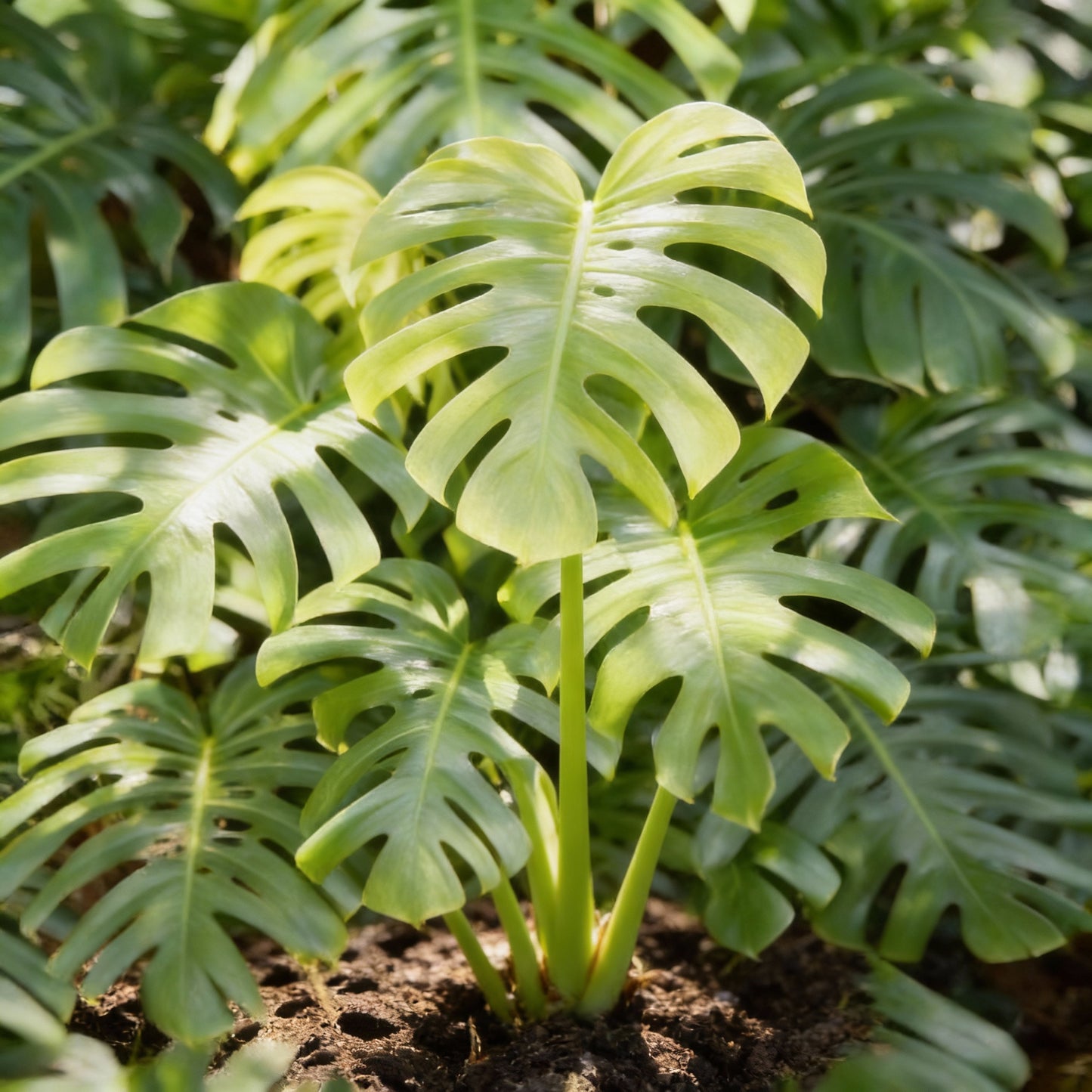
The characteristic holes and splits, known as fenestrations, develop as the plant matures under suitable growing conditions and are a natural feature of the species.
Can Monstera deliciosa be grown as an indoor statement plant?
Can Monstera deliciosa be grown as an indoor statement plant?
Yes. Its large tropical foliage and upright climbing habit make it a popular focal point for living rooms, offices, and other indoor spaces.
Will the leaves become larger as the plant matures?
Will the leaves become larger as the plant matures?
Yes. Mature plants typically produce much larger leaves with more pronounced splits and holes than juvenile plants.
Does Monstera deliciosa need high humidity for healthy growth?
Does Monstera deliciosa need high humidity for healthy growth?
It grows best with moderate to high humidity, although it can adapt to typical indoor conditions when given proper care.
Is Monstera deliciosa safe around pets?
Is Monstera deliciosa safe around pets?
No. Monstera contains calcium oxalate crystals that can irritate the mouth and digestive tract if chewed or ingested by pets, so it should be kept out of reach.