



Life Cycle
Annual

Plant Characteristics
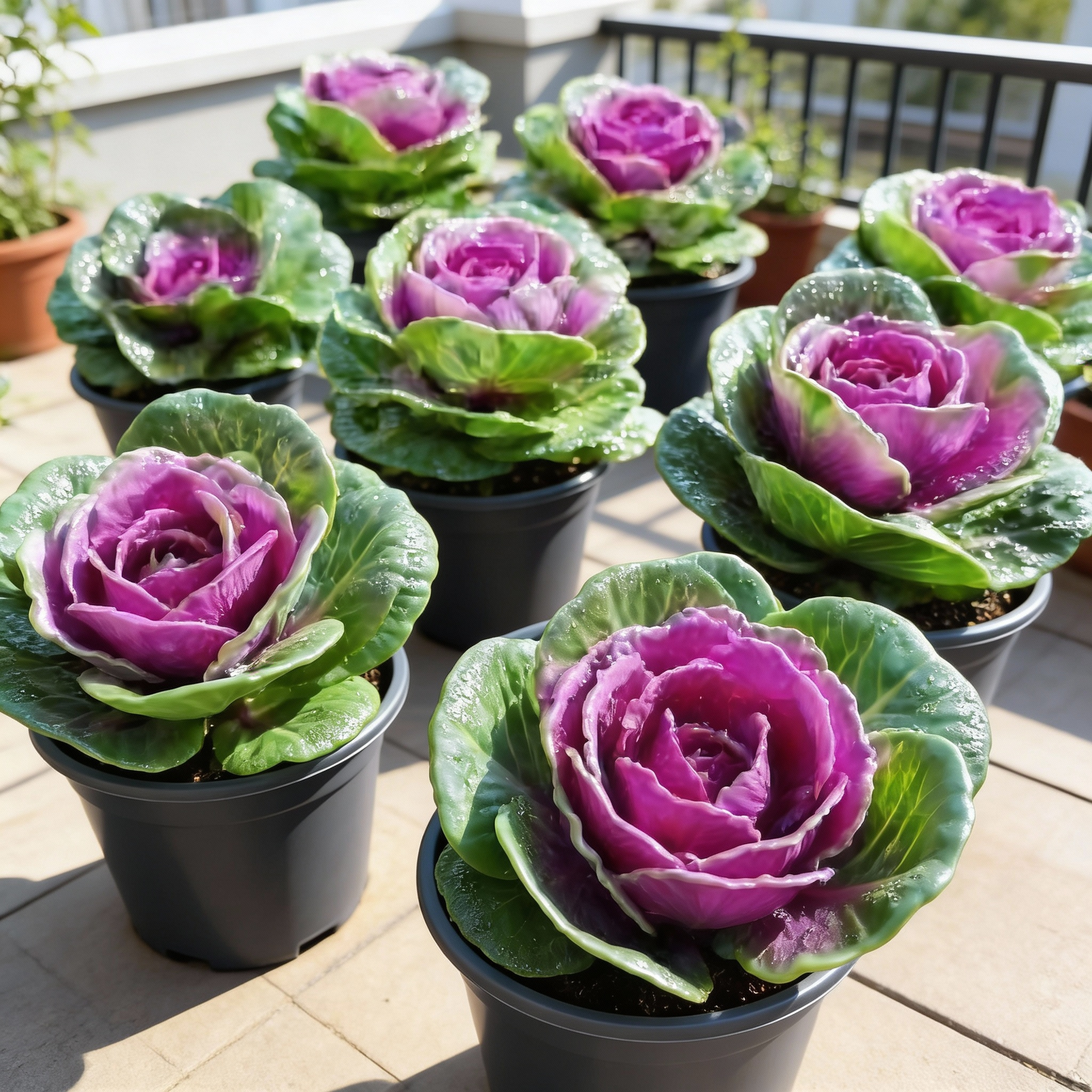
Colorful foliage

Growth Habit
Upright

Bloom Season
Winter

Flavour Profile
rather than

Suitable for
Outdoor

Seed Type
Open pollinated

Plant Type
vegetable

Planting Season
Autumn

Fruit Size
Medium

Plant Height
30–45 cm

Light Requirement
Full sun

Water Needs
Moderate

Hardiness Zones
2–11

Container Garden
Yes

Plant Spacing
30–40 cm

Planting Depth
0.5–1 cm

Growing Conditions
Cool
Frequently Asked Questions
Can Ornamental Cabbage produce colorful rosettes that brighten cool-season gardens?
Can Ornamental Cabbage produce colorful rosettes that brighten cool-season gardens?
Yes. Ornamental Cabbage is admired for its large, vibrant rosettes of colorful foliage that provide striking visual interest during the cooler months.
Does the foliage become more colorful as temperatures cool?
Does the foliage become more colorful as temperatures cool?
Yes. Cooler weather often enhances the intensity of the foliage colors, creating an even more attractive ornamental display.
Can Ornamental Cabbage be grown in containers, borders, or garden beds?
Can Ornamental Cabbage be grown in containers, borders, or garden beds?
Yes. It performs well in containers, raised beds, borders, window boxes, and landscape plantings with fertile, well-drained soil.
Will removing damaged outer leaves help maintain an attractive appearance?
Will removing damaged outer leaves help maintain an attractive appearance?
Yes. Regularly removing older or damaged leaves helps keep the plants neat and showcases the colorful central rosette.
Can Ornamental Cabbage be combined with other cool-season flowers for decorative displays?
Can Ornamental Cabbage be combined with other cool-season flowers for decorative displays?
Yes. Its colorful foliage pairs beautifully with pansies, violas, chrysanthemums, and other cool-season ornamental plants in mixed containers and garden beds.
How is Ornamental Cabbage different from edible cabbage?
How is Ornamental Cabbage different from edible cabbage?
Ornamental Cabbage (Brassica oleracea var. acephala group) is primarily grown for its colorful decorative foliage, while edible cabbage (Brassica oleracea var. capitata) is cultivated for its compact leafy heads intended for culinary use.