


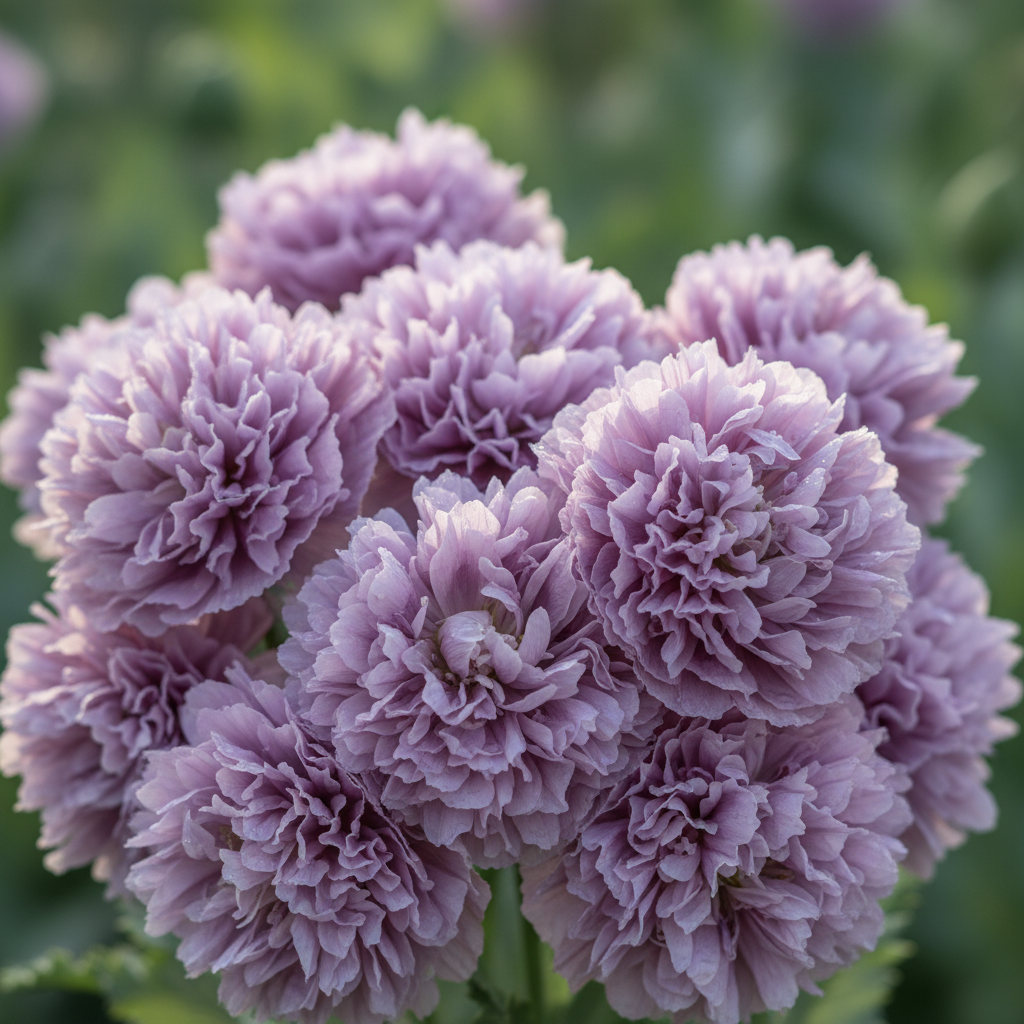

Life Cycle
Annual

Plant Characteristics
Fluffy blooms

Growth Habit
Upright

Bloom Season
Spring

Flavour Profile
Ornamental

Suitable for
Outdoor

Seed Type
Open Pollinated

Plant Type
Flowering plant

Planting Season
Winte

Fruit Size
N/A

Plant Height
60–90 cm

Light Requirement
Full sun

Water Needs
Low to Moderate

Hardiness Zones
3–9

Container Garden
Limited

Plant Spacing
20–30 cm

Planting Depth
Surface sow

Growing Conditions
Well-drained soil
Frequently Asked Questions
What makes Lilac Pom Pom poppies different from single blooms?
What makes Lilac Pom Pom poppies different from single blooms?
Lilac Pom Pom is notable for its densely layered, double flower form, giving the blooms a fuller appearance than simple single-flowered poppies.
Can Lilac Pom Pom poppies be used in cottage garden borders?
Can Lilac Pom Pom poppies be used in cottage garden borders?
Yes. Their upright stems and soft lilac flower color can add height and visual interest to informal cottage-style borders.
Are Papaver somniferum seeds subject to local growing rules?
Are Papaver somniferum seeds subject to local growing rules?
Regulations for Papaver somniferum can vary by location. Check applicable local laws and gardening rules before planting these seeds.
Can these poppies be useful in a cut-flower garden?
Can these poppies be useful in a cut-flower garden?
Yes. Their distinctive flower form can add visual variety to seasonal cut-flower arrangements and decorative garden displays.
What plants can contrast with lilac poppy flowers?
What plants can contrast with lilac poppy flowers?
Plants with white, blue, silver, or deep green foliage can provide attractive contrast against the soft lilac blooms.
Does the Pom Pom flower form add garden texture?
Does the Pom Pom flower form add garden texture?
Yes. The layered petals create a textured floral appearance that contrasts with simple flowers and fine-leaved companion plants.