


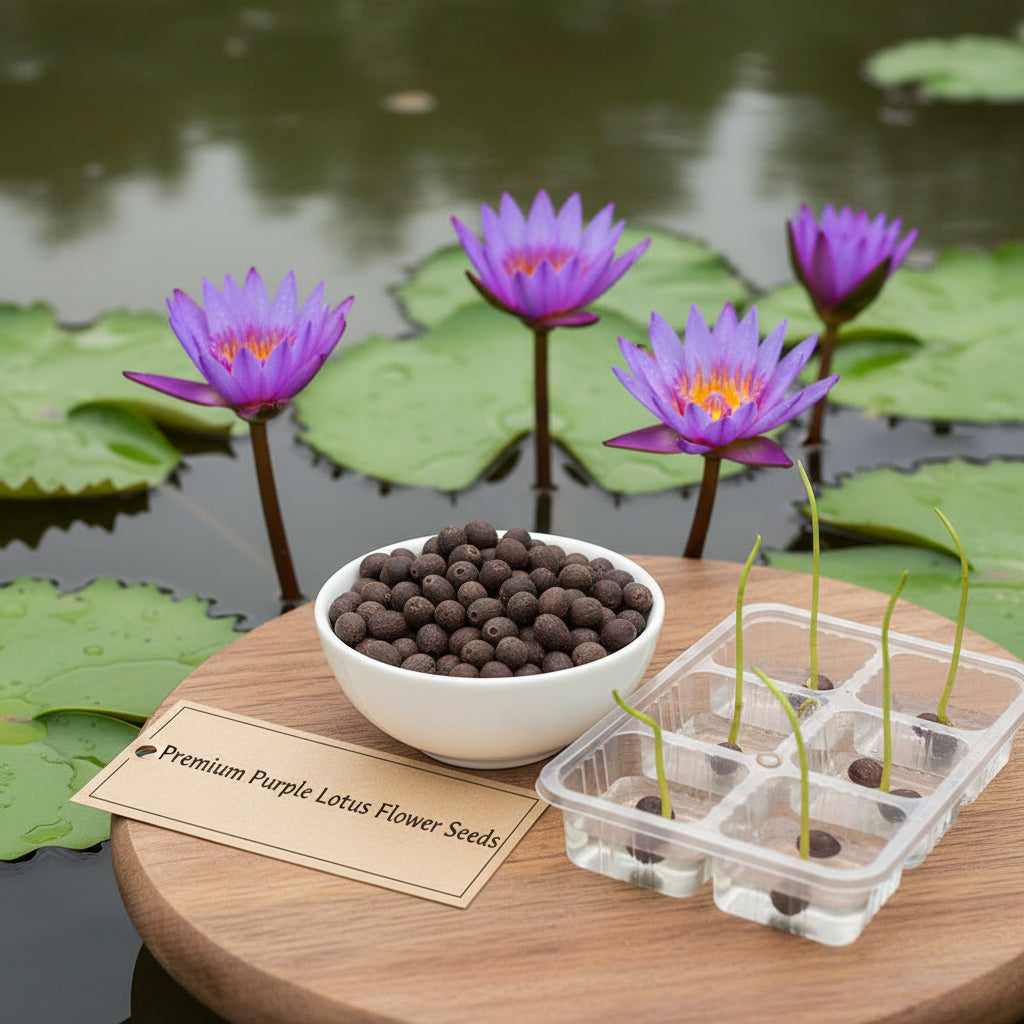

LIFE CYCLE
Perennial

PLANT CHARACTERISTICS
Purple Blooms

GROWTH HABIT
Aquatic Rhizomatous

BLOOM SEASON
Summer

FLAVOUR PROFILE
Ornamental

SUITABLE FOR
Outdoor

PLANTING SEASON
Spring

FRUIT SIZE
N/A

PLANT HEIGHT
Tall

LIGHT REQUIREMENT
Full Sun

WATER NEEDS
High

HARDINESS ZONES
Warm

CONTAINER GARDEN
Yes

PLANT SPACING
Wide

PLANTING DEPTH
Submerged

GROWING CONDITIONS
Aquatic
Frequently Asked Questions
How deep should a Purple Lotus container be for long-term growth?
How deep should a Purple Lotus container be for long-term growth?
Use a spacious aquatic container that provides enough depth for developing roots while allowing leaves to reach the water surface.
Can Purple Lotus be grown in a small backyard water feature?
Can Purple Lotus be grown in a small backyard water feature?
Yes, provided the water feature offers sufficient sunlight, stable water conditions, and enough room for the lotus to develop.
Why should lotus leaves remain above the water surface?
Why should lotus leaves remain above the water surface?
Healthy leaves naturally extend toward or above the surface, allowing the plant to receive the light needed for vigorous growth.
How can fallen lotus foliage be managed in a pond?
How can fallen lotus foliage be managed in a pond?
Remove decaying leaves and other debris periodically to keep the water feature tidy and reduce organic buildup.
Can Purple Lotus be combined with other aquatic plants?
Can Purple Lotus be combined with other aquatic plants?
Yes. Combine it with compatible aquatic plants while leaving enough open water for lotus leaves and flowers to spread.
What makes Purple Lotus suitable for ornamental water gardens?
What makes Purple Lotus suitable for ornamental water gardens?
Its floating or elevated foliage and distinctive purple flowers create vertical and surface-level interest in aquatic landscapes.