


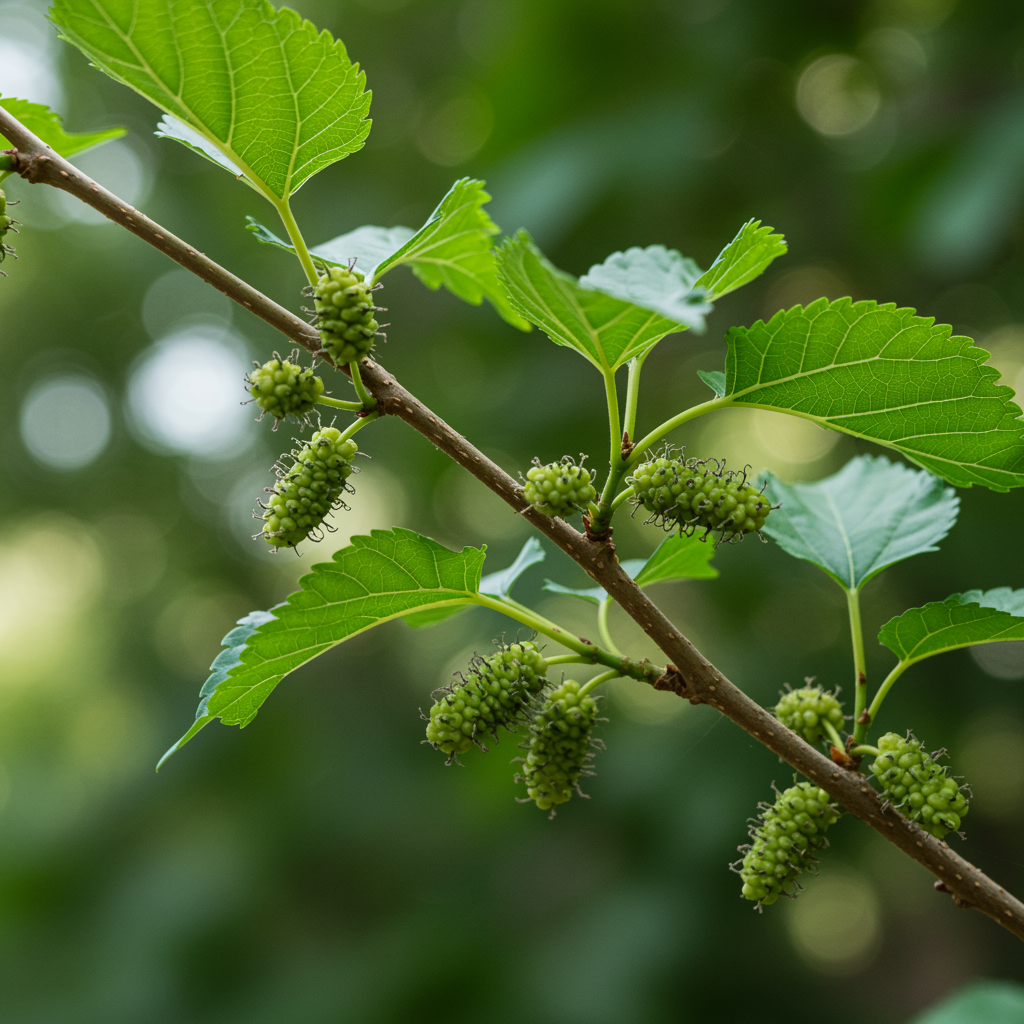

LIFE CYCLE
Perennial

PLANT CHARACTERISTICS
Deciduous

GROWTH HABIT
Weeping

BLOOM SEASON
Spring

FLAVOUR PROFILE
Sweet

SUITABLE FOR
Outdoor

PLANTING SEASON
Spring

FRUIT SIZE
1–1.5 in

PLANT HEIGHT
10–20 ft

LIGHT REQUIREMENT
Full sun

WATER NEEDS
Moderate

HARDINESS ZONES
Temperate

CONTAINER GARDEN
Yes

PLANT SPACING
12–15 ft

PLANTING DEPTH
0.5–1 in

GROWING CONDITIONS
Well drained
Frequently Asked Questions
How can the weeping form be maintained?
How can the weeping form be maintained?
Annual light pruning can help maintain the characteristic drooping shape and keep the tree visually balanced.
Should young weeping mulberry trees be protected from wind?
Should young weeping mulberry trees be protected from wind?
Yes. Young plants benefit from a sheltered location and protection from strong winds while establishing.
Can this mulberry be grown as a landscape focal point?
Can this mulberry be grown as a landscape focal point?
Yes. Its cascading branches give it a distinctive ornamental form suitable for focal planting.
Does weeping mulberry produce edible berries?
Does weeping mulberry produce edible berries?
The product describes it as an ornamental fruit tree producing sweet edible berries.
Can weeping mulberry grow in a container?
Can weeping mulberry grow in a container?
Yes. Container gardening is listed as suitable, although adequate space is needed as the tree develops.
Why is pruning important for this mulberry?
Why is pruning important for this mulberry?
Light annual pruning helps preserve the weeping form, manage branches and maintain an orderly appearance.