


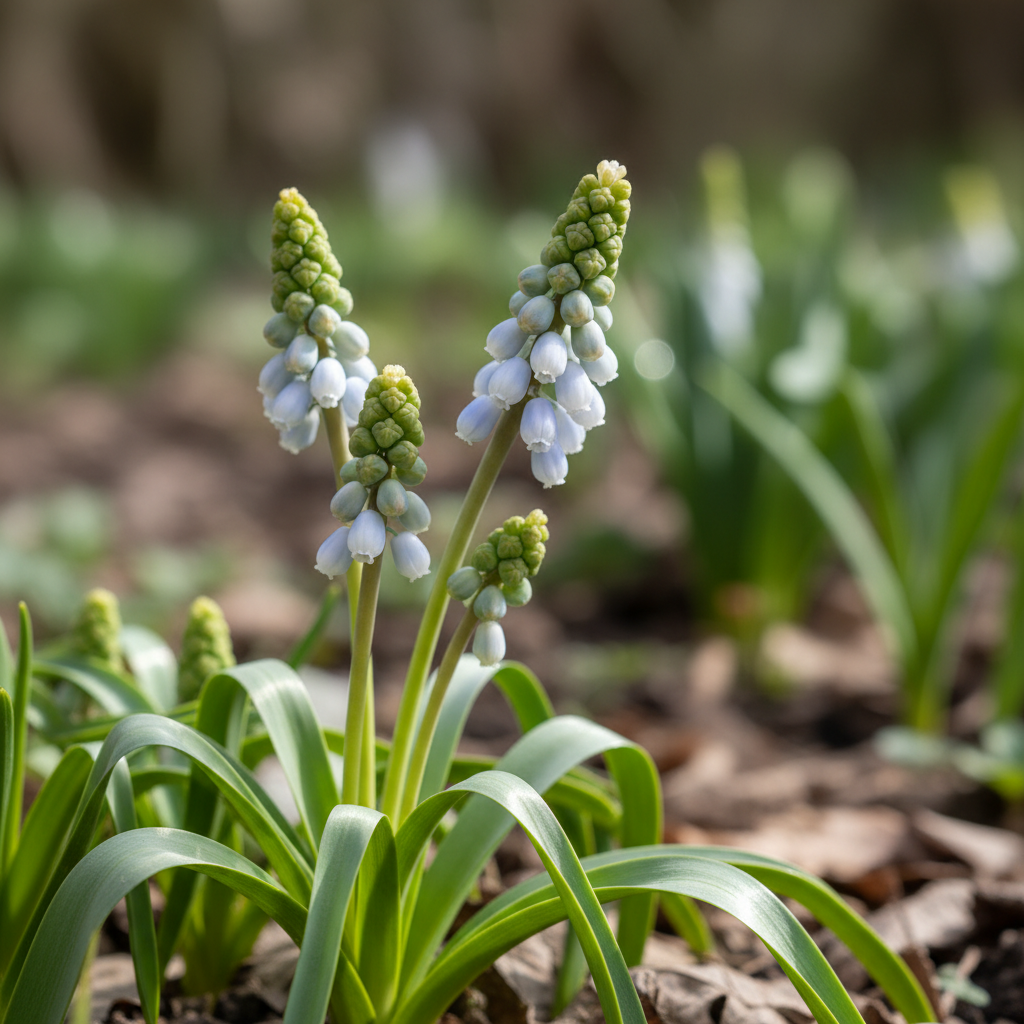

Life Cycle
Perennial

Plant Characteristics
Compact

Growth Habit
Clump-forming

Bloom Season
Early to Mid Spring

Flavour Profile
N/A

Suitable for
Outdoor

Planting Season
Autumn to Early Winter

Fruit Size
N/A

Plant Height
15–25 cm

Light Requirement
Full Sun to Partial Shade

Water Needs
Moderate

Hardiness Zones
Zones 4–9

Container Garden
Yes

Plant Spacing
10–15 cm

Planting Depth
Surface sow to 0.5 cm

Growing Conditions
Cool climate
Frequently Asked Questions
How does Pseudomuscari differ from grape hyacinths?
How does Pseudomuscari differ from grape hyacinths?
Although closely related, Pseudomuscari has its own botanical classification and produces distinctive flower clusters with a refined appearance.
Can it be planted beneath deciduous trees?
Can it be planted beneath deciduous trees?
Yes. It benefits from spring sunlight before tree canopies fully develop, making it suitable for woodland-style plantings.
Does it look best in small groups or large drifts?
Does it look best in small groups or large drifts?
Planting several together creates a fuller and more natural-looking spring display than individual plants.
Will the flowers complement rock gardens?
Will the flowers complement rock gardens?
Yes. Its compact size blends naturally with stones, gravel beds, and alpine-style landscapes.
Can it be combined with early spring bulbs?
Can it be combined with early spring bulbs?
Yes. It pairs attractively with crocus, dwarf daffodils, and other early-flowering ornamental bulbs.
Does the flower color remain consistent?
Does the flower color remain consistent?
Blooms generally stay within their characteristic white tones, although light and temperature may slightly influence their appearance.