


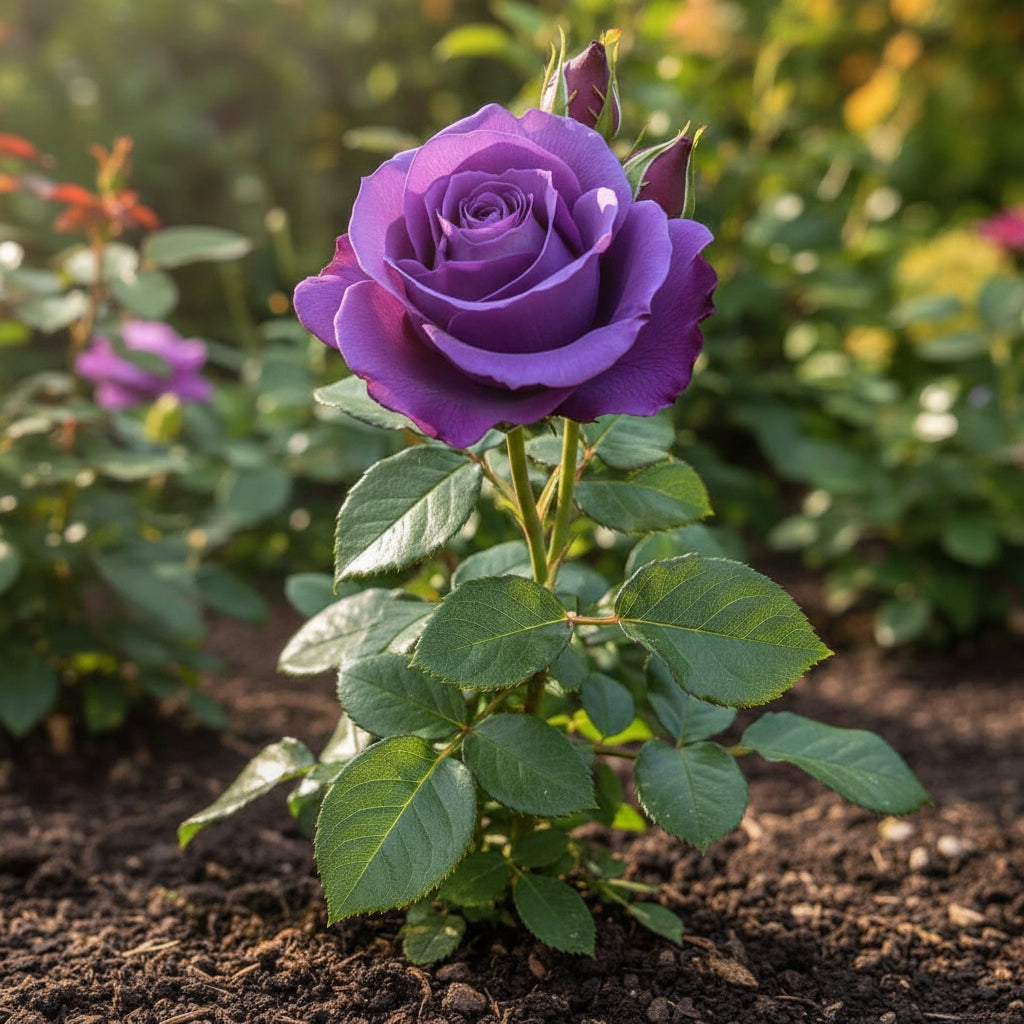

LIFE CYCLE
Perennial

PLANT CHARACTERISTICS
Exotic blooms

GROWTH HABIT
Bushy

BLOOM SEASON
Spring

FLAVOUR PROFILE
Ornamental

SUITABLE FOR
Outdoor

SEED TYPE
Open Pollinated

PLANT TYPE
Flowering Shrub

PLANTING SEASON
Winter

FRUIT SIZE
N/A

PLANT HEIGHT
60–120 cm

LIGHT REQUIREMENT
Full Sun

WATER NEEDS
Moderate

HARDINESS ZONES
USDA Zones 6–10

CONTAINER GARDEN
Yes

PLANT SPACING
45–60 cm

PLANTING DEPTH
0.5–1 cm

GROWING CONDITIONS
Well-drained soil
Frequently Asked Questions
Are purple blue roses naturally occurring in all varieties?
Are purple blue roses naturally occurring in all varieties?
Rose colors can vary by variety and growing conditions. Purple-blue shades are often associated with selected ornamental cultivars.
How can rose plants be shaped in gardens?
How can rose plants be shaped in gardens?
Regular pruning helps maintain plant form, encourage branching, and improve the overall appearance of rose shrubs.
Can roses be grown in containers?
Can roses be grown in containers?
Yes, roses can grow in suitable containers with enough space, drainage, sunlight, and proper care.
What garden styles suit purple roses?
What garden styles suit purple roses?
Purple-toned roses complement cottage gardens, flower borders, and decorative landscape designs.
Do rose flowers attract pollinators?
Do rose flowers attract pollinators?
Rose blooms can attract visiting insects, especially when flowers provide accessible pollen.
When is the best time to prune roses?
When is the best time to prune roses?
Pruning is usually done during suitable seasonal periods depending on local climate and rose growth patterns.