



Life Cycle
Perennial

Plant Characteristics
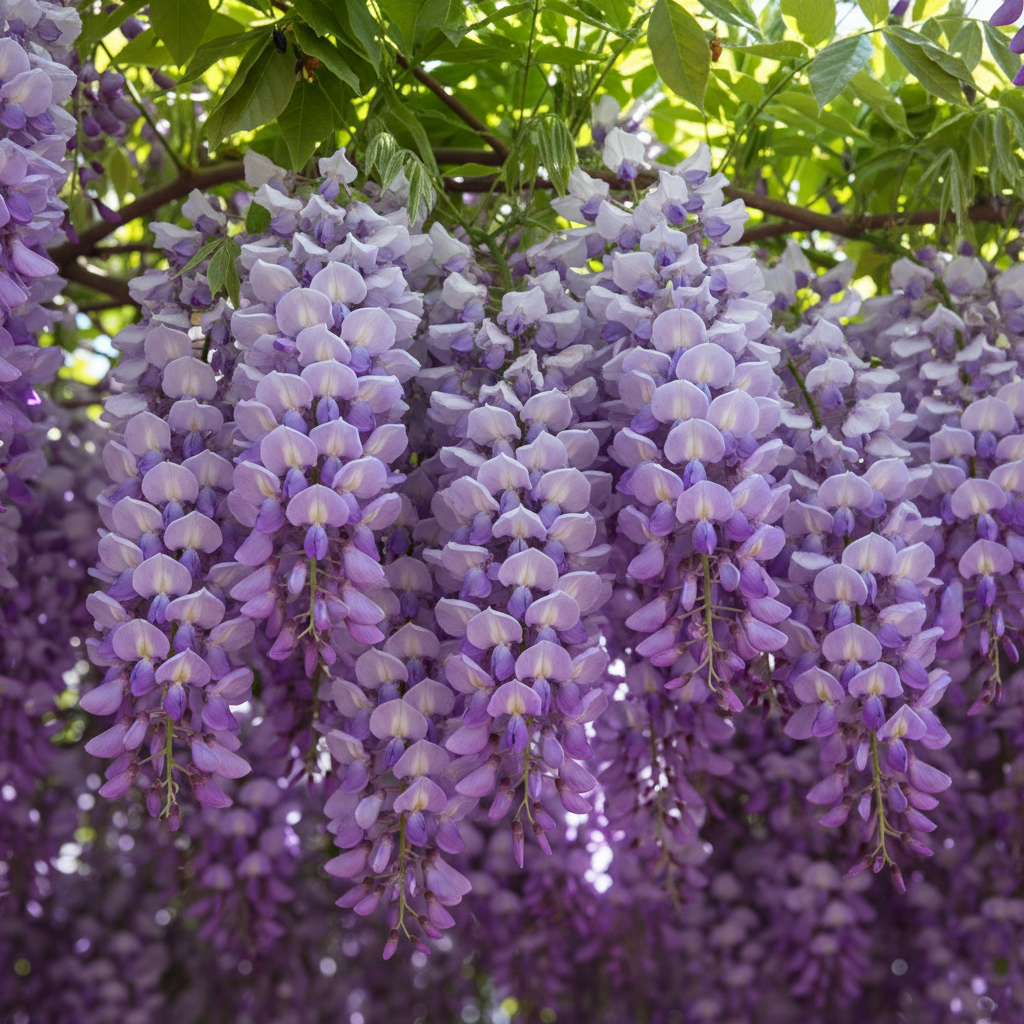
Fragrant flowers

Growth Habit
Climbing

Bloom Season
Spring

Flavour Profile
Ornamental

Suitable for
Outdoor

Seed Type
Non-GMO

Plant Type
Flowering perennial

Planting Season
Spring

Fruit Size
N/A

Plant Height
6–9 m

Light Requirement
Full Sun

Water Needs
Moderate

Hardiness Zones
USDA 5–9

Container Garden
Yes

Plant Spacing
2–3 m

Planting Depth
1–2 cm

Growing Conditions
Well-drained soil
Frequently Asked Questions
Can purple wisteria be trained over a garden entrance?
Can purple wisteria be trained over a garden entrance?
Yes. A strong pergola, arch, or trellis can direct its climbing growth over an entrance while providing support for mature vines.
Why does wisteria need a strong support structure?
Why does wisteria need a strong support structure?
Mature vines become substantial, so sturdy structures such as reinforced trellises or pergolas are better suited to supporting long-term growth.
Can wisteria be used to frame a garden view?
Can wisteria be used to frame a garden view?
Yes. Training the vine along a defined structure can create a natural frame around paths, entrances, or selected landscape views.
How can I keep wisteria from covering nearby plants?
How can I keep wisteria from covering nearby plants?
Train new growth toward its support and prune unwanted shoots so the vine remains within its intended growing area.
Can purple wisteria provide shade over a pergola?
Can purple wisteria provide shade over a pergola?
Its climbing habit can eventually create overhead foliage, but the support should be designed to accommodate mature vine growth.
What makes wisteria suitable for a vertical garden feature?
What makes wisteria suitable for a vertical garden feature?
Its climbing habit, fragrant flowers, and tall growth make it well suited to large structures where vertical space is available.