


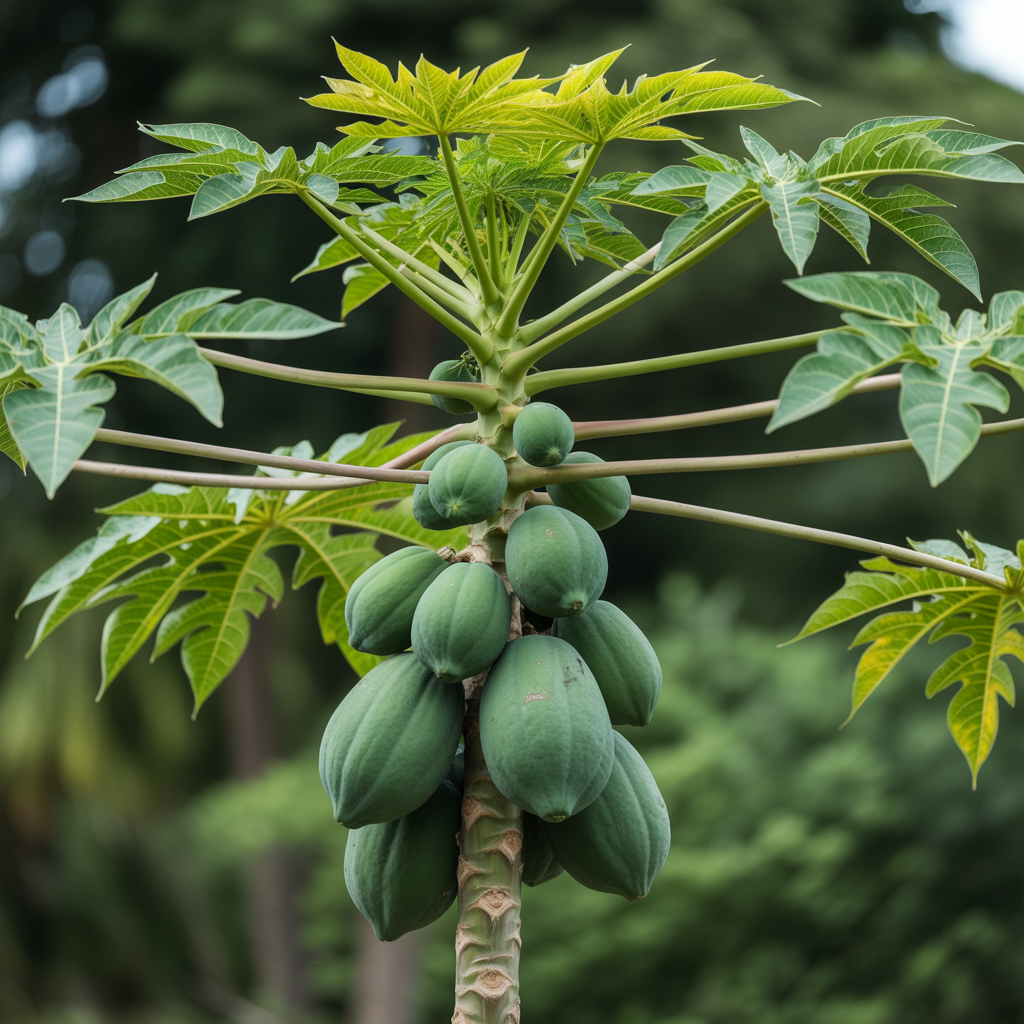

LIFE CYCLE
Perennial

PLANT CHARACTERISTICS
Fruiting

GROWTH HABIT
Upright

BLOOM SEASON
Year-round

FLAVOUR PROFILE
Sweet

SUITABLE FOR
out door

SEED TYPE
Open-pollinated

PLANT TYPE
Fruit

PLANTING SEASON
Spring–Summer

FRUIT SIZE
Large

PLANT HEIGHT
6–10 feet

LIGHT REQUIREMENT
full sun

WATER NEEDS
Moderate

HARDINESS ZONES
9–11

CONTAINER GARDEN
Limited

PLANT SPACING
6–8 feet

PLANTING DEPTH
½ inch

GROWING CONDITIONS
Warm
Frequently Asked Questions
Can Pusa Delicious Papaya produce sweet, juicy tropical fruits on vigorous plants?
Can Pusa Delicious Papaya produce sweet, juicy tropical fruits on vigorous plants?
Yes. Pusa Delicious Papaya is known for producing abundant, flavorful fruits with attractive orange flesh under suitable growing conditions.
Do the flowers attract bees and other beneficial pollinators?
Do the flowers attract bees and other beneficial pollinators?
Yes. The blossoms attract bees and other beneficial pollinating insects, supporting healthy pollination and fruit development.
Can Pusa Delicious Papaya be grown in gardens or large containers in warm climates?
Can Pusa Delicious Papaya be grown in gardens or large containers in warm climates?
Yes. It performs well in sunny gardens, orchards, and large containers with fertile, well-drained soil in frost-free conditions.
Will consistent watering and regular care support healthy fruit production?
Will consistent watering and regular care support healthy fruit production?
Yes. Providing full sun, consistent moisture, and fertile soil encourages vigorous growth and reliable fruit development.
Can Pusa Delicious Papaya fruits be enjoyed fresh or used in a variety of recipes?
Can Pusa Delicious Papaya fruits be enjoyed fresh or used in a variety of recipes?
Yes. The ripe fruits are excellent for fresh eating, smoothies, fruit salads, juices, desserts, jams, and many other homemade recipes.
How is Pusa Delicious Papaya different from Maradol Papaya?
How is Pusa Delicious Papaya different from Maradol Papaya?
Pusa Delicious Papaya (Carica papaya) is a productive variety valued for its sweet, juicy fruits and reliable performance, while Maradol Papaya (Carica papaya) typically produces much larger, elongated fruits with thick orange-red flesh and is widely grown for its impressive fruit size.