



LIFE CYCLE
Perennial

PLANT CHARACTERISTICS
Exotic

GROWTH HABIT
upright

BLOOM SEASON
Late Spring

FLAVOUR PROFILE
Not applicable

SUITABLE FOR
Outdoor

SEED TYPE
Open pollinated

PLANT TYPE
Flowering

PLANTING SEASON
Spring

FRUIT SIZE
Not applicable

PLANT HEIGHT
90 to 180 cm

LIGHT REQUIREMENT
Full sun

WATER NEEDS
Low

HARDINESS ZONES
9 to 11

CONTAINER GARDEN
Yes

PLANT SPACING
60 to 90 cm

PLANTING DEPTH
Surface sow

GROWING CONDITIONS
Well drained
Frequently Asked Questions
Is it true this plant can trap and even kill small animals like sheep?
Is it true this plant can trap and even kill small animals like sheep?
Yes, this is a documented but incidental occurrence in its native Chile — sheep or birds can occasionally become caught in its spiny rosette and die, with the decomposing remains helping fertilize the plant, though it isn't an actively carnivorous plant in the Venus flytrap sense.
How many years does it typically take before this plant first blooms from seed?
How many years does it typically take before this plant first blooms from seed?
Puya species are notoriously slow to mature, sometimes taking well over a decade, and in some cases decades, before producing their first flower spike.
Why is the flower color considered so remarkable?
Why is the flower color considered so remarkable?
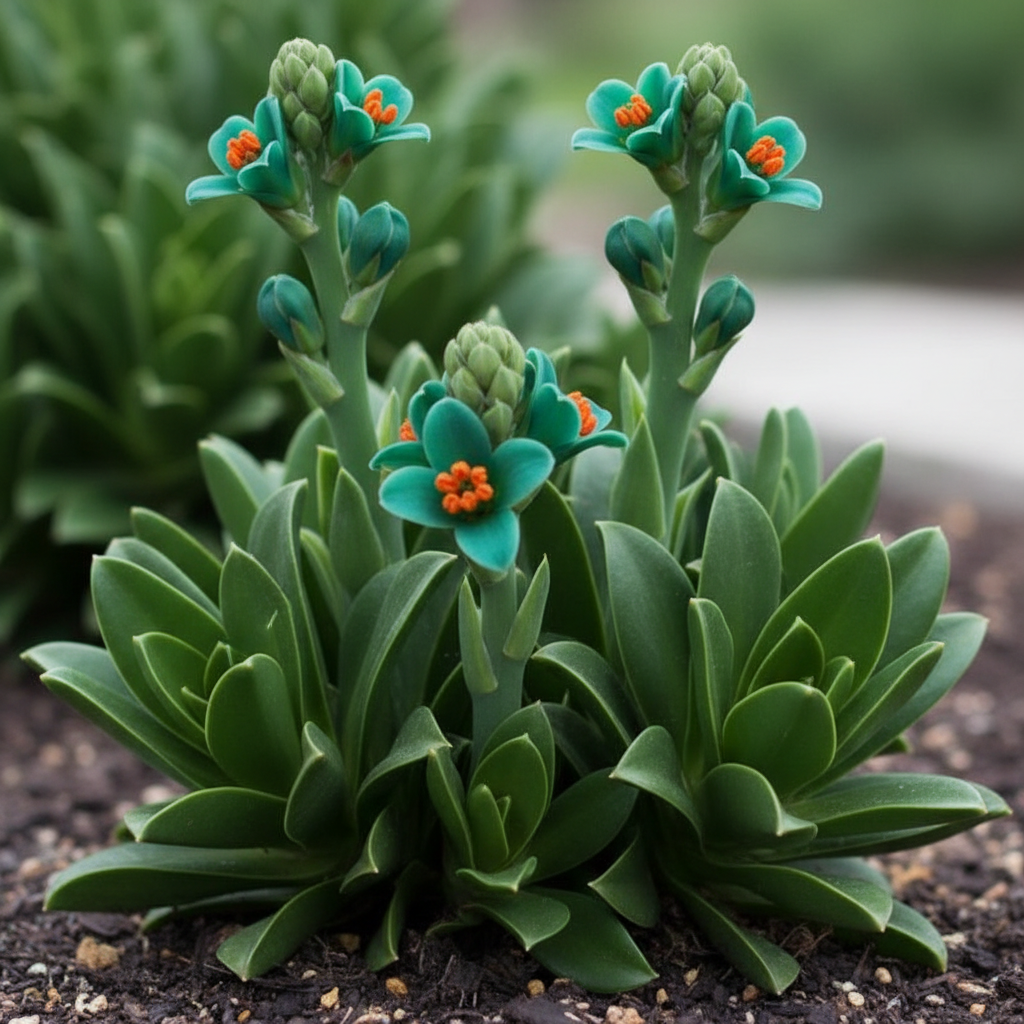
Its metallic turquoise-blue-green bloom color is genuinely rare in the plant world, making it one of the most unusual flower colors found in nature.
Is this plant actually related to pineapples?
Is this plant actually related to pineapples?
Yes, despite its spiky, un-tropical appearance, Puya belongs to the bromeliad family (Bromeliaceae), the same family that includes pineapples.
What kind of spines does this plant have, and how dangerous are they?
What kind of spines does this plant have, and how dangerous are they?
Its leaf margins have small, hooked, barb-like spines rather than simple straight thorns, which can snag skin or clothing more persistently than an ordinary prickle.
Why does it need such dry, sunny conditions to thrive?
Why does it need such dry, sunny conditions to thrive?
It's native to high-altitude, arid mountain regions in Chile, so it's adapted to intense sun and minimal water, conditions it needs replicated in cultivation.