


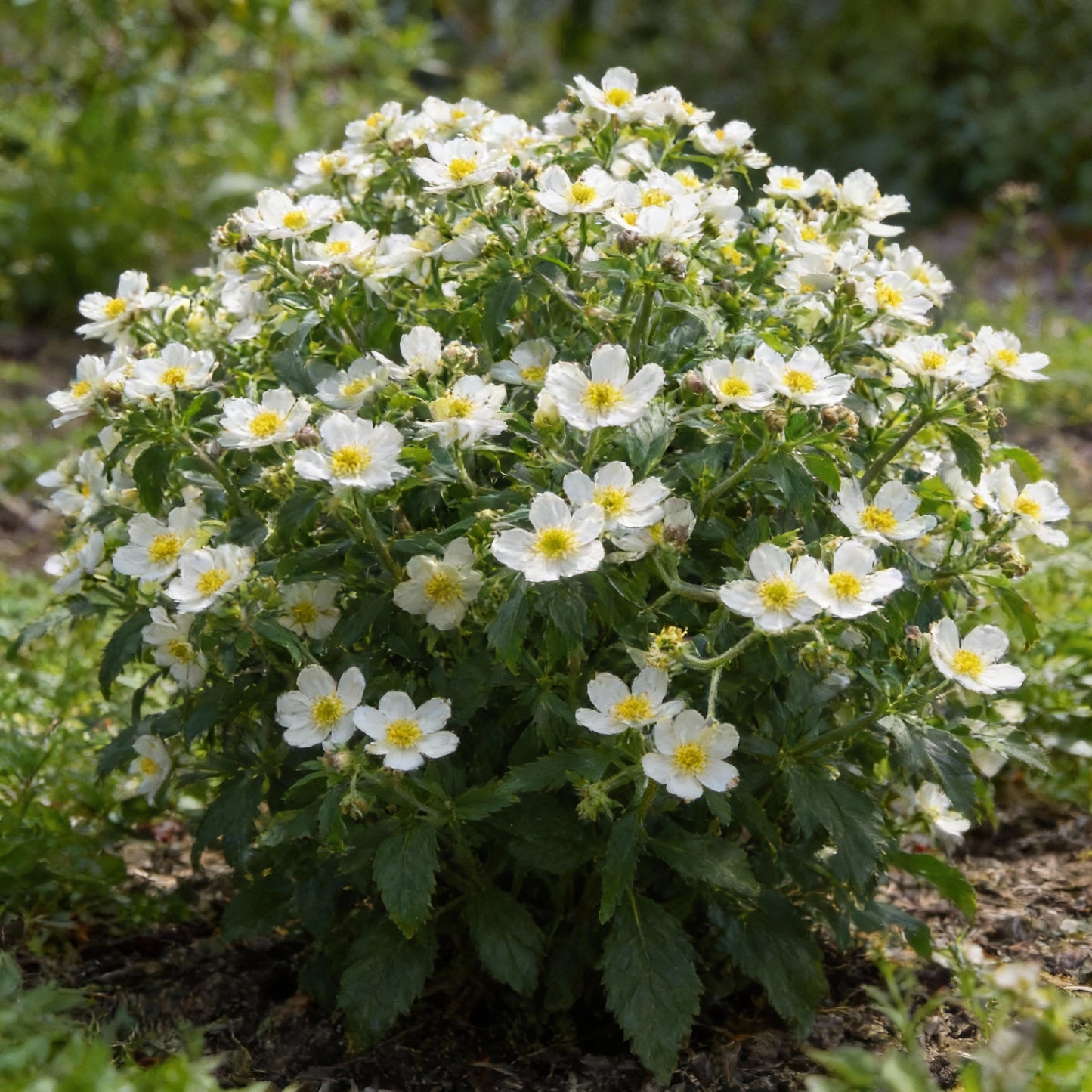

LIFE CYCLE
Perennial

PLANT CHARACTERISTICS
Herbaceous

GROWTH HABIT
Erect bushy

BLOOM SEASON
Late spring

FLAVOUR PROFILE
Non-edible

SUITABLE FOR
Outdoor

PLANTING SEASON
Spring

FRUIT SIZE
N/A

PLANT HEIGHT
90–120 cm

LIGHT REQUIREMENT
Full Sun

WATER NEEDS
Moderate

HARDINESS ZONES
Perennial

CONTAINER GARDEN
Yes

PLANT SPACING
45–60 cm

PLANTING DEPTH
Surface sow

GROWING CONDITIONS
Well-drained soil
Frequently Asked Questions
Are the sap and plant parts safe to handle or ingest?
Are the sap and plant parts safe to handle or ingest?
Like most buttercups, this plant's sap contains protoanemonin, a mild irritant that can cause skin sensitivity or digestive upset if ingested, so it's grown for ornamental purposes only.
Is this the same as the ruffled "Persian buttercup" sold by florists?
Is this the same as the ruffled "Persian buttercup" sold by florists?
No, that's a different species (Ranunculus asiaticus); this is a taller woodland buttercup grown for garden borders, not the compact bulb type used in bouquets.
What does "platanifolius" mean?
What does "platanifolius" mean?
It refers to "plane-tree-leaved," describing how the broad, lobed leaves resemble those of a plane or sycamore tree.
Where does this species naturally grow?
Where does this species naturally grow?
It's native to European woodland and mountain meadow habitats, which explains its preference for cool temperatures and consistent moisture.
Is this plant deer or rabbit resistant?
Is this plant deer or rabbit resistant?
Generally yes — like many buttercups, its acrid sap tends to discourage grazing animals, making it a relatively low-risk choice near deer-prone areas.
Does it spread over time?
Does it spread over time?
Yes, in favorable moist conditions it can spread gradually via self-seeding or rhizomes, naturalizing in suitable woodland-style plantings.