


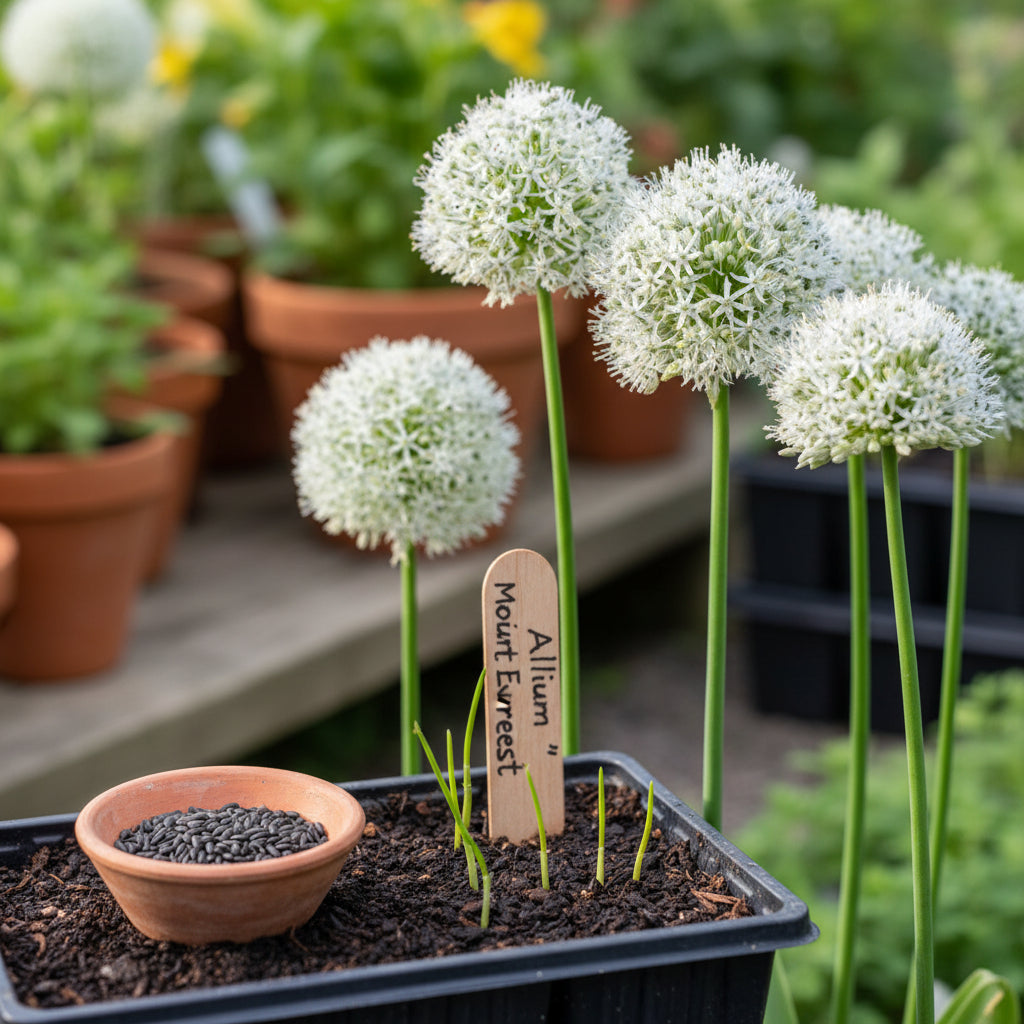

Life Cycle
Perennial

Plant Characteristics
Tall stems

Growth Habit
Upright clumping growth

Bloom Season
Late Spring

Flavour Profile
Ornamental

Suitable for
Outdoor

Seed Type
Open Pollinated Seeds

Plant Type
Flowering Ornamental

Planting Season
Autumn to Winter

Fruit Size
N/A

Plant Height
80–120 cm

Light Requirement
Full Sun

Water Needs
Moderate

Hardiness Zones
USDA Zones 4–8

Container Garden
Yes

Plant Spacing
25–30 cm

Planting Depth
Surface sow

Growing Conditions
Well-drained soil
Frequently Asked Questions
What makes Mount Everest different from purple alliums?
What makes Mount Everest different from purple alliums?
Mount Everest produces large, pure white flower spheres that create bright contrast in mixed borders alongside purple allium varieties.
Can Mount Everest be planted among ornamental grasses?
Can Mount Everest be planted among ornamental grasses?
Yes. Its tall stems and globe-shaped blooms pair well with ornamental grasses, adding vertical structure to landscape designs.
Do the flower heads remain attractive after blooming?
Do the flower heads remain attractive after blooming?
Yes. The dried seed heads often keep their rounded shape, providing ornamental interest even after flowering has finished.
Is this variety suitable for fresh floral arrangements?
Is this variety suitable for fresh floral arrangements?
Yes. Strong, upright stems and long-lasting blooms make it a popular choice for fresh-cut flower displays.
Can Mount Everest be planted in large groups?
Can Mount Everest be planted in large groups?
Yes. Mass planting creates a dramatic display of uniform white flower globes during the blooming season.
Will pollinators visit the flowers?
Will pollinators visit the flowers?
Yes. The nectar-rich blooms are commonly visited by bees and butterflies during their flowering period.